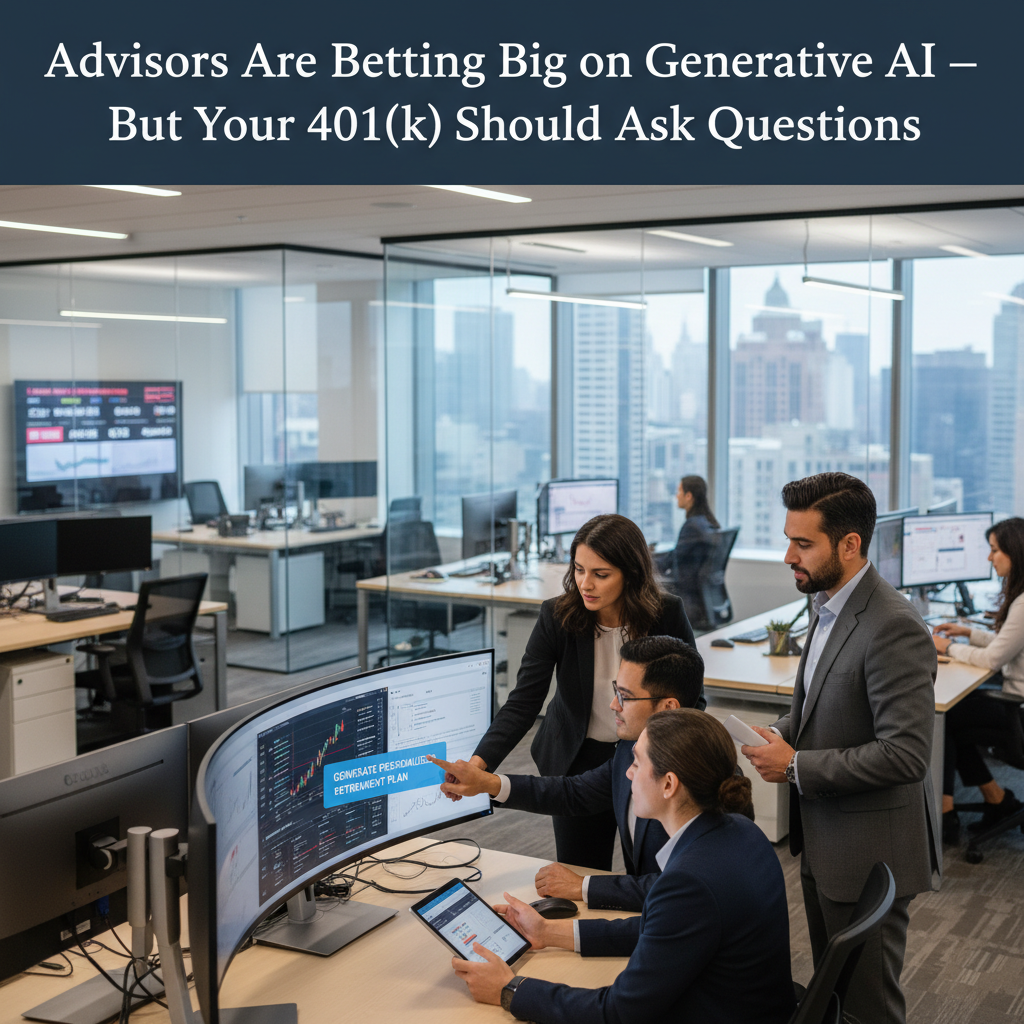
A quick drift from robo-advisors to conversational counsel
If you remember the first robo-advisor wave a decade ago, this feels familiar: a tech tool promising cheaper, faster advice. But the current shift is not just a replay. Instead of fixed rulebooks that rebalance on a cadence, firms are testing generative models that can read client documents, draft narrative financial plans and run scenario analysis in plain English. The output looks different — and so does the risk profile.
What firms are building — and why it matters
- Personalized narratives in volume. Wealth teams can churn out tailored plan summaries, tax strategies and retirement scenarios for thousands of clients without handwriting a single bespoke memo. That changes client communication, not just efficiency.
- Faster, more frequent tax-loss harvesting. Automated strategies used to run monthly. Now pipelines that ingest market moves and client-specific data can flag opportunities much sooner.
- Conversational interfaces. More people prefer chat or voice for quick planning questions. Large language models let firms answer in natural language instead of directing clients to static FAQ pages.
Put together, these features make advice cheaper and stickier. For price-sensitive retirees or DIY 401(k) savers, that often means clearer explanations and fewer surprise portfolio moves.
Hiccups nobody is ready to ignore
- Hallucinations and factual drift. These models can produce confident, plausible-sounding errors. In a portfolio or tax context, a made-up rule or cost estimate is more than an awkward typo.
- Data privacy and aggregation risk. Feeding client statements, Social Security numbers or sensitive tax forms into third-party systems enlarges the attack surface and draws regulatory attention.
- Fiduciary accountability. Who is on the hook when an AI-generated plan underperforms — the human advisor, the firm, or the model vendor? Regulators are watching, and clients will expect clear lines of responsibility.
A reality check: humans still matter
Advisors retain an edge in behavioral coaching, estate nuance and cross-disciplinary judgment. Complex situations — illiquid holdings, family businesses, ongoing tax audits — almost always need a human to untangle trade-offs. In practice, most firms will end up with a hybrid: AI drafts and analyzes; humans validate, interpret and counsel.
Where capital and chips meet advice
This trend draws interest from infrastructure providers and chipmakers as much as from brokerages. Cloud and GPU vendors sell the compute that makes large models usable; custodians and broker-dealers decide which vendors get certified. So AI in wealth management is as much an operations problem as it is a product decision.
What investors and clients should watch
- Ask whether your advisor uses generative models and how your data is stored, audited and deleted.
- Push for clarity on model provenance: who built it, what safeguards exist around training data, and how recommendations are tested.
- Expect firmer disclosures about AI in account opening and advice as regulators move from questions to rules.
What this means in practice is simple: generative models can finally bring individualized planning to mid-market investors who were priced out a decade ago. But the shift also moves risk — from trading desks to model audits, from human slip-ups to algorithmic gaps. Treat AI-enabled advice like any other professional service: highly useful when transparent and well-audited; risky when opaque.
Pedro Marini