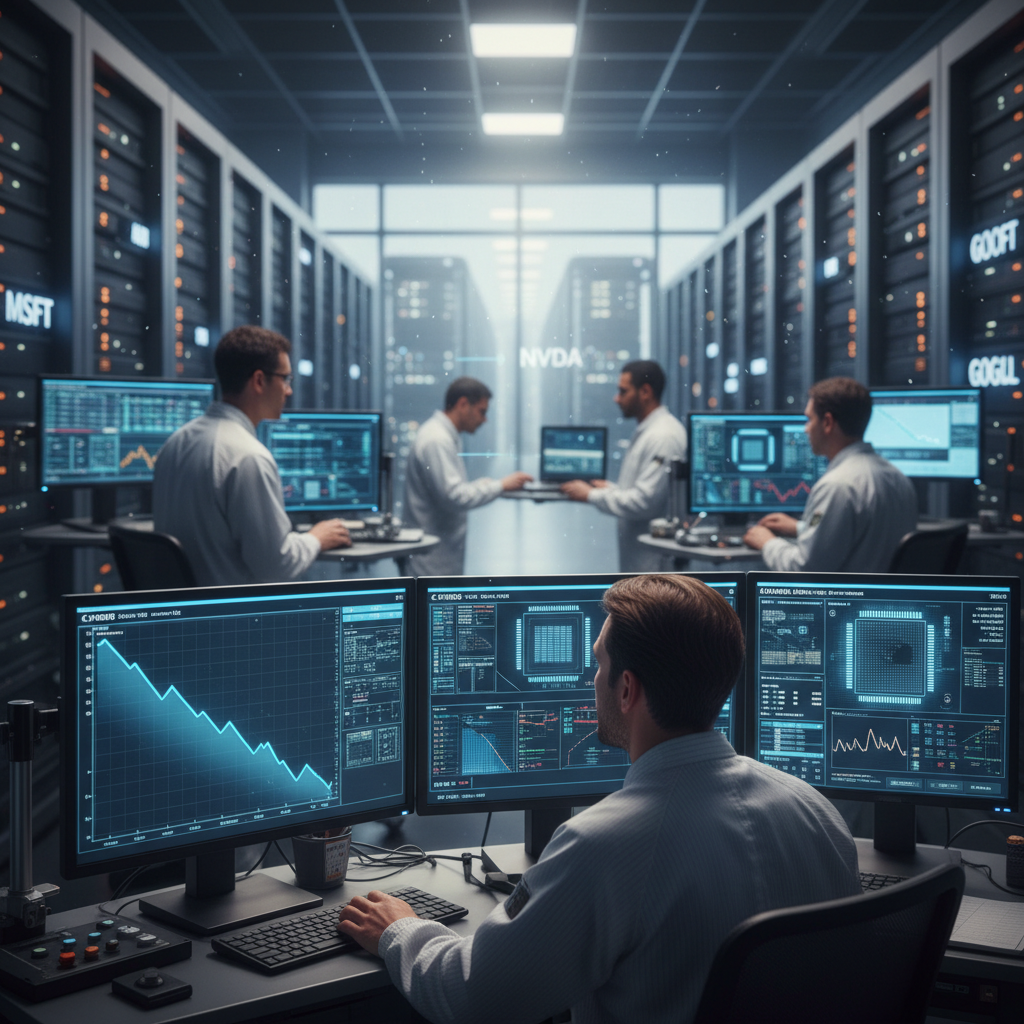
Nvidia led the AI charge, but it won't own the whole party.
For months the market funneled into one ticker. Now institutional flows and hedge funds are poking around the layers that actually make AI run: silicon, fabs, interconnects, and hosted model services. Different parts of the stack are showing clearer revenue paths, and that matters to allocators.
This is a rotation, not a repudiation. When a leader becomes a crowded trade, the marginal dollar looks for optionality — cheaper or steadier ways to capture long-term AI growth. Think of Nvidia as the headline performer; the rest of the stack are the durable, income-generating sidemen.
Why this matters now
- Leader valuations are elevated. Some investors want exposure to AI but at less frothy multiples.
- Supply-chain and capex cycles are waking up. Chipmakers and equipment vendors are starting to see multi-year commitments from hyperscalers.
- Cloud providers are bundling hardware with managed services, which creates recurring revenue that is easier to model than one-off chip shipments.
Where investors are leaning (and why)
- Core AI leader: Nvidia stays the center of gravity because of its software ecosystem and developer mindshare. That dominance looks sticky, but concentration also concentrates risk.
- Semiconductor supply chain: toolmakers, wafer fabs and equipment suppliers tend to benefit whenever industry production expands. These names behave less binary — more defensive in a downturn.
- Specialized accelerators and IP plays: smaller public companies and startups building domain-specific chips for inference, edge deployments or networking. They promise lower power or latency, and bespoke software stacks that could be preferable for particular workloads.
- Cloud and software layers: hyperscalers are turning model hosting into a sticky profit center. Contracts, data residency and custom tooling create advantages chipmakers alone can’t easily copy.
A few concrete examples
- A leading GPU company sets the performance bar and captures early adoption. Meanwhile, fabs and equipment makers see steadier revenue as wafer volumes rise.
- Cloud providers sell managed model hosting; that recurring fee stream often yields steadier top-line growth and more predictable margins than a single product cycle.
- Smaller accelerators try to beat large GPUs on price-per-inference for narrow tasks. If they do, they carve out niches rather than displace incumbents outright.
Signals that suggest the rotation is gaining steam
- Capex guidance from hyperscalers and TSMC-style fabs ticking higher
- Clear growth in cloud AI revenue and more paying model-hosting customers
- Partner announcements where chipmakers score design wins with big enterprise customers
- Changes in export controls or regulation that can quickly reshuffle competitive positions
A little history for perspective
Markets have shifted like this before. Early in tech cycles leadership concentrated — hardware first, then platforms, then apps. Winners emerged in layers. The dominant name today might not be the biggest beneficiary over the next decade; often the quiet suppliers of compute, connectivity and software glue do very well.
A healthy dose of skepticism
Rotation is not a free pass. Many smaller players fail to commercialize, or get squeezed by scale economics. Narrative can run far ahead of revenue, and valuations in niche names can still be lofty.
What to do with this insight
- If you own the market leader, consider trimming into strength and redeploying a portion into infrastructure and cloud names.
- If you prefer simplicity, diversified AI ETFs spread exposure across the stack and reduce single-stock concentration.
- If you’re risk-tolerant, dig into accelerator names that show real revenue traction, strong partnerships and defensible IP.
Short risk note
This is market color, not personal financial advice. AI is a multi-year theme with cyclical fits and starts. Position sizes, time horizon and due diligence matter.
Pedro Marini