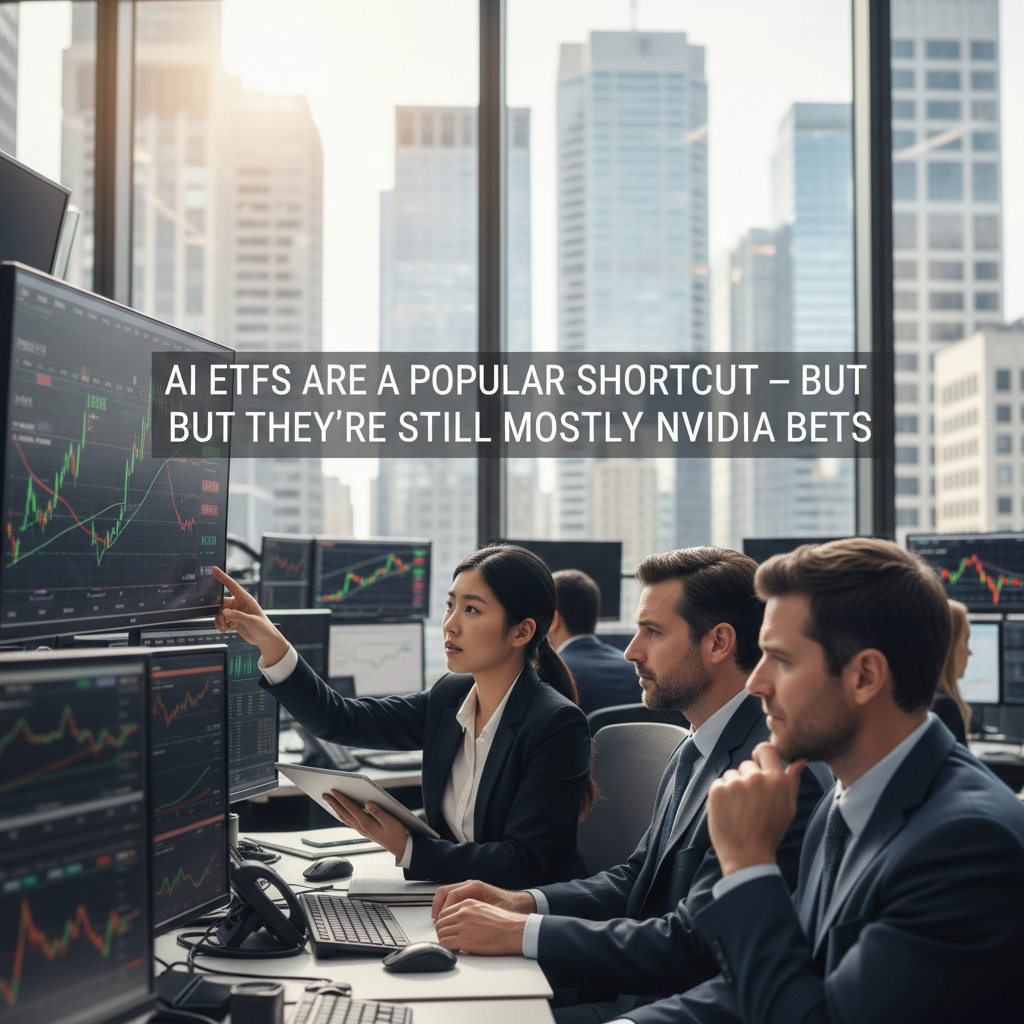
The headline everyone sees: AI ETFs are booming. Behind the ticker tape, though, many of these funds act like a concentrated — sometimes leveraged — bet on one company: Nvidia.
Retail money has poured into thematic AI funds over the past year. The story people tell themselves is simple: buy the theme, and you buy the winners. That’s convenient. It’s also a little misleading, because two realities are easy to miss.
1) Concentration risk
- Most AI ETFs are cap-weighted or otherwise tilt toward the biggest market caps. When a handful of firms dominate an index, the ETF behaves more like a large-cap tech play than a diversified AI exposure.
- Nvidia frequently ends up as the single largest weight. If Nvidia stumbles — supply chain problems, regulatory scrutiny, an earnings miss — lots of AI ETFs will wobble with it. Some funds are effectively a single-stock bet dressed as a theme.
2) Different definitions of AI
- These funds are not homogeneous. Some emphasize chipmakers and semiconductors; others lean into cloud infrastructure and enterprise software; a few chase robotics and industrial automation.
- Index construction matters. Revenue screens, equal-weighting, and active selection can produce very different holdings and risk profiles. Two ETFs labeled AI can behave almost nothing alike.
A quick history check helps. In the late 1990s many investors piled into internet-themed funds that simply mirrored the biggest names; when the bubble burst, thematic funds didn’t dodge the fallout. Today’s AI wave has echoes of that era, but also differences: adoption is being driven by enterprise spending, cloud platforms, and a small set of purpose-built chips — a narrower group of beneficiaries than the broad internet playbook. That matters for how concentrated gains (and losses) can be.
How to parse AI ETF claims in practice
- Read the fact sheet. Look at the top-10 weights and whether the fund is cap-weighted. If the top 10 add up to 50% or more, consider that a red flag.
- Compare methodologies. Active funds and equal-weighted ETFs often charge more, but they can blunt single-stock exposure.
- Check sector tilt. Is the fund loaded with semiconductors, or does it also include services, healthcare, and industrial AI names? The differences change the risk-return profile.
Ways to build exposure without getting hostage to one stock
- Pair a core AI ETF with targeted holdings: cloud infrastructure (for recurring revenue), enterprise AI software (subscription economics), and a few specialized chip designers.
- If you want to be conservative, prefer broader tech or semiconductor ETFs that include AI leaders but dilute single-stock risk.
A quick counterpoint: concentration is not inherently bad. When one company has a genuine structural edge — better architecture, broad developer adoption, quasi-monopolistic economics — owning it can drive returns. The point is to recognize when you own a de facto single-stock position and size it appropriately.
One final thought: AI ETFs are useful, but not something to set and forget. If you want exposure without being hostage to a single company’s fortunes, do the homework: inspect weights, understand how the index is constructed, and spread exposure across hardware, software, and cloud. Think of the ETF as a theme suitcase — handy for travel, but you still want a few reliable tools packed inside.
Quick takeaways
- AI ETFs give easy exposure but often carry heavy concentration in chip and cloud leaders.
- Read fund documentation to see how diversified a fund really is.
- Balance thematic excitement with disciplined sizing and complementary allocations.
Pedro Marini