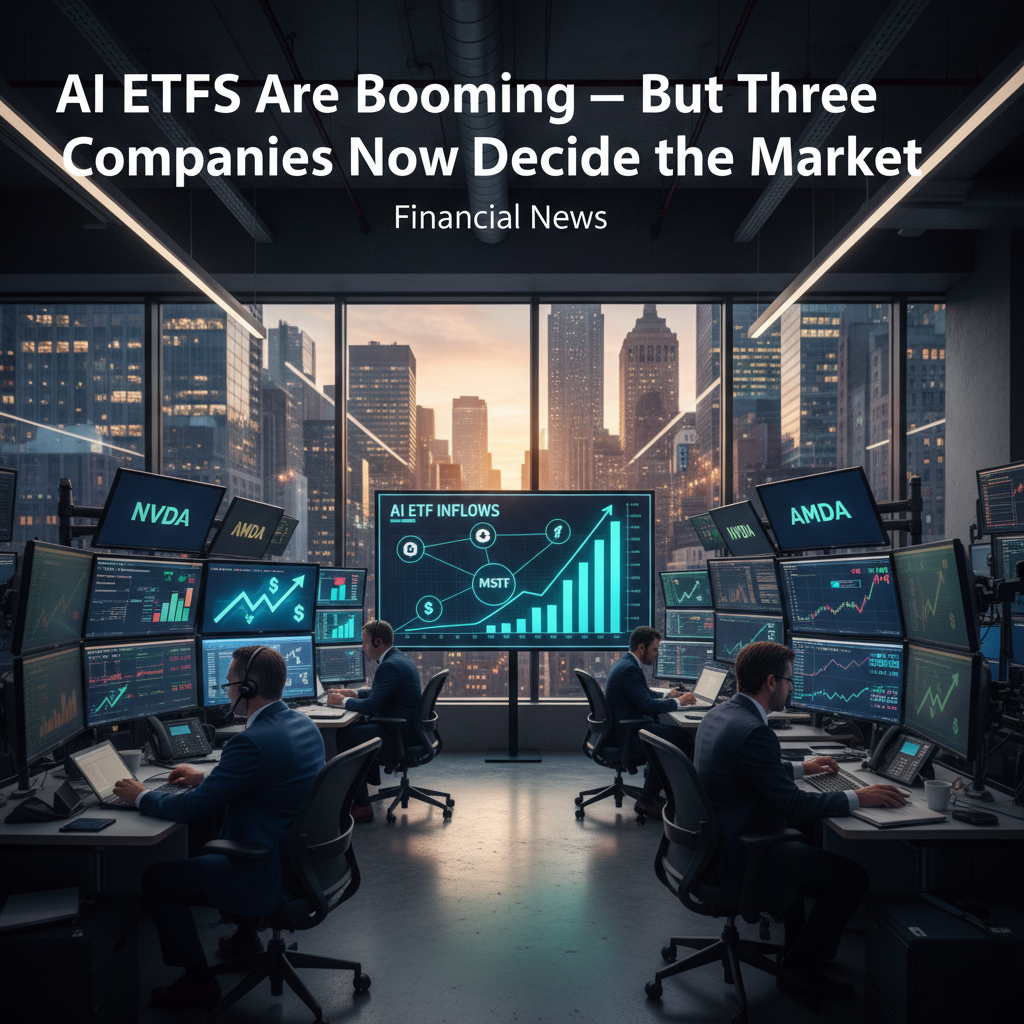
The headline is simple: AI ETFs are winning. The nuance isn't.
Lately, AI-themed ETFs have pulled in big new money as both retail and institutional investors look for AI exposure without the hassle of picking single names. That ease is the selling point. It also hides a structural problem: a very small group of megacaps now drives most of the returns inside those baskets.
Sounds familiar if you lived through late-1990s tech manias or the FAANG era. Different wrapper, same dynamic — thematic flows tend to funnel capital into the companies that actually make the theme happen. For AI that means chip designers and cloud providers — the firms that rent the data-center horsepower and sell the silicon that trains and serves models.
Why concentration matters now
- Passive flows are not neutral. When money pours into a theme, market-cap weighting hands the largest holdings the biggest share of new buying, which can push valuations past what fundamentals support.
- The revenue exposure is lopsided. A handful of firms capture most of the data-center compute, AI chips, and cloud AI services revenue; a single strong earnings print or guidance change from one of them can lift an entire ETF.
- Correlation risk creeps up. As active managers and later-stage investors pile into the same names, diversification frays and funds start to move more like one big position than many independent bets.
A few practical implications
- Downside is asymmetric. If Nvidia or a major cloud vendor trips up, AI-themed ETFs can drop faster than a broad tech index because of concentrated weightings.
- Returns can look binary. Over short periods, a couple of winners can mask weak selection elsewhere in the fund. That can be misleading if you’re evaluating skill instead of momentum.
- Product responses are coming. Expect more equal‑weight AI ETFs, genuinely active AI strategies, and hybrid products priced to manage concentration. Some investors will happily pay for that risk control.
Signals worth watching
- How funds rebalance. Many AI ETFs use quarterly, market-cap rebalances — which tends to accelerate concentration during momentum runs.
- Options and futures flow on the biggest components. Heavy call buying or skew can foreshadow squeezes that jack up ETF volatility for a spell.
- Index-provider and regulatory chatter. Index committees have intervened before to curb extreme crowding; if concentration spikes, rule changes or formal reviews are possible.
What an investor can actually do this week
- Look at the top 10 holdings before you buy. See whether one or two names make up half the fund. It matters.
- Consider equal‑weight or active alternatives if you worry about single-stock dependence. Paying a bit more for active risk control can be worth it when a theme is concentrated.
- Hedge selectively. Put spreads or collars on a concentrated ETF, or buy protection on the largest component rather than the entire basket.
A contrarian note
Concentration isn’t automatically bad. Sometimes markets are signaling that a few firms have real, persistent advantages — and that moat can justify big weightings. The tricky part is timing: owning the clear winner is easy until it’s not. For long-term portfolios, mixing thematic exposure with core diversification and strict position sizing separates luck from skill.
The upshot
AI ETFs have made access to AI straightforward. They’ve also reintroduced an old problem in a new package: convenience-driven flows elevating a handful of companies into de facto portfolio dictators. Treat AI themes like any other concentrated bet — hands-on, deliberate, and sized so you survive the next surprise.