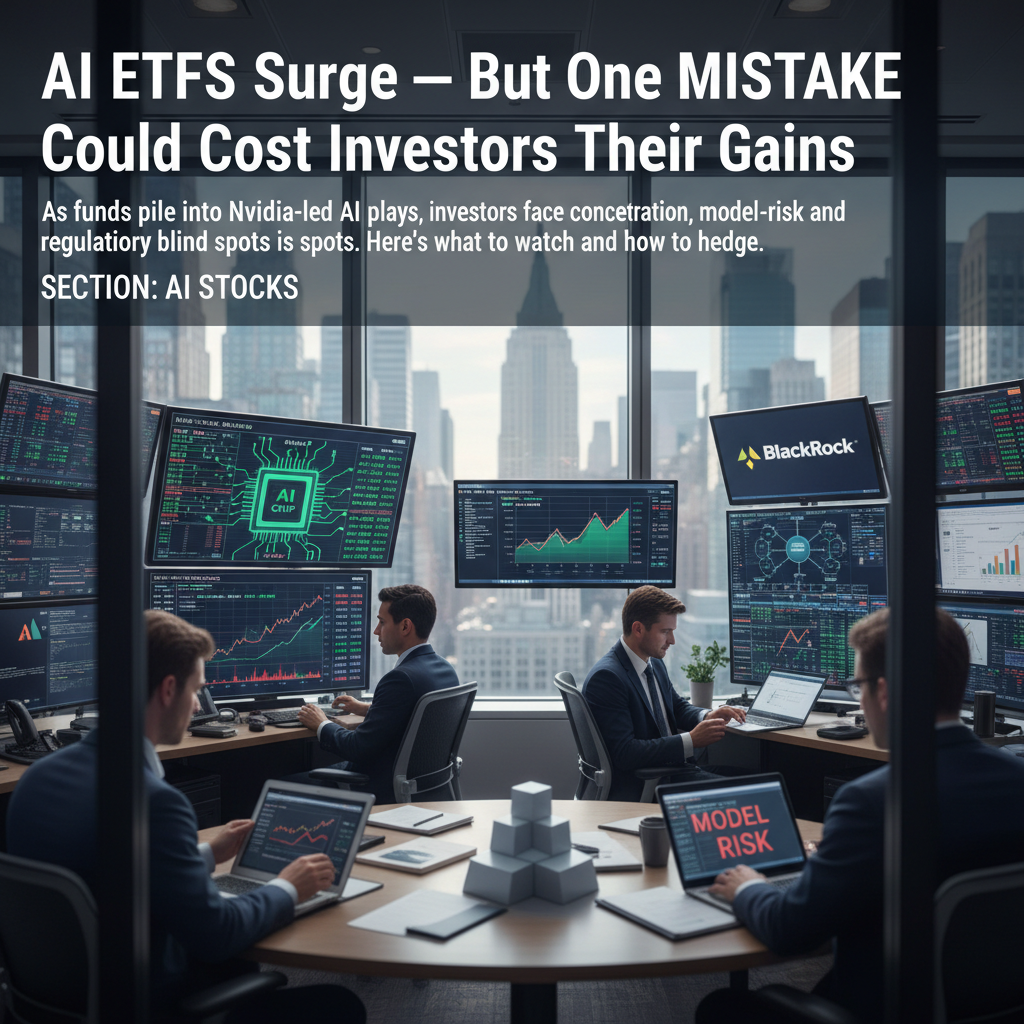
Markets have a new favorite trade: AI exposure — and it’s getting dangerously narrow.
Over the past year capital has funneled into chipmakers and AI-focused ETFs as asset managers and quant shops try to catch LLM-driven growth. The result feels oddly familiar: outsized gains when a few winners lead, and sudden pain when the narrative shifts.
Why this setup matters
- Concentration in a handful of names. A small group of chip and cloud providers now drives most AI ETF performance. That makes headlines look great. It also piles on idiosyncratic risk.
- Model and operational risk. Firms rushed to push models into production. Expect software bugs, data leaks and governance gaps — problems that can be more than PR headaches, and that can hit balance sheets in banks and fintechs that depend on these models.
- More regulatory focus. Regulators are moving from curiosity to scrutiny. Model validation, vendor oversight and disclosure demands are likely to increase.
A short historical frame
This sort of concentration isn’t new — think tech rallies in 1999 or 2020, where a few leaders did most of the heavy lifting and rotations punished broad portfolios. What’s different now is infrastructure stickiness. Once companies commit to particular AI chips or cloud stacks, the switching costs can lock winners in for longer. That’s good for persistent market leadership, but it also creates single points of failure.
Concrete examples to watch
- Dominant training-chip suppliers can swing sharply if a rival architecture actually matters in practice.
- Cloud vendors that bundle model services create systemic linkages; an outage or a policy change can cascade through dependent fintechs.
- Niche AI ETFs often claim diversification but frequently end up tracking highly correlated holdings.
Practical steps for investors
- Reassess concentration. Look at the top 10 holdings of AI-themed funds and how they overlap with major indexes.
- Run stress tests. What happens if a leading chipmaker drops 30%? Or if a major cloud provider throttles AI services for a quarter?
- Prefer broader exposure. Consider semiconductor ETFs, cloud infrastructure plays, or active managers who will trim outsized positions rather than ride momentum.
- Manage model risk. Institutional investors should demand rigorous vendor due diligence, thorough backtesting and disciplined change-management for any third-party models they rely on.
A counterpoint worth keeping in mind
AI-driven productivity gains are real. Overweights to infrastructure can pay off for patient investors — provided you accept more near-term volatility. The real question is not whether AI will change things; it almost certainly will. The question is whether current prices already price in many years of growth while underestimating regulation and competitive disruption.
A caution
Chasing the AI story without discipline is a fast route to concentration risk. Treat AI exposure like any hot sector: identify where the durable advantages actually are, prepare for downside scenarios, and don’t confuse momentum with a lasting moat.
Pedro Marini