AI ETFs
AI ETFs Surge — Why Concentration, Not AI, Is the Real Risk
Billions flow into AI-themed funds, but a handful of megacaps are doing the heavy lifting. Here’s the nuance investors are missing.
P
Pedro Marini
July 18, 2026 · 4 min read
Billions flow into AI-themed funds, but a handful of megacaps are doing the heavy lifting. Here’s the nuance investors are missing.
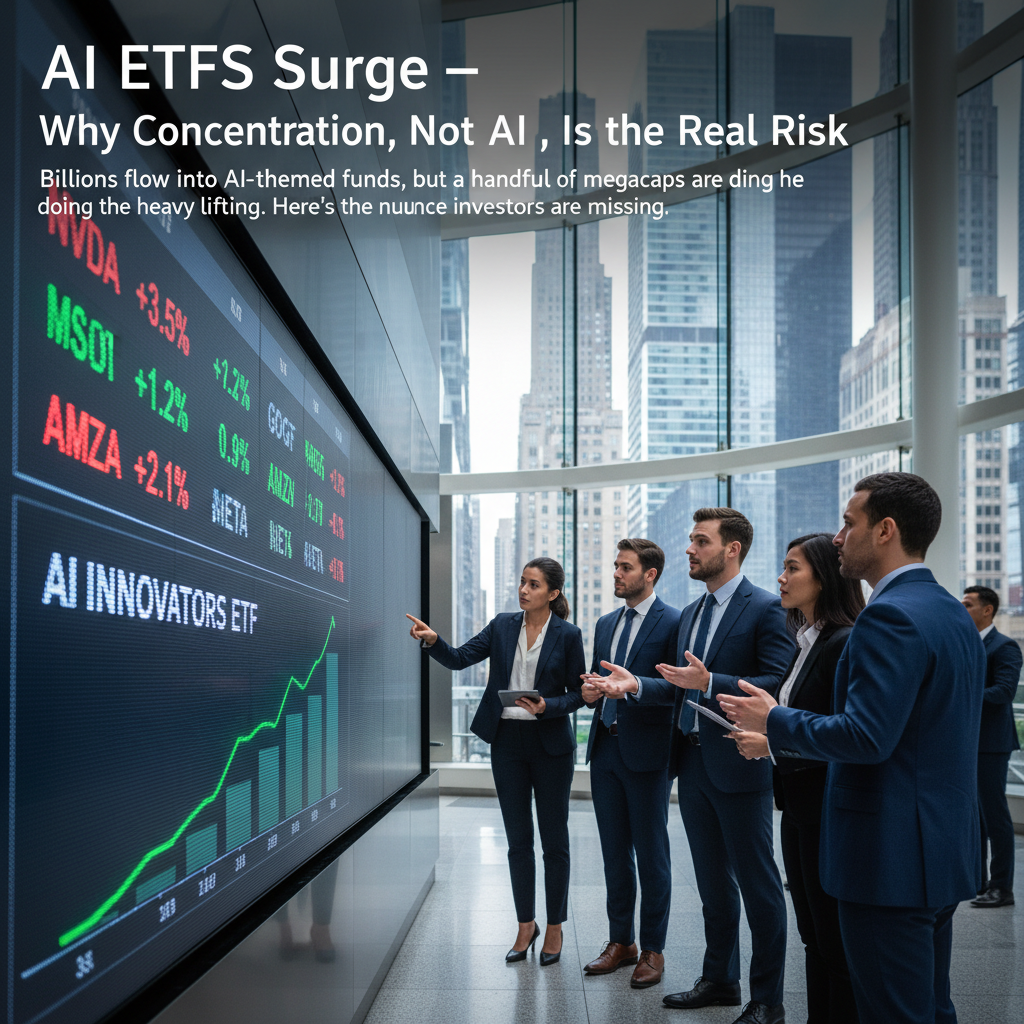
Illustration by IMF Alpha editorial · Reviewed by Pedro Marini
The headline is blunt: investors are piling into AI ETFs. What often gets lost in the surge is that many of these funds feel less like a broad industry bet and more like a concentrated play on a handful of market favorites.
This is not a dismissal of AI’s promise. The point is simply about how exposure is being packaged. The AI opportunity spans infrastructure, software, and services; yet ETF footprints are overwhelmingly dominated by GPU makers and big cloud platforms. That shift turns what ought to be sector risk into something much closer to single-name and valuation risk.
Why this matters now
Historical and market context
This pattern echoes earlier tech episodes. In 1999 the story was internet adoption; in 2017 it was mobile plus cloud. Investors then equated big technological narratives with built-in diversification. That mistake concentrated portfolios and magnified losses when sentiment reversed. Today the commercial case for AI looks more real, sure—but crowding can still produce abrupt, painful swings.
Concrete implications for portfolios
Examples investors should check
What to watch this quarter
How to position — practical steps
The reality is simple: AI is investable, but the easiest funds to buy are often the least diversified. Owning the idea without owning the risk means asking who truly benefits from AI adoption, not just who makes the headlines.
Authorial takeaway
Momentum and narratives drive flows; portfolio math does not care about stories. If you want AI exposure without taking on single-name risk, do the boring work: look past the label, study the holdings, and size thematic allocations like any other high-conviction position.

As lawsuits and privacy rules squeeze scraped training sets, synthetic data firms are drawing capital and corporate deals. Practical wins, hidden risks.
From web-scraping lawsuits to paid, privacy-preserving feeds and synthetic substitutes — firms are buying better data to train safer, more valuable models.

Smaller models, smarter chips and privacy-first apps are turning phones and PCs into autonomous AI hubs — and the ripple effects will hit chips, apps and search.