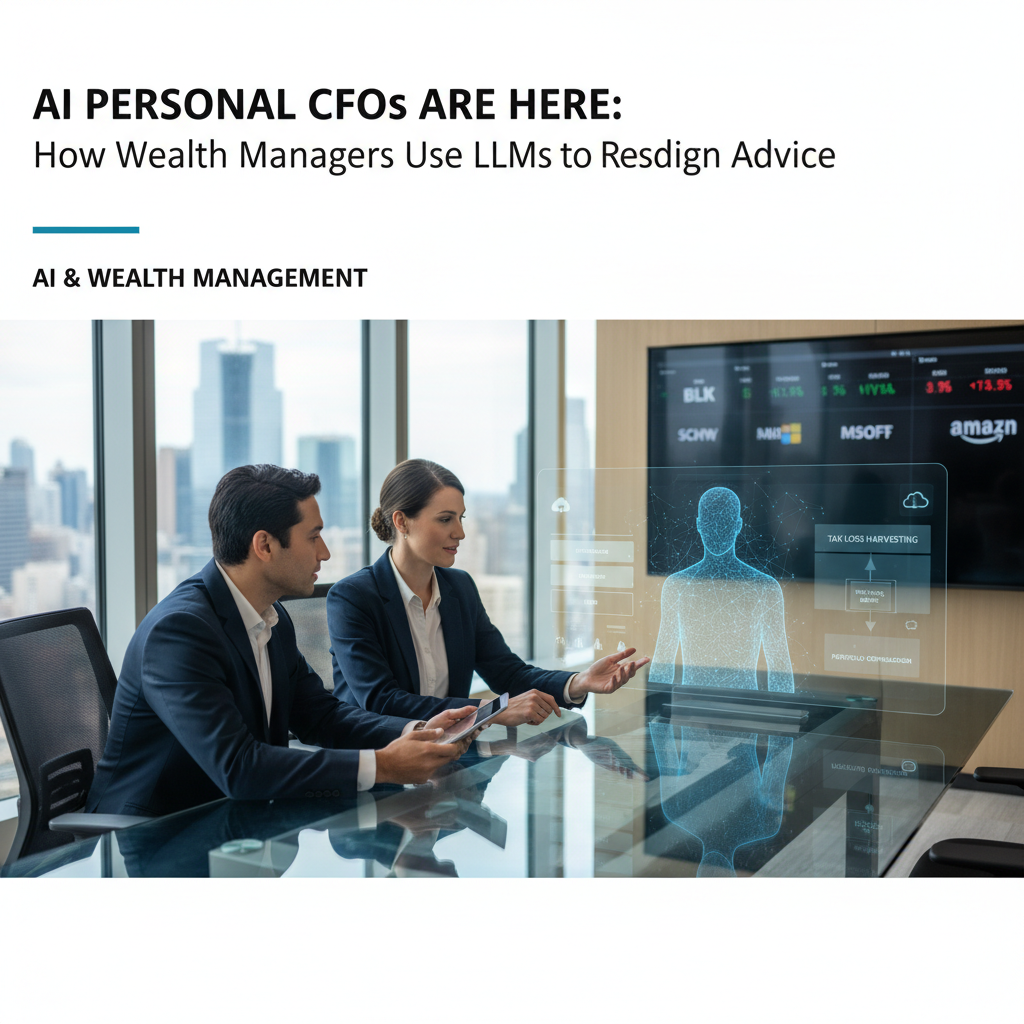
The pitch is simple but radical. Wealth management has been split for years: templated robo-advice on one side, bespoke human planning on the other. Advances in large language models and machine-learning plumbing are starting to stitch those halves together into what I call the AI personal CFO — continuous, conversational, and highly tailored financial planning delivered at scale.
Why this matters now
- The second wave of robo-advisors leaned on rules and mean–variance math. Large language models bring context, memory and narrative, so plans can respond to life events instead of a one-shot questionnaire.
- Institutional platforms such as Aladdin already showed how analytics change decision-making for institutions. The consumer layer is finally catching up thanks to generative models, cloud scale, and much cheaper inference.
Concrete, practical upgrades
- Tax-loss harvesting that spots when to realize small losses across dozens of taxable accounts, then explains the trade-offs in plain English. No marketing fluff — real trade-offs.
- Behavioral coaching that nudges save-versus-spend decisions using language and calendar signals, not only portfolio glidepaths.
- Faster, audit-ready compliance trails because models can tag advice with the data, rationale and risk tolerances that informed it.
Real implications for investors and advisors
- For investors: more personalization at lower incremental cost. Trade-off: greater reliance on clean data and platform trust.
- For advisors: routine work — rebalancing, reporting, client Q&A — will increasingly automate. The premium shifts to judgment calls, estate planning and intricate tax strategy.
- For firms: build a proprietary stack or stitch public models to private data. Either route brings model risk, integration headaches and ongoing maintenance.
Risks and regulatory friction
- Model hallucinations are not an academic curiosity when retirement savings are involved. Guardrails and human-review workflows are essential.
- Data privacy and residency matter. Wealth platforms hold the most sensitive PII and financial records; cloud and vendor choices will be scrutinized.
- Expect heightened SEC and state-level attention to algorithmic advice, with a focus on explainability and recordkeeping.
A short history detour
Robo-advisors shook up fee schedules a decade ago by automating allocation. Costs fell, but nuance was left behind. What’s interesting now is that generative AI is the first technology that can plausibly fold nuance back in while keeping scale — imagine a seasoned planner’s memory applied to millions of micro-interactions.
Who stands to gain
- Large incumbents with deep client histories and distribution can turn those records into contextual advice quickly.
- Specialist firms that pair tax expertise with good AI engineering could win over wealthier clients who want automation without sacrificing bespoke tax strategy.
Counterpoints and open questions
- Personalization can become overcomplication. Too many micro-adjustments risk trading long-term discipline for short-term optimization.
- Fee compression will accelerate. Lower fees don’t automatically translate to better long-run outcomes if models encourage churn or excessive tinkering.
The upshot
AI personal CFOs will not make human advisors obsolete, but they will change what clients hire humans to do. The winners will be firms that combine solid engineering with fiduciary practices, clear audit trails and a culture that treats models as tools rather than inscrutable black boxes.
What to watch next
- Product releases that bundle conversational planning with tax and estate modules.
- Regulatory guidance on algorithmic advice and recordkeeping.
- Partnerships between wealth platforms and cloud/AI vendors advertising onshore, auditable inference.
Think of this as a roadmap: static financial plans are on the way out. The practical question for investors is which custodians and advisors can convert smarter automation into steadier outcomes.