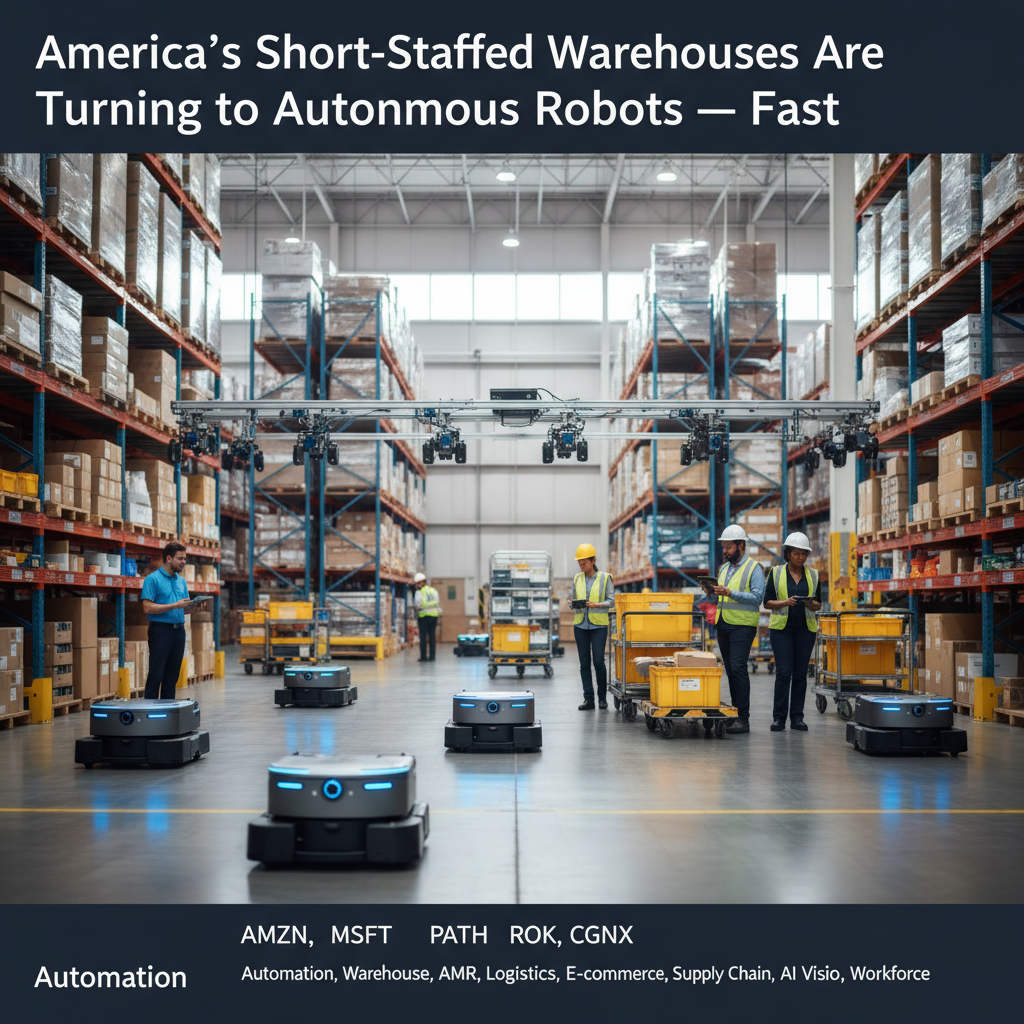
The scene in midsize distribution centers is changing fast. Where once teams shuffled aisles with handheld scanners, small autonomous mobile robots now haul pallets and totes, steered by camera-based perception and real-time orchestration software.
This is not science fiction. It’s a pragmatic response to three stubborn forces: chronic labor shortages, the rising expectation for same-day delivery, and pressure to shorten supply chains. The result is a rush toward automation that looks less like wholesale replacement and more like a reconfiguration of who does what on the floor — with real effects on operations, margins and jobs.
Why leaders are buying now
- Labor economics. Warehouse wages have been climbing. Install a fleet of AMRs and you move some variable wage spend into capital or a service contract with clearer unit economics.
- Speed and density. Robots plus machine vision speed picks and let facilities store goods more tightly, squeezing more throughput out of the same square footage.
- Flexibility. Unlike fixed conveyors or traditional AS/RS, modern AMRs can be shifted between SKUs and lines. That matters when demand is fickle.
Concrete returns — and the fine print
Several operations cite payback in 12 to 24 months when robots take over repetitive picking or transit tasks. Those numbers, though, assume smooth integration. Expect software orchestration, floor re-planning, network upgrades and a different maintenance rhythm. That extra work is often where budgets and timelines get stretched.
Think of automation as hiring a perpetual intern who never clocks out. Useful, but still needs trainers, electricians, and someone to manage schedules. Many smaller retailers avoid the upfront hit by leasing robots or buying robotics-as-a-service — an install-then-subscribe approach that lowers the entry bar.
A short history (because context matters)
This wave isn’t brand new; it follows earlier automation phases. Conveyors and pallet racks optimized throughput for static operations. The Kiva-era introduced true mobility. Now, AI vision and edge compute give robots situational awareness inside crowded facilities. It’s incremental, not a single leap — but the effects pile up.
Winners, losers and the large middle
- Winners: companies that pair automation with process redesign and upskilling. Robots lift productivity only when you rethink workflows around them.
- Losers: operators who treat robots as plug-and-play and ignore software and data integration. Result: downtime, underused fleets and frustrated teams.
- Middle ground: hybrid setups where humans handle exceptions and robots do the heavy lifting. Practical, but it requires clear rules about who handles what.
Policy, labor and social trade-offs
Automation will shift jobs more than it erases them. Expect fewer pure pick roles and more openings for technicians, data analysts and supervisors. That shift calls for investment in training — and for local labor policy to treat reskilling as infrastructure, not an afterthought. Also worth watching: how wage gains are distributed across regions and worker cohorts.
What to watch next
- Pricing and financing in robotics-as-a-service that broaden access for smaller players.
- Better AI vision that reduces dependence on barcodes and speeds returns and sortation.
- Nearshoring and the rise of regional micro-fulfillment centers, which tend to favor flexible AMRs over fixed automation.
The takeaway
This automation wave is less about robots elbowing humans out and more about rewriting workflow on the shop floor. Firms that treat the change strategically — pairing machines with process redesign and training — stand to gain. For others, it can become an expensive experiment. Either way, American logistics is being remade, one autonomous cart at a time.