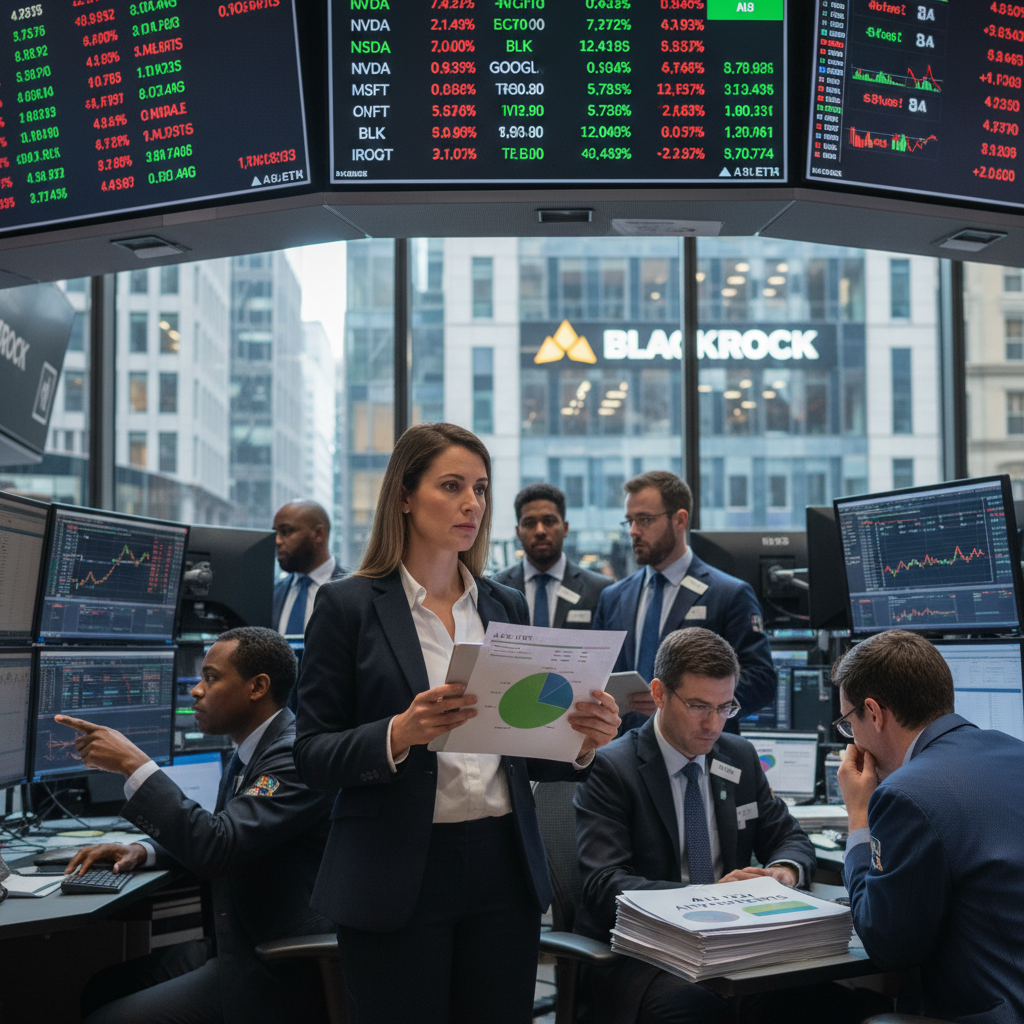
The shorthand is seductive: buy an AI ETF and you own the future. It sounds neat. It also, for many funds, turns out to be a high‑conviction bet on a very small set of hardware and cloud providers.
Most retail investors only notice this afterward: AI ETFs often pile into the same handful of names — Nvidia, Microsoft, Alphabet — so what feels like diversification is often a near‑single‑stock trade. Two questions matter here: are you paying to own broad AI adoption, or are you simply buying exposure to a narrow hardware and infrastructure rally? And what happens if regulation, geopolitics, or a change in demand undercuts one dominant supplier?
Why concentration matters
- Many AI plays depend on the same scarce pieces: GPUs, chip designs, and hyperscale cloud capacity. When a few companies control those pieces, thematic ETFs naturally skew toward them.
- That skew erodes the diversification investors expect. An AI ETF can behave like a concentrated tech holding during drawdowns — volatile, closely tied to a handful of narratives.
A short history lesson, because patterns repeat
This is not new. Thematic funds in the late 1990s or later cycles in social media and biotech often looked diversified on paper but were essentially bets on narrow winners. The twist today is scale: the biggest AI firms are effectively infrastructure monopolies with large moats — which magnifies both upside and downside.
Where the risk actually lies
- Valuation mismatch. Some beneficiaries trade at multiples that already assume years of uninterrupted growth. Stretch the adoption timeline and those multiples can reprice quickly.
- Regulatory and model risk. Governments are tightening scrutiny on how models are trained and used. Compliance shocks can arrive fast and hit companies unevenly.
- Supply‑chain fragility. GPU shortages, export controls, and geopolitical pressure can redirect investment away from today's leaders, perhaps abruptly.
Why some concentration makes sense
Not all concentration is bad. If a few companies really do own the critical infrastructure, owning them via an ETF can be a practical way to capture long‑duration structural winners. For investors who want targeted, lower‑cost exposure to AI infrastructure, a heavy weighting might be a perfectly reasonable tradeoff.
A practical checklist for investors
- Check the top 10 holdings. If one company is 15–25% of the fund, treat the ETF more like a single large stock than a diversified basket.
- Look under the hood. Are you buying chipmakers, cloud providers, or application companies? Each behaves differently amid shocks.
- Compare fees and active options. Some active managers run niche strategies that may avoid extreme single‑stock concentration.
- Stress‑test scenarios. How would the fund react if Nvidia fell 30%? What if export restrictions cut chip shipments for a quarter?
Where to look instead
Split exposure. One sleeve to core infrastructure leaders, another to application‑level winners and smaller innovators. Or pick funds that cap individual weightings to prevent single‑stock dominance. It’s not glamorous, but it reduces the risk of waking up to a narrative that’s gone sideways.
A final, slightly human note
AI is not a single stock, even if markets sometimes treat it like one. Buying an AI‑labeled ETF without checking the holdings is like grabbing a grocery basket and assuming the label tells the whole story. If you want genuine breadth, do the work: read the holdings, understand the thesis, and accept that thematic exposure can still carry concentrated risks. Those little choices — the ones nobody headlines — will matter most for long‑term returns.