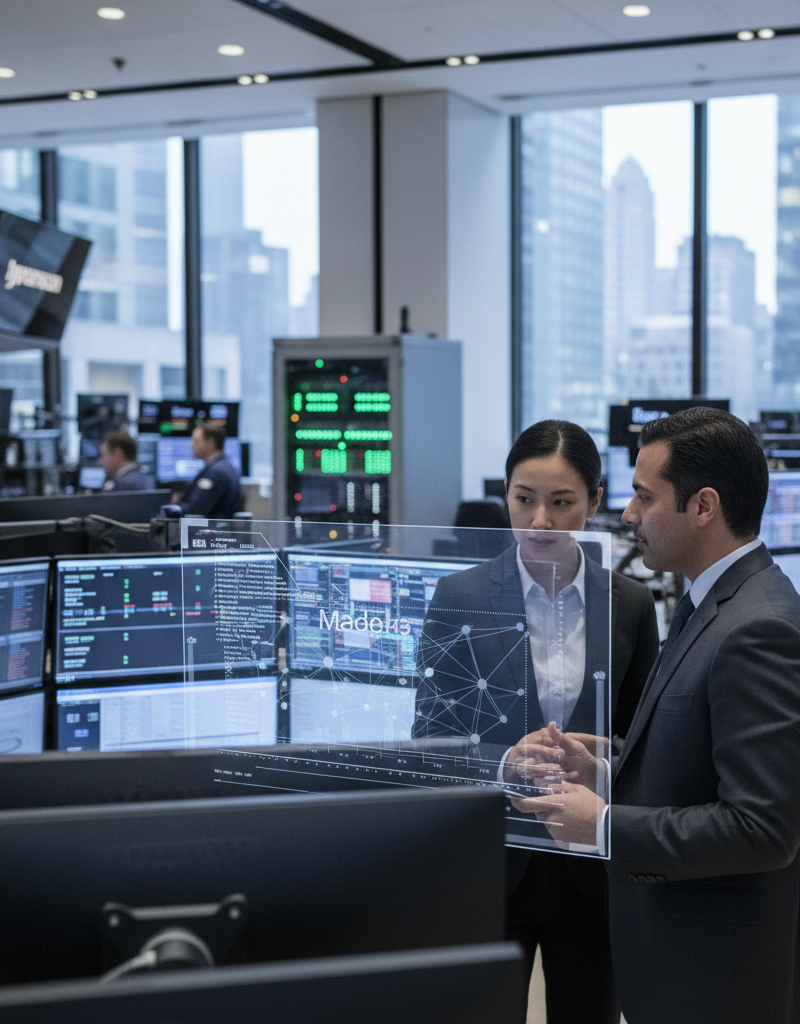
The pitch is irresistible: faster loan decisions, near-instant fraud detection, cheaper back-office work. For many US banks and fintechs, generative AI has jumped from lab demos into production in months, not years — and yes, that velocity itself is notable.
But adoption is not the same as mastery. What looks like a productivity miracle can also be an opaque way to amplify risk. Think of generative models as powerful new engines bolted onto old financial trains — they can pull harder, but if the tracks are fragile, a failure is worse.
Where AI is already changing finance
- Underwriting and pre-approval. Models pull alternative signals from transaction histories, call metadata, even public social footprints to score credit faster and push near-instant approvals. Upstart made the algorithmic-lending case; now incumbent banks are borrowing similar stacks.
- Fraud and AML. Large language and multimodal models catch novel fraud patterns and stitch together suspicious narratives across documents. They help, but false positives and contextual misses remain common.
- Customer servicing and collections. Generative agents draft personalized outreach, negotiate settlements and shave human hours. In practice, though, they sometimes amplify compliance missteps when guardrails are weak.
Notable players shaping this shift
- NVIDIA supplies the GPUs that run the largest models. Cloud providers — Microsoft and Amazon among them — sell the managed infra and tooling banks are buying.
- Upstart represents the pure-play lending angle, showing both the upside and the pitfalls of model-first credit.
Why this feels different from past fintech waves
Two decades ago, algorithmic lending rode data expansion and securitization; the outcome was faster credit and, eventually, systemic strain when underwriting loosened. Generative AI layers a new problem: opacity. Models can invent plausible-sounding rationales, hide bias in their patterns, or quietly deteriorate as customer behavior shifts. That last bit matters more than it first appears.
Watch for these risks
- Model drift and blind spots. Accuracy in production can decay as macro conditions change. Banks that lean on a single-model stack are particularly exposed.
- Data provenance and bias. If training data encodes past discrimination, automated decisions can reproduce or magnify it — and bring legal and reputational fallout.
- Third-party concentration. A small set of cloud and chip providers now anchor the stack. Outages or price shocks at that layer hit downstream lenders fast.
- Regulatory friction. Supervisors are unusually sensitive to opaque credit decisioning. Expect tougher exams and more demands for explainability.
Some counterpoints
- The efficiency gains are real. Smaller banks and credit unions can access sophisticated scoring without hiring huge data science teams.
- Better fraud detection can cut charge-offs and improve customer trust — when implemented carefully.
- Hybrid human-in-the-loop designs blunt many failure modes; wholesale automation is not inevitable.
For investors
- Watch infrastructure winners where demand is likely steady: NVDA, MSFT and AMZN are natural exposure to GPU and cloud spend.
- Monitor pure-play AI lenders like UPST for volatility tied to underwriting outcomes and regulatory headlines.
- Be skeptical of banks that trumpet AI initiatives without governance; those names often trade up on hype and then slide when surprises surface.
The real question for executives and investors is governance. Can organizations pair model horsepower with rigorous oversight, auditability and operational discipline? If they cannot, the efficiency gains may become a hidden lever that worsens credit outcomes when the cycle turns.
Pedro Marini signs off: stay skeptical of systems that sound too clever, and pay attention to the small operational cracks — they usually show you where the biggest risks are.