The quiet shift
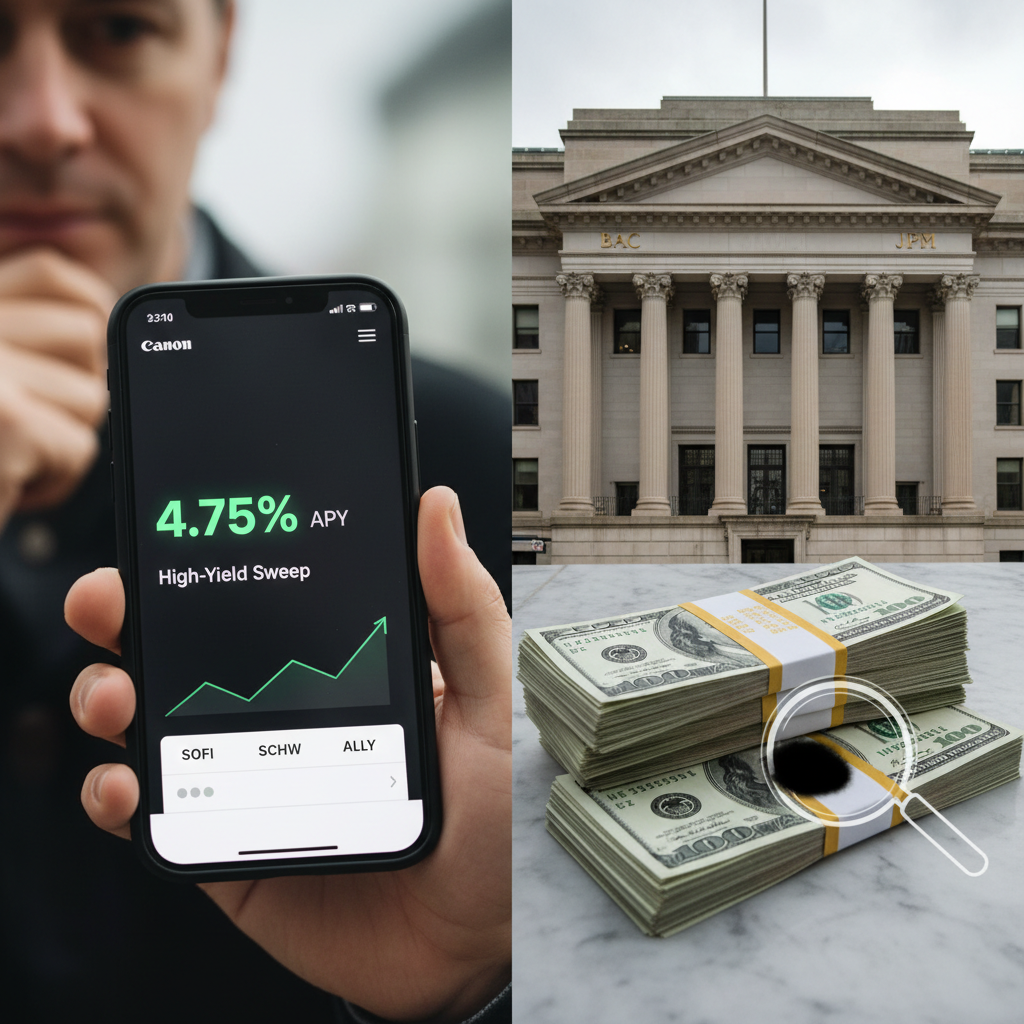
If you opened a fintech app recently you might have noticed something odd: uninvested cash earning rates that look a lot healthier than a legacy savings account. Not a fluke. It’s by design. Fintechs and brokerages are increasingly sweeping customer balances into partner banks, money‑market funds, or short‑term Treasuries. That quietly opened a new front in the retail rate war.
Why it matters now
Banks built deposit businesses on branch convenience and trust. Fintechs are winning with product design and distribution — think push notifications, round‑ups and one‑tap transfers — then parking that cash where yields are higher. The consequence is predictable: deposits drift away from branches, net interest margins get squeezed, and incumbents either raise rates or pay more for funding. That shift matters more than it first appears, especially for smaller banks that rely on sticky retail funding.
How these sweep programs actually work
- The fintech or brokerage shows a ledger balance for your cash.
- Behind the scenes that balance is swept into a partner bank as an FDIC‑insured deposit, or into a government money‑market fund or a short Treasury ladder.
- Some platforms scatter funds across multiple banks to broaden FDIC coverage; others keep it simpler.
Short version: the app shows easy liquidity; the money lives in different places depending on the platform.
The practical tradeoffs for savers
- Higher nominal yield: These offerings often outpace traditional bank rates because they target wholesale short‑term instruments or negotiate better terms with partners. You’ll see bigger headline numbers.
- Insurance is murkier: FDIC pass‑throughs, sweep networks and SIPC protections aren’t interchangeable. Details matter. Some broker sweeps use money‑market funds that don’t carry FDIC coverage.
- Liquidity and access: Transfers are usually fast, but settlement delays, cutoff times or temporary holds can appear when funds move between custodians.
What’s interesting is that most users experience higher yields with no visible friction, while the real tradeoffs live in the fine print.
A few concrete examples
A brokerage that overnight converts idle cash into government money‑market instruments. An app that routes spare change into partner bank deposits paying a promotional rate. For everyday users the result is similar: fatter yields, plus a bit of hidden plumbing.
Historical context
Sweeps are not new; banks and brokerages have been doing versions of this for decades. The novelty is scale and user experience. Fintechs made the mechanism consumer‑facing, wrapped it in polished UX, and launched it when short‑term yields were elevated. The effect is less a gentle evolution and more a redistribution of the deposit pie.
Risks regulators and banks are watching
- Large, concentrated outflows could amplify stress at smaller institutions.
- Consumers often conflate FDIC and SIPC protections; that misunderstanding creates real exposure.
- Intensifying price competition may compress lending margins enough that some banks pull back from consumer products.
Regulators are paying attention precisely because the plumbing now sits between a slew of nonbank platforms and the banking system.
What savers should do — a practical checklist
- Ask how your cash is parked: FDIC sweep, SIPC coverage, or a money‑market fund?
- Check aggregate insurance limits if your balances exceed standard FDIC thresholds.
- Try a small withdrawal first so you know actual transfer speed and any quirks.
- Consider a cash ladder: mix sweeps with short Treasuries or I Bonds to diversify where your cash lives.
- Read the fine print on fees and promotional rate terms; attractive offers can be temporary.
A little testing and a few questions will save you surprises later.
The bigger picture
Banking has become as much about experience as about balance sheets. Fintechs score points with product design; banks still hold advantages in scale and capital. Consumers can benefit from the competition, but yield is only one axis — safety, access and portability matter too.
If you want better yield without giving up liquidity, fintech sweep programs are a reasonable option. They solve some problems and create new ones. Do the homework: confirm insurance, diversify where appropriate, and learn how withdrawals actually work so the upside doesn’t come with unexpected headaches.