The narrative so far: For about three years, Nvidia’s GPUs have been the simplest shorthand for AI investing. Lately that shorthand feels more like a headline act — exciting, obvious, but not the whole show.
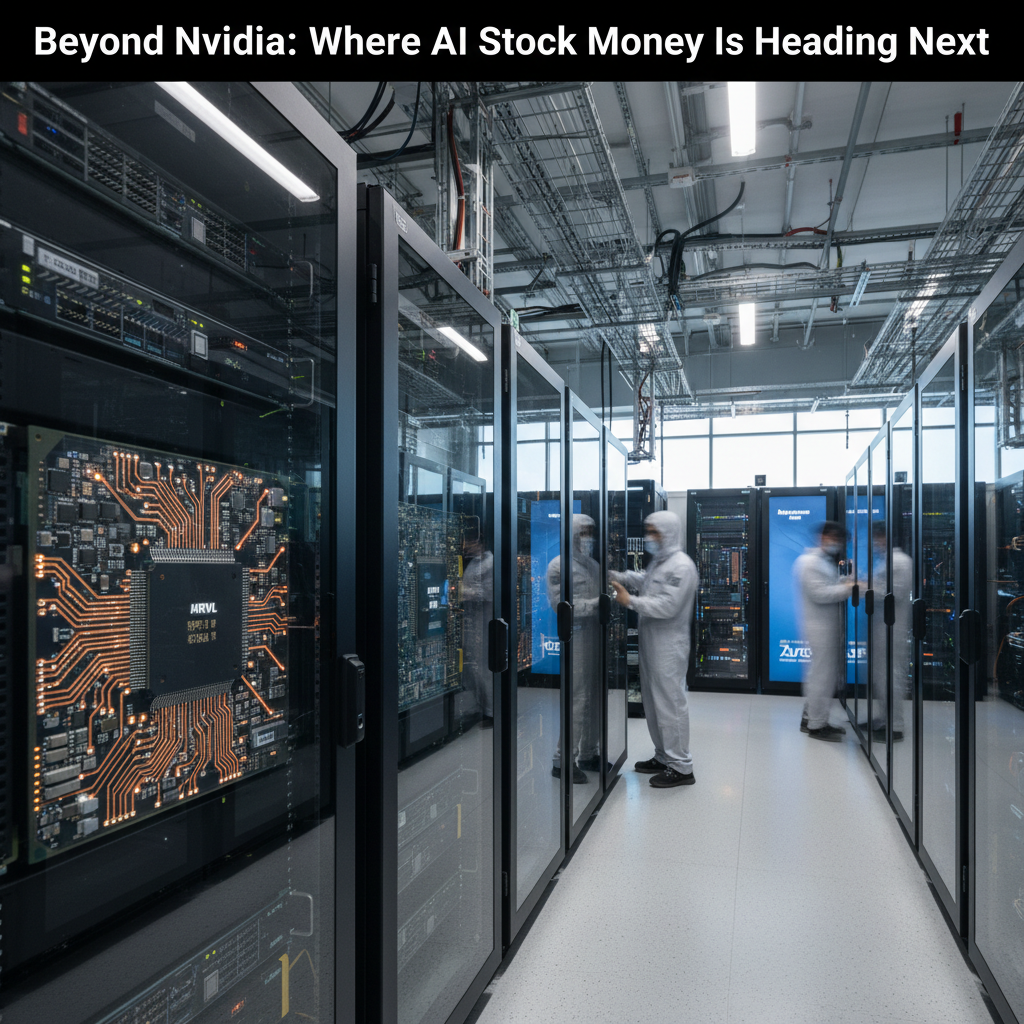
What’s different: money is drifting into the infrastructure that keeps models live and cheap to run. Think inference chips, faster switches, power-delivery gear and the software that actually squeezes costs out of production AI. Institutional flows and active managers are increasingly biased toward those pieces.
Why it matters: training—where high-end GPUs dominated—was the early revenue story. The steady, recurring business is inference: billions of small, latency-sensitive queries that care more about efficient chips, networking and energy than brute training throughput. That reorients who captures value.
A quick tour — not a checklist, more like a map:
- Nvidia (NVDA) — Still the market leader and the firewall in any AI portfolio. Think of Nvidia like the iPhone: indispensable hardware that an ecosystem assembles around.
- AMD (AMD) — Competes on price and power efficiency; stands to gain if hyperscalers diversify away from a single supplier.
- Intel (INTC) — Rough ride lately, but shifting toward XPUs and accelerators. High risk, potentially high reward if execution finally lines up.
- Marvell (MRVL) — The networking play: switches and silicon that move AI traffic are becoming profit centers in their own right.
- Amazon (AMZN) / Microsoft (MSFT) — Cloud providers sell AI compute as a service; sticky, growing AI revenue per user is what compounds over time.
Why investors are rotating now
- Inference scales differently: low latency and energy efficiency matter more than raw training FLOPS.
- Valuation pressure: Nvidia’s premium pushes buyers to hunt for cheaper, durable exposures elsewhere.
- Policy and supply shocks: export rules and fab constraints make diversification and niche innovation more attractive.
Signals to watch (what I look for)
- Capex and forward guidance from hyperscalers — sustained increases usually pick hardware winners.
- Price movements in GPU spot markets — prolonged declines can accelerate moves to alternative accelerators.
- New silicon launches explicitly aimed at inference rather than training.
Risks and caveats
- Concentration risk: if one vendor reasserts dominance, many smaller plays get crowded out.
- Demand volatility: AI spend can be pulled back quickly if macro conditions deteriorate.
- Execution risk: smaller chipmakers must deliver hardware plus a solid software stack to win — not a small ask.
Tactical thoughts
- If you’re cautious: keep NVDA exposure but add selective networking and power-efficiency names.
- If you take more risk: watch small-cap silicon designers and specialized inference ASIC makers — volatile, but asymmetric upside exists.
- If you’re long-term: favor cloud providers that can turn AI features into sticky, recurring revenue over pure-play GPU speculation.
This feels a lot like the old shift from desktop PC parts to a mobile ecosystem: the headline hardware gets attention, but long-lived cash flows settle into platforms and the plumbing that makes the hardware useful. In other words — watch the plumbing.