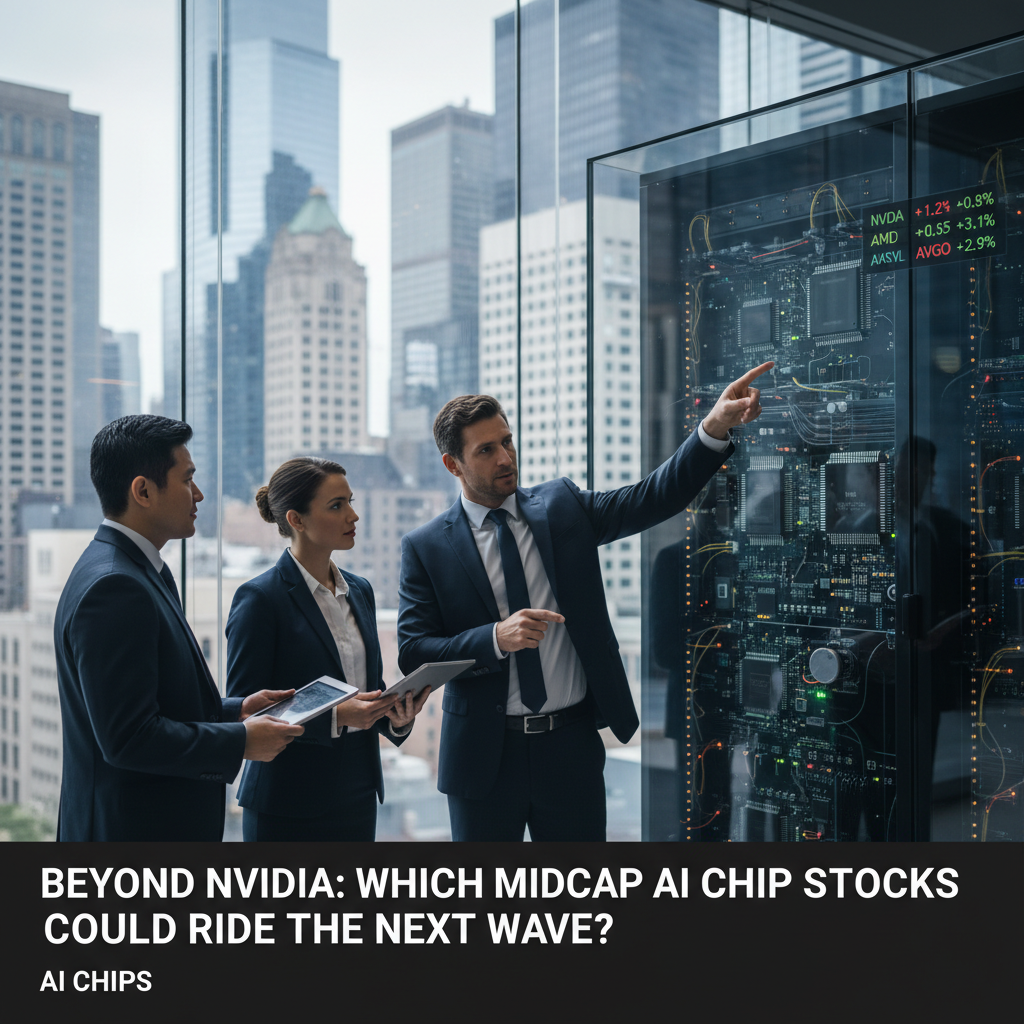
Everyone points to Nvidia as the emblem of the AI hardware boom. Markets have already baked a ton of future profits into that one ticker. That concentration creates both opportunity and risk for active investors.
But the coming decade of compute is unlikely to be a one-company show. Expect a messier stack: GPUs still handle training, but specialized accelerators will pick up inference, networking silicon will become critical to stitch racks together, and edge chips will be tuned for latency and power. Fragmentation. More niches. Which means midcaps can steal share without toppling the leader.
Why midcaps matter now
- Hyperscalers want options. After the initial GPU rush, datacenter architects are testing alternatives to trim cost and shave latency. Not every workload needs a brute-force GPU.
- Data movement is a bottleneck you can't paper over. Chips that move and route data quickly matter as much as chips that compute it.
- Vertical specialization pays. Custom inference ASICs, AI-capable SoCs for embedded devices, and accelerators built around security address narrower but profitable markets.
How to spot survivors
- Design wins with cloud providers and OEMs. Big press releases help, yes, but the quiet, multi-year contracts are often the real proof.
- Margin trajectory and profit per chip. Few companies can command Nvidia-like pricing. Look for rising ASPs, improving gross margins, and a growing share of software or recurring revenue.
- Foundry and OSAT relationships. A close TSMC roadmap can be a moat for some firms. For others, having multiple fab partners is a pragmatic hedge.
A quick history check: GPUs started in gaming, then crypto, then AI. Each wave amassed capital and attention, and each time new use cases pushed value outward into different parts of the stack. Concentration is often followed by specialization — familiar pattern in tech cycles.
Counterpoints to keep in mind
- Scale matters. Nvidia's software, tooling, and ecosystem give it durable advantages that are not easy to clone.
- Market froth exists. Several midcaps have rerated on AI hopes rather than on sustained revenue gains.
- Politics and exports can bite. Chipmakers and advanced-node suppliers are increasingly exposed to policy risk.
Signals that actually move the needle
- Revenue mix by customer. Real growth in sales to cloud providers or OEMs tends to be more reliable than flashy PR.
- Win cadence. Repeated wins across different customers often precede durable margin expansion.
- Insider buying and shifts in institutional ownership. Management alignment and the presence of thoughtful long-only funds are meaningful clues.
Names worth watching (illustrative, not investment advice)
- NVDA — still the primary demand barometer.
- AMD — GPU and custom-accelerator exposure that could take incremental share.
- INTC — lots of IP, some interesting pivots; execution risk remains.
- MRVL — networking and I/O silicon that can quietly unlock datacenter performance.
- AVGO — connectivity and infrastructure chips tied to cloud capex cycles.
Portfolio approach
If you build exposure, mix it. Hold a high-conviction NVDA position and pair it with smaller, thesis-driven stakes in midcaps that show clear product-market fit and visible recurring revenue. Size them to the clarity of the business case, not the size of the headline.
Call it plumbing, not glamour. The next wave of returns may come not from the headline GPUs but from the components that move, secure, and embed intelligence where it actually runs.