The headline is simple: automation is no longer a cottage industry for IT teams.
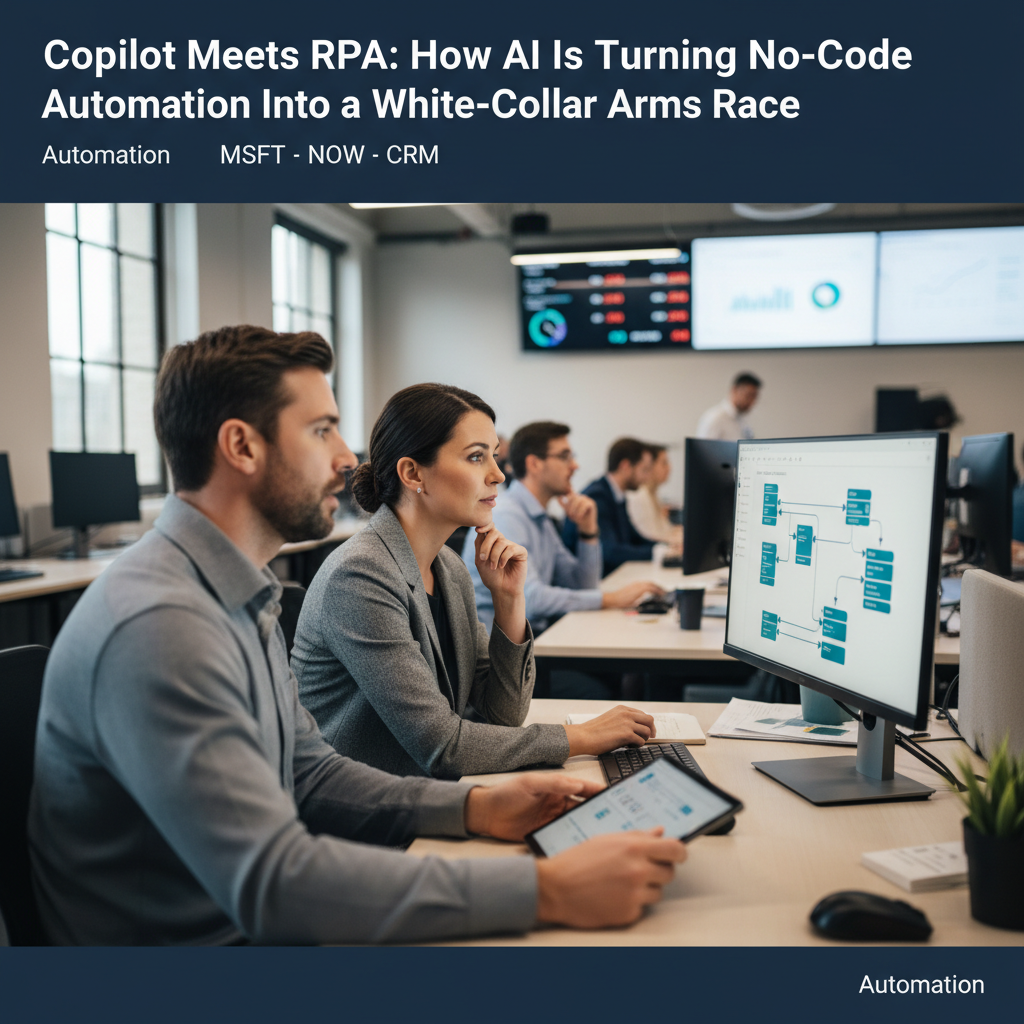
Today’s RPA doesn't feel like the brittle, scripted bots of a decade ago. It behaves more like a coworker who picks things up as it goes — sometimes impressively, sometimes imperfectly. Put large language models next to no-code automation — think Copilot-triggered flows in Power Automate or AI-aware connectors in modern RPA suites — and adoption inside finance, legal, HR, and sales starts to look different.
Why care? Because this changes who builds automations, how fast they spread, and who captures the value.
A short history to orient the change
- Early RPA (2010s): screen-scraping, fragile scripts, tightly centralized control.
- Mid-cycle: APIs, better orchestration, still IT-led but more capable.
- Today: models power natural-language triggers, extraction, decisioning and error handling — putting usable automation into the hands of power users.
It’s a bit like trading a fax machine for an email client that drafts, files, and files again for you. Different class of tool.
Real-world signs — concrete examples
- A mid-size accounting team replaced days of manual reconciliations with an LLM-driven flow that reads statements, maps transactions, and flags exceptions. The automation handles triage; people handle nuance.
- A regional law firm uses AI-assisted RPA to triage NDAs and surface risky clauses, slashing first-pass review time by about 60 percent in pilots.
These are not toy projects. They are repeatable playbooks for cutting cost and increasing capacity — though the human oversight piece usually stays front and center.
Where the money flows (and why investors care)
- Platform owners that bundle model access, connectors, observability, and governance will be able to charge a premium.
- Big clouds and enterprise software players that embed AI into their low-code toolsets — Microsoft, ServiceNow, Salesforce — are becoming default choices for companies standardizing on a stack.
A finer point: pure-play RPA vendors face a choice. Some will pivot to AI-first value and stay relevant; others risk being relegated to a feature in a bigger suite and seeing margins compress. There’s room for both specialization and consolidation.
Risks and counterpoints — don’t buy the hype without a checklist
- Shadow automation: when more people can build flows, more uncontrolled processes pop up. Compliance and auditability suddenly matter.
- Quality drift: models can assert falsehoods with confidence. For critical tasks you need human-in-the-loop patterns and ongoing validation.
- Vendor lock and data risk: shipping sensitive documents through model endpoints requires tight contracts, encryption, and operational discipline.
Governance will be where battles are won or lost. Teams that pair citizen development with central guardrails tend to capture benefits while avoiding the worst mistakes.
What CIOs, workers, and investors should do now
- CIOs: pick an automation platform that includes observability, model lifecycle controls, and identity management. Treat automations like apps in a portfolio — version, monitor, retire.
- Workers: learn prompt craft and how to compose flows. The baseline skill is designing reliable automations, not rote clerical work.
- Investors: hunt for platform economics, high retention, and real integration into enterprise processes — not just impressive pilot metrics.
A human-centered reality check
The next wave of automation is less about mass layoffs and more about shifting the division of labor. Repetitive cognitive work gets cheaper; judgment, context and cross-domain synthesis grow scarce and valuable. That favors flexible teams, regulated industries that need traceability, and people who can combine domain expertise with product judgment. It also squeezes roles built on routine information wrangling.
So the real question for organizations is not whether AI takes tasks, but whether they will build the governance, skills and product strategy needed to capture the upside while limiting the downside.