The shift
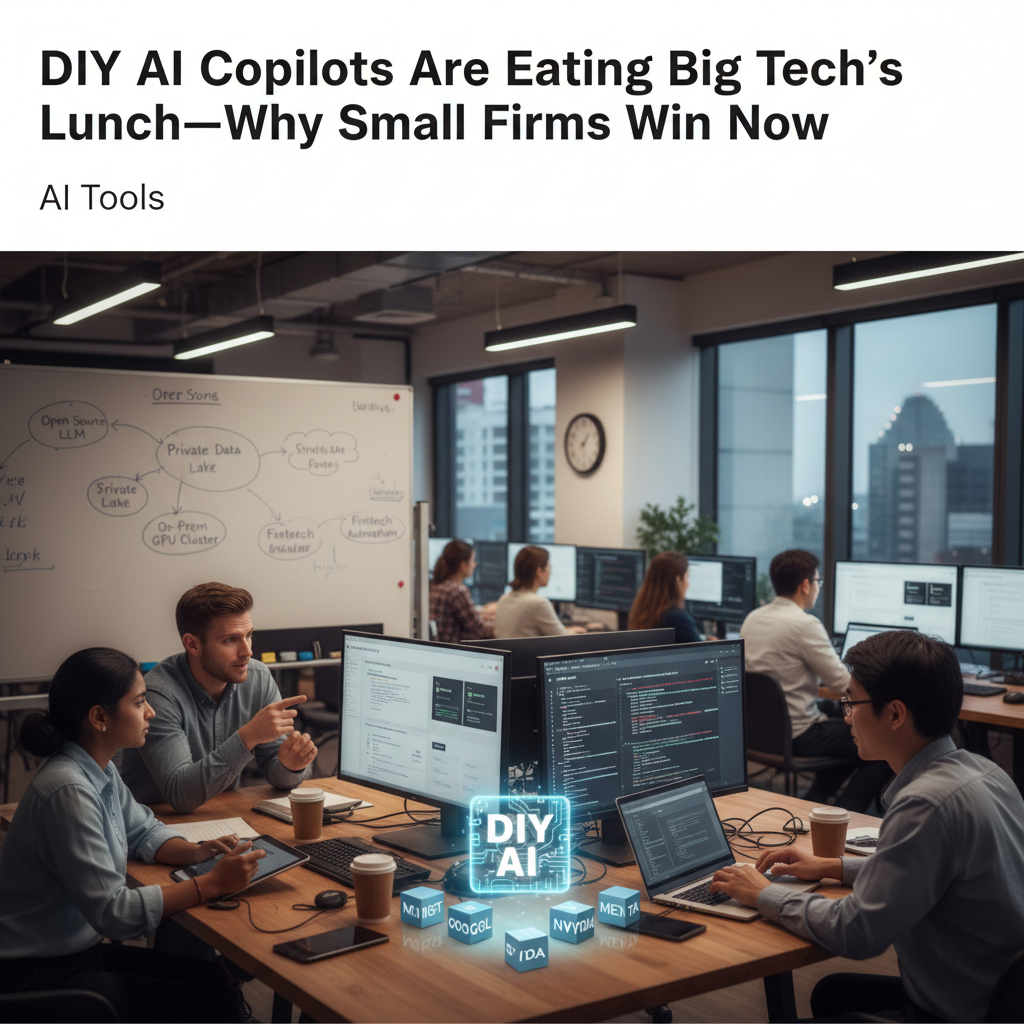
A year ago, copilot usually meant a subscription to a Big Tech offering. Now dozens of startups—and a surprising number of internal engineering teams—have stitched together bespoke copilots using open models, efficient on‑device inference, and cheap vector stores. The competition today is less about feature checklists and more about trust, latency, and cost.
Why this matters now
- Cost: Renting models from cloud providers at scale adds up fast. Running a slim foundation model on CPU or in private inference clusters can cut recurring costs by a wide margin.
- Data control: Sectors like finance and healthcare simply cannot funnel sensitive documents through third‑party APIs. On‑prem or VPC deployments give legal and compliance teams something they can actually sign off on.
- Latency and UX: Real‑time workflows—trading, frontline support, live demos—need near‑instant responses. Local or edge inference gets you there.
What's interesting here is how these drivers stack: savings matter, but only when privacy and speed are also addressed.
Where this is hitting first
- Retail brokers building trade‑idea copilots that compress filings, earnings call notes, and models into a one‑page action plan.
- Support teams using multimodal copilots to triage tickets with screenshots and short videos, cutting SLA breaches.
- Product teams automating competitive intelligence by streaming press releases and analyst notes into a searchable knowledge graph.
These aren't experiments anymore; for some teams they're the workflow.
How we got here
Open models and faster inference libraries didn't appear overnight. Over the last five years three trends converged: much larger public models, easier methods to specialize them, and hardware plus algorithm wins that let inference move off the hyperscaler. It feels like a reversal of the cloud story—value migrating closer to users and data rather than outward into centralized hosts.
Winners and losers
Winners are the nimble vendors, consultancies that package vertical datasets, and enterprises that treat models as products rather than proofs of concept. They get to own workflows and margins.
The losers? Vendors peddling generic API calls with no clear privacy path, or those that bolt on integrations without tackling latency and cost. They’ll struggle to stay relevant.
Headwinds and caveats
- Building a bespoke copilot is not free. Talent, data ops, ongoing monitoring—those are real line items. For many teams, managed cloud copilots still deliver faster value.
- Regulation will bite. Expect financial regulators to insist on logging, explainability, and audit trails. That pushes people away from black‑box deployments.
Both points matter in practice; they change timelines and risk profiles.
How investors should read this
This is not a binary threat to hyperscalers. It’s a reallocation of where margins sit. The big cloud providers still sell the infrastructure that enables bespoke copilots and will monetize higher‑value services. But money at the application layer—profits captured inside vertical workflows—is shifting toward companies that actually own domain data and UX.
In short: hyperscalers remain powerful, but software and data owners are carving out new, valuable territory.
A short checklist for execs exploring a copilot
- Start with one concrete, high‑value workflow. Don’t try to automate every knowledge worker at once.
- Sort out data contracts early: where documents live, who can access them, retention policies.
- Measure latency and cost per query before you scale. Small gains compound across thousands of interactions.
- Plan for model drift: guardrails, a retraining cadence tied to business outcomes, and monitoring that focuses on real errors—not just loss curves.
The practical tradeoffs are often operational, not algorithmic.
The upshot
For many organizations the smart move is a tailored copilot that lives near their data and users. That doesn't mean Microsoft, Google, or AWS are finished—far from it—but the ecosystem will fragment and niche players will get chances to win.
Expect consolidation around companies that solve governance and deliver measurable ROI; they’ll trade at premiums. The rest will face commoditization and churn.
If you run finance or operations, the next strategic question may not be which copilot to buy, but whether to build one your competitors can't reverse‑engineer.