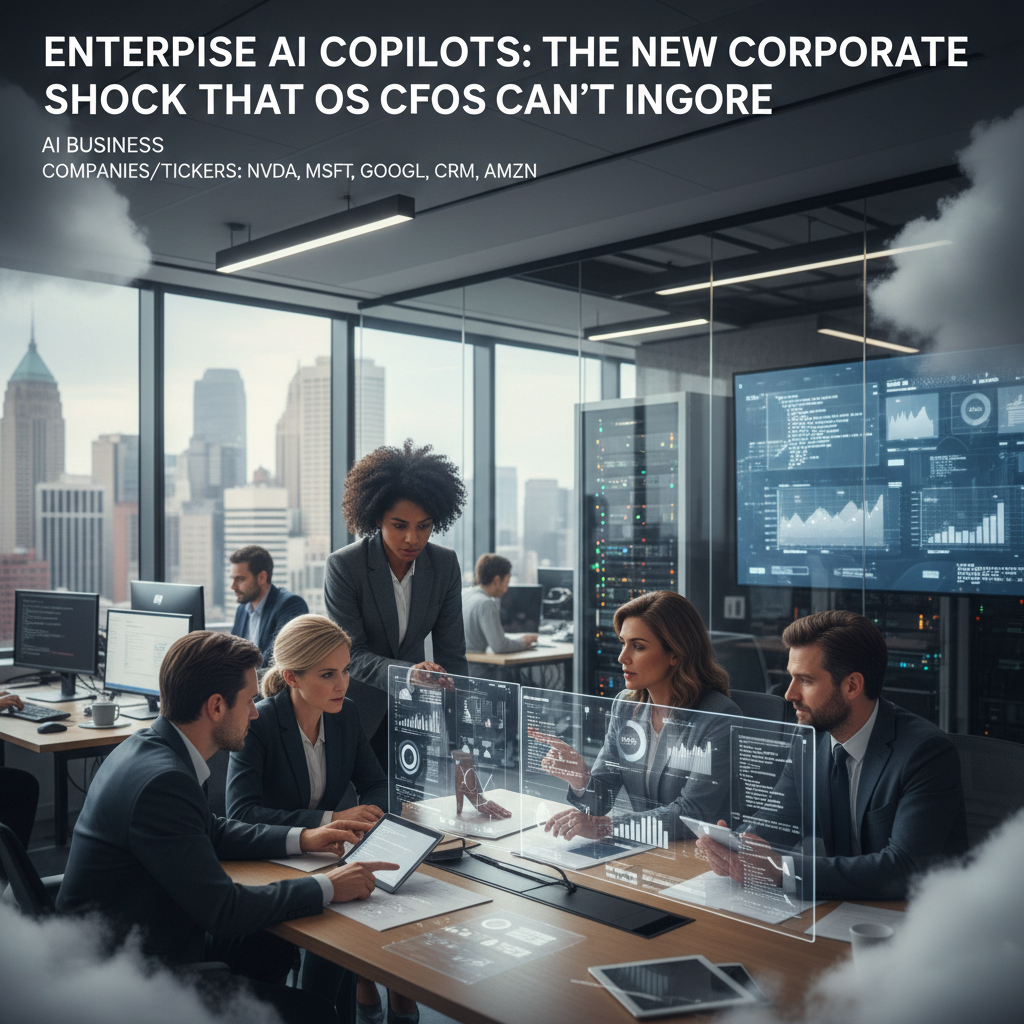
The next corporate inflection point isn’t another SaaS suite. It’s a layer of AI copilots embedded in the apps people already use — drafting reports, flagging deal opportunities, triaging inboxes. This stopped being a research exercise months ago. Now it’s a procurement and governance headache headed straight for every CFO’s desk.
Why this matters now
Enterprise vendors moved from promises to product in the last 18 months. Microsoft folded Copilot into 365, Salesforce threaded generative features through CRM, and Google pushed Gemini into Workspace. The effect feels familiar if you watched the cloud shift in the 2010s: small, day-to-day changes that accumulate into large productivity swings — and a fresh set of vendor lock-in concerns.
Concrete deployments, concrete consequences
- Finance teams are using copilots to speed up FP&A models and generate first-pass variance notes. Faster cycles, yes. But also new audit and control questions.
- Sales reps lean on AI for pitch drafts and call summaries. Activity goes up; attribution and compliance trails get fuzzier.
- Customer support routes routine queries to copilots, which drops average handle times and pushes agents toward exception handling.
Those wins are real and measurable, but messy in practice. I’ve talked to CFOs seeing 20–30 percent reductions in time spent on repetitive tasks in pilots, and to legal leaders who now spend as much vetting prompts and outputs as they did negotiating contracts the previous year. That tells you something about where the friction moves.
Winners and the hidden costs
Public companies that provide the underlying infrastructure and tooling are clear beneficiaries. Demand for GPU-backed inference and training is a tailwind for chip makers and cloud vendors. Enterprise software vendors are also buying time by stitching AI into sticky workflows.
But the cost picture is more nuanced:
- Vendor lock-in intensifies as copilots absorb internal docs and tune to company context.
- Compute and inference bills can balloon faster than feature adoption justifies.
- Compliance, data lineage and model performance monitoring create new staffing and tooling needs.
Historical parallel, with a twist
Think ERP: a brutal integration sprint, then years of lift. Copilots flip that pattern. Integration can be lighter, adoption faster, but governance is heavier and continuous. Instead of a single implementation project you get ongoing model maintenance, prompt engineering and cost management that never quite goes away.
Risk checklist for executives
- Treat copilots as business systems: set SLAs, require audit trails and assign clear ownership for outputs.
- Measure accuracy on the metrics that matter — financial forecasts, contract clause extraction, or call-summary fidelity — not on vanity prompts.
- Budget for GPU and cloud spend variability. Plan for peaks, not just average use.
- Invest in upskilling. Prompt literacy and model oversight belong in finance and legal as much as in IT.
A note on jobs and middle management
Headlines will scream about job loss. Reality is more subtle. Copilots will displace tasks, not always whole roles. Expect fewer hours on rote work and more emphasis on judgment, exceptions and stakeholder management. That transition needs deliberate workforce planning, not a wait-and-see shrug.
What to watch next
- Pricing models: vendors are testing per-seat, per-query and value-based approaches. The one that ties cost to measurable business outcomes will win.
- Vertical copilots: industry-specific models trained on proprietary datasets will challenge general-purpose players.
- Regulation: sector-specific guidance on AI use in finance, healthcare and public services is likely within 12–24 months.
For finance and tech leaders the immediate imperative is practical: run targeted pilots that track real KPIs, embed governance from day one, and assume recurring costs for compute and compliance. Treat copilots as strategic platforms, not novelty features. Do that and you’ll capture the upside; treat them as marketing and you’ll discover surprise line items on next quarter’s cloud bill and a governance problem at the next audit.
This isn’t a moment for blind optimism or denial. It’s an operational inflection that rewards discipline, attention and some ugly, persistent work.