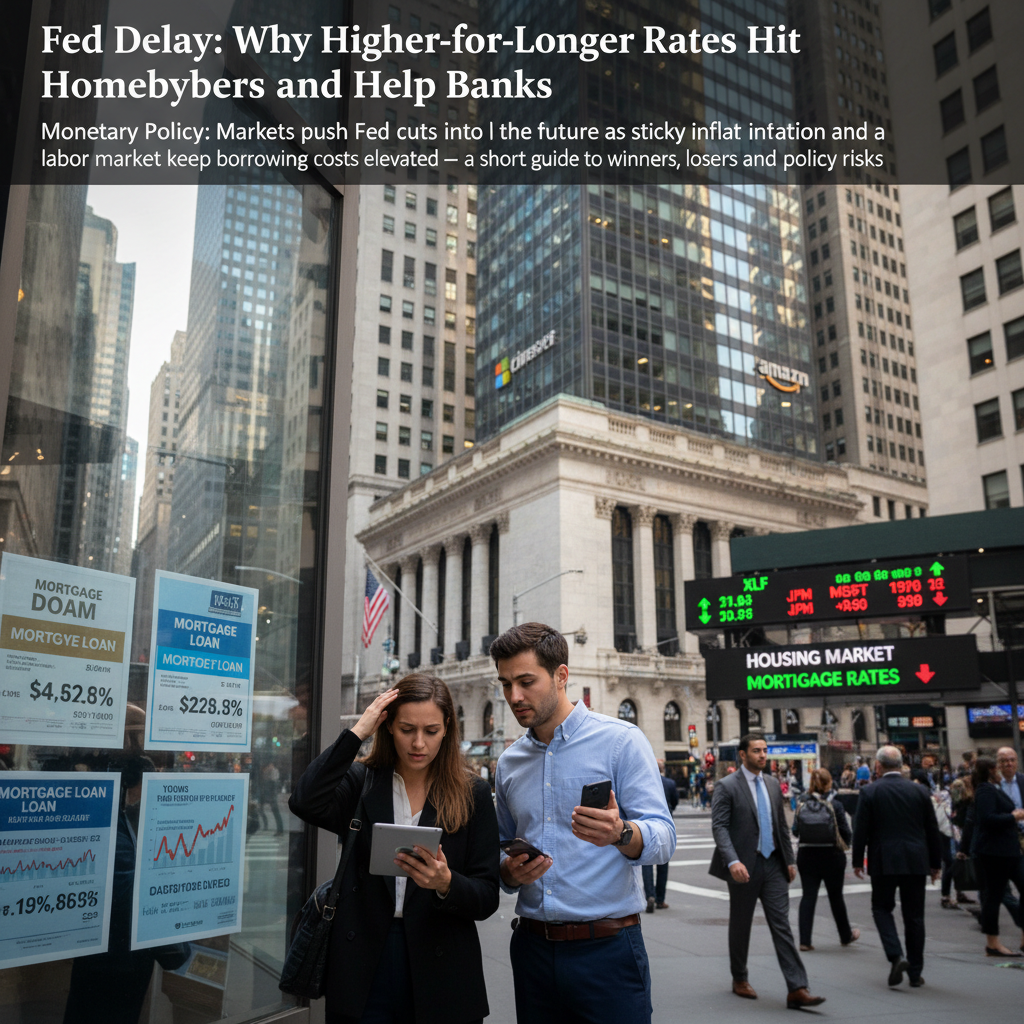
Short version: The Fed looks to be pushing rate cuts further into the future. That matters more than many expect — it reshuffles winners and losers across housing, banks, tech and consumer credit.
Why this matters now
The debate has shifted from whether cuts will happen to when. Bond markets are pricing in fewer and later cuts as services-sector inflation and wage gains keep proving stubborn. Translation: the easy-refinancing, cheap-capital era is on hold. That ripples through mortgage desks, corporate treasuries and household balance sheets.
Why cuts are being delayed
- Sticky services inflation: Price pressure in non-tradable sectors — rents, medical care, personal services — is proving tougher to unwind than the goods-price shock.
- A resilient labor market: Low unemployment and steady wage gains make it harder for the Fed to justify easing.
- Financial-stability trade-offs: The Fed is balancing the cost of cutting too soon — reigniting inflation or fanning asset froth — against the benefits of looser policy.
Immediate market implications
- Housing and mortgages: Expect fewer refinances and slower transaction volume. Higher-for-longer rates lift monthly payments, which sidelines marginal buyers and tempers house-price growth.
- Banks and net interest margins: Many banks benefit when the short end stays elevated and prepayment risk is low. That can support net interest margins and near-term earnings.
- Tech and growth stocks: Long-duration growth names are pressured as discount rates stay up. Some rotation into value and financials is already underway.
- Consumer credit costs: Credit-card and auto-loan rates track the Fed more directly than mortgages do. That raises the cost of discretionary spending.
Winners and losers — a quick snapshot
- Winners: banks with sticky deposits and room to grow loans, money-market and short-duration bond funds, and selective dividend payers and value names.
- Losers: mortgage REITs, highly leveraged homebuilders, and long-duration tech names priced for distant, optimistic growth.
Historic echoes and a caution
It feels a bit like the mid-1990s and the late-2010s episodes where the Fed nudged financial conditions without allowing market blow-ups. But the economy now is more services-heavy and consumers carry more revolving debt. That combination tightens the policy trade-offs — and makes mistakes costlier.
A few plausible counter-moves
- A sharp disinflation shock — say, a collapse in commodity prices or a big, sudden drop in rents — could bring cuts forward.
- Significant financial stress or a deep growth slowdown could force the Fed to pivot sooner than markets expect.
What investors and consumers can do now
- Revisit duration: favor short-to-intermediate duration in fixed income.
- Rotate carefully into financials and dividend payers, but avoid concentrated bets.
- Homebuyers: run affordability scenarios assuming higher rates and plan to hold longer before hoping to refinance.
- Keep emergency savings accessible; money-market yields are finally useful again.
Net effect
Higher-for-longer is not an emergency. It is a regime shift. The ones who adjust risk and income expectations quickly will fare better; those banking on a rapid refinance lifeline may be surprised. Policymakers are playing a long game — markets and households will have to adjust while that plays out.