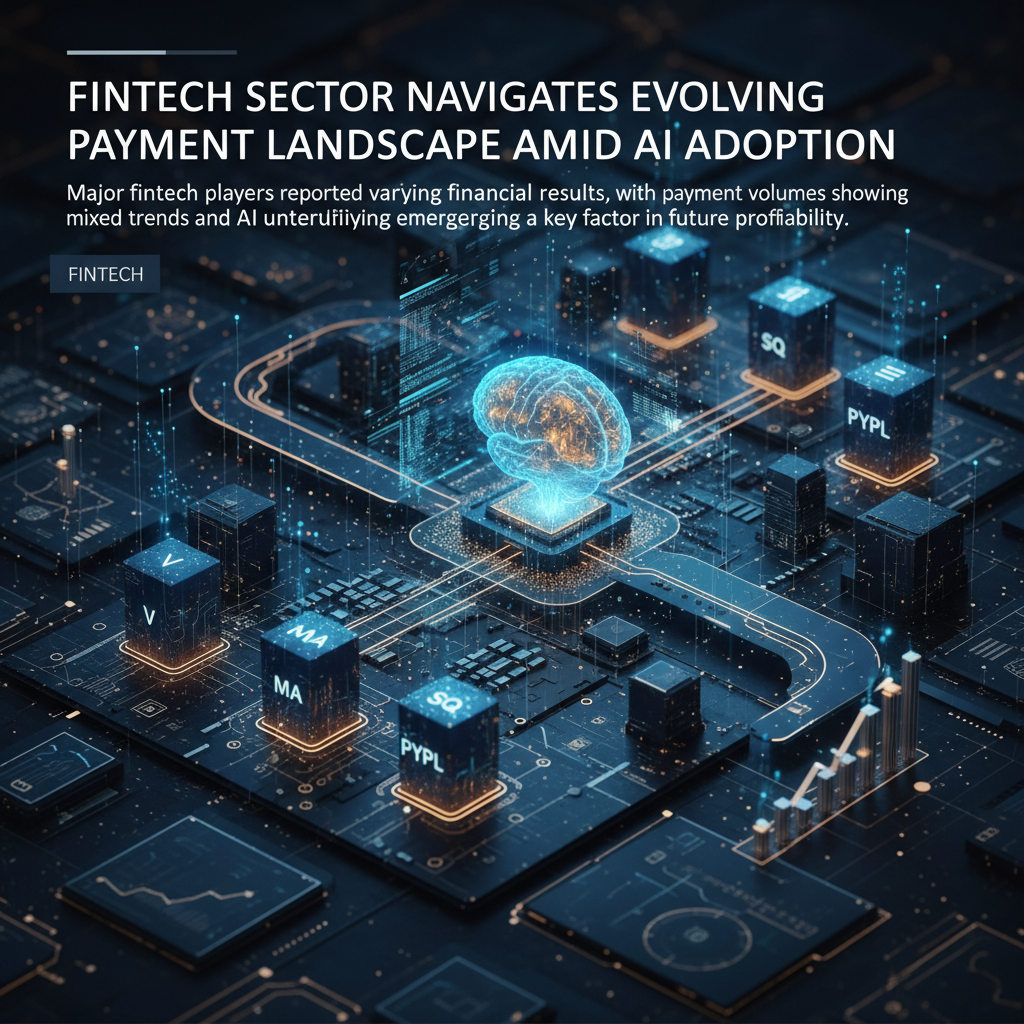
The fintech sector, represented by giants such as Visa (V), Mastercard (MA), PayPal (PYPL), and Block (SQ), continues to adapt to shifts in consumer spending and technological advancements, particularly in artificial intelligence (AI).
Visa and Mastercard, dominant in global payment processing, demonstrated robust, albeit moderating, growth in their latest earnings. Visa reported a 9% increase in processed transactions year-over-year, reaching 60 billion, with cross-border volumes up 16%. Mastercard similarly saw an 11% rise in switched transactions and cross-border volumes growing by 18%. Both companies highlighted stable consumer spending within their networks, although macroeconomic uncertainties were noted as potential headwinds.
PayPal's performance reflected a more challenging environment. The company reported a 7% increase in total payment volume (TPV), reaching $404 billion. However, active accounts remained relatively flat at 400 million, and average revenue per user (ARPU) saw a modest 3% increase. PayPal's focus on profitability initiatives and cost controls has been evident amidst increased competition in the digital payments space.
Block, parent company of Square and Cash App, presented a mixed picture. Gross Profit for the quarter increased by 22% year-over-year to $2.03 billion, driven by strong performance in Cash App, which saw a 26% increase in gross profit to $1.15 billion. However, Square's gross profit growth was slower at 13%, indicating saturation in some small business segments. Transaction-based revenue for Block rose 8% to $1.64 billion.
Artificial intelligence is increasingly integrated into these companies' operations. Visa and Mastercard leverage AI for fraud detection and risk management, processing billions of transactions daily with high accuracy rates. These systems have reportedly reduced fraud rates by over 70% in certain segments over the past five years. PayPal utilizes AI for personalizing user experiences and optimizing payment routing, aiming to enhance conversion rates. Block is exploring AI for improved credit underwriting within its lending products and for enhancing merchant services on the Square platform. Early indications suggest AI-driven underwriting models are leading to lower default rates compared to traditional methods by an average of 15% in pilot programs.
The adoption of AI is not without its challenges, including the significant investment required in data infrastructure and talent. Nevertheless, the strategic integration of AI across payment processing, fraud prevention, and credit assessment remains a critical differentiator and growth driver for the fintech industry moving forward.