The headline nobody shouted: RPA is getting smart.
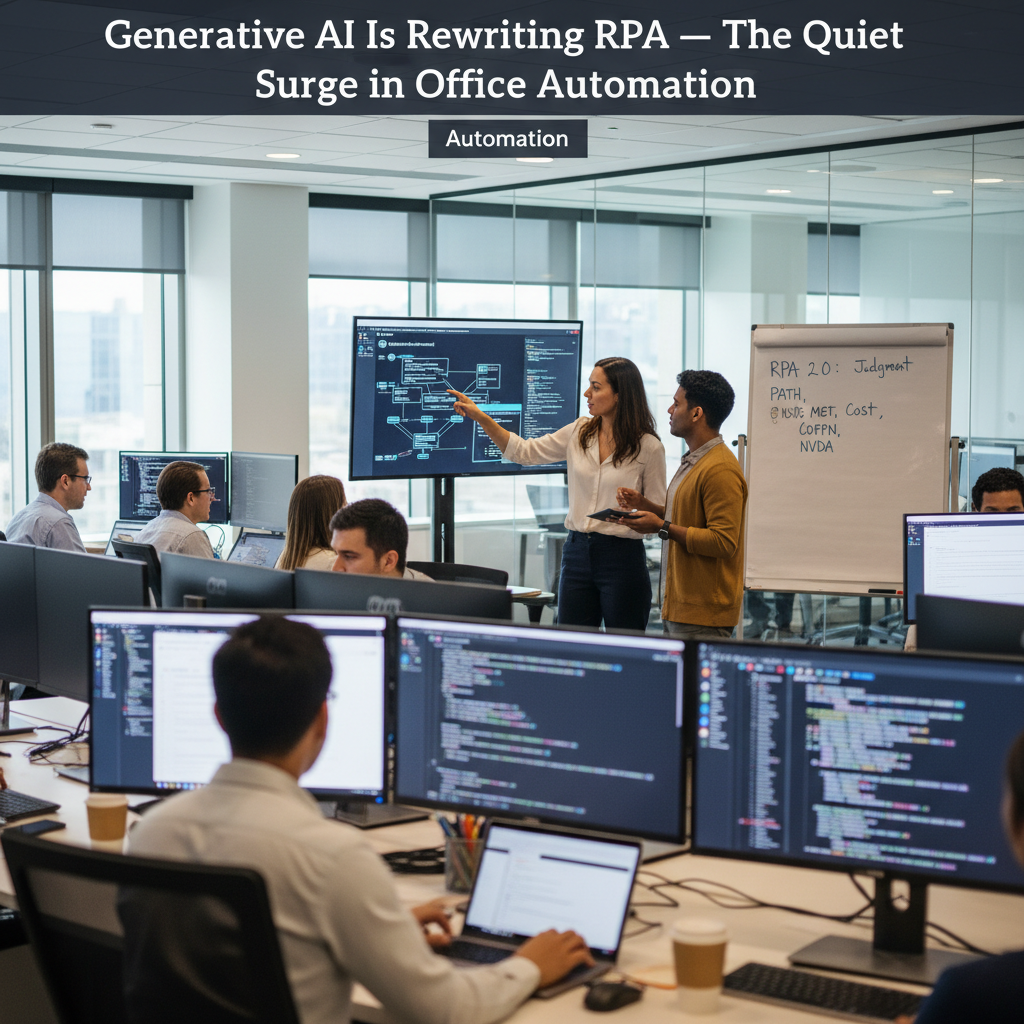
For years RPA was basically glorified macros — bots that copied and pasted between screens. Now generative models are giving those scripts something like judgment. Not Hollywood robots; the change is quieter and systemic, pushing into knowledge work: expense processing, contract review, customer triage, sales ops. What’s interesting is how ordinary and consequential the shift feels.
What’s different: models, not just macros
- Models let automation infer intent, pull nuance out of messy documents, and draft replies that once needed human clean-up. Not always perfect, but often good enough to reroute work.
- Low-code platforms are embedding pretrained language models, so citizen developers suddenly act as de facto AI integrators. Liberating — and a little risky.
- Cloud providers are selling these capabilities as workflow primitives instead of one-off point tools. That’s important because it changes procurement, budgets and who ends up owning automation.
Why this matters now
Companies are under three real pressures: rising labor expense, demands for speed, and tighter compliance. Stitching RPA to generative AI eases headcount strain for repetitive white-collar tasks and boosts throughput. It also creates fresh headaches: hallucinations that look fine on the surface, longer audit trails to maintain, and tighter vendor lock-in.
Three concrete trade-offs make the point.
- A midmarket insurer condensed a six-step claims flow into one AI-augmented pipeline that flags exceptions for humans. Throughput jumped. So did work for auditors — the firm had to log prompts, model versions and decisions to satisfy regulators.
- A bank that used AI to extract underwriting text halved onboarding time, then found subtle bias baked into decision prompts. Fixing it meant retraining models and rewriting policy, not just flipping a switch.
- An enterprise software vendor added a semantic layer to its RPA studio and citizen projects took off. The downside: rapid adoption concentrated control in a smaller set of IT teams.
Where to watch
Keep an eye on three buckets.
- RPA vendors that partner with major model providers to add cognition to orchestration — those upgrades can materially lift retention.
- Cloud platforms folding workflow AI into their services — this makes life easier for big customers and squeezes margins for niche vendors.
- AI infrastructure and chipmakers that drive low-latency inference at scale — if run costs fall, they benefit behind the scenes.
Stocks mentioned as proxies: PATH (UiPath), MSFT (Power Automate), IBM (enterprise AI), APPN (low-code automation), NVDA (inference hardware). Not investment advice — just indicators of where enterprise budgets are flowing.
Risks and governance
When automation gains judgment, risk gets amplified. Compliance and risk teams should insist on:
- Explainability logs tying outputs back to data, prompts and model versions.
- Human-in-the-loop thresholds for high-stakes decisions.
- Continuous monitoring for drift and emergent bias.
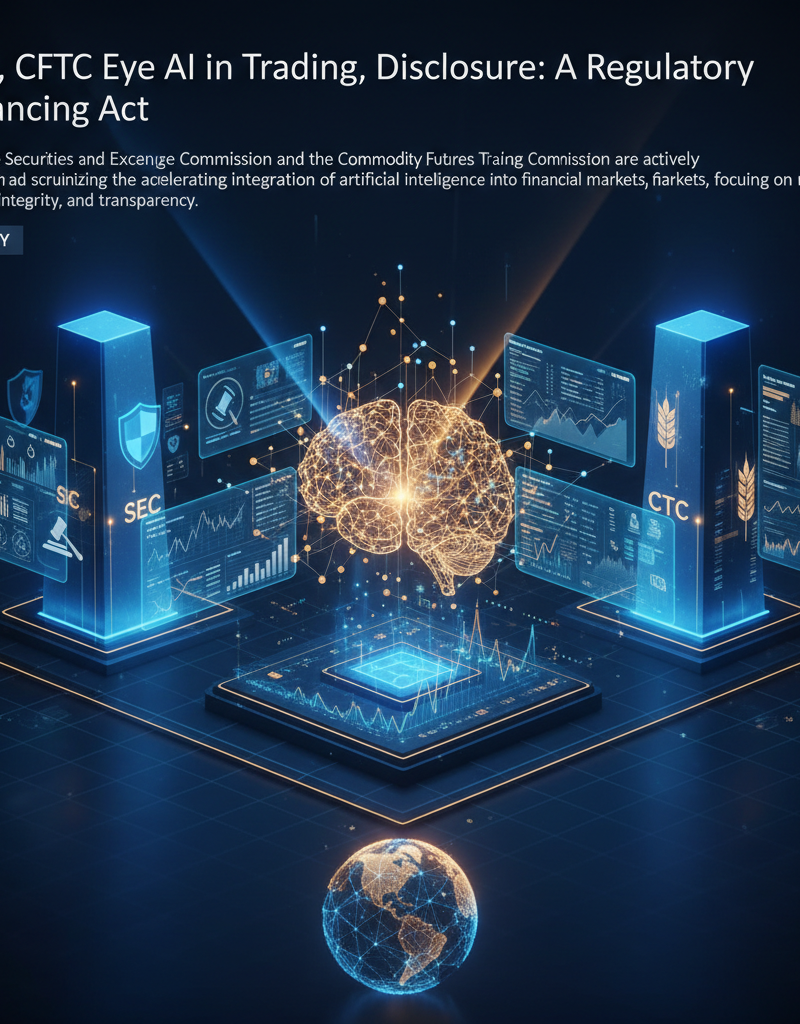
Regulators are starting to look more closely. Procurement will increasingly treat AI-enabled automation as a controlled product category rather than a quick pilot.
How to think about it
This isn’t a simple bots-versus-people story. Think reallocation: routine cognitive work drifts into AI-augmented flows, while humans focus on exceptions, relationships and strategy. The pressing question for leaders and investors isn’t whether to adopt, but how to deploy with governance so automation scales without creating opaque decision-making.
If you run operations or pick enterprise tech, start small. Pilot targeted AI-augmented automations with concrete KPIs. Invest in traceability. Treat models as mutable infrastructure you will update and replace, not as finished features you can forget about.