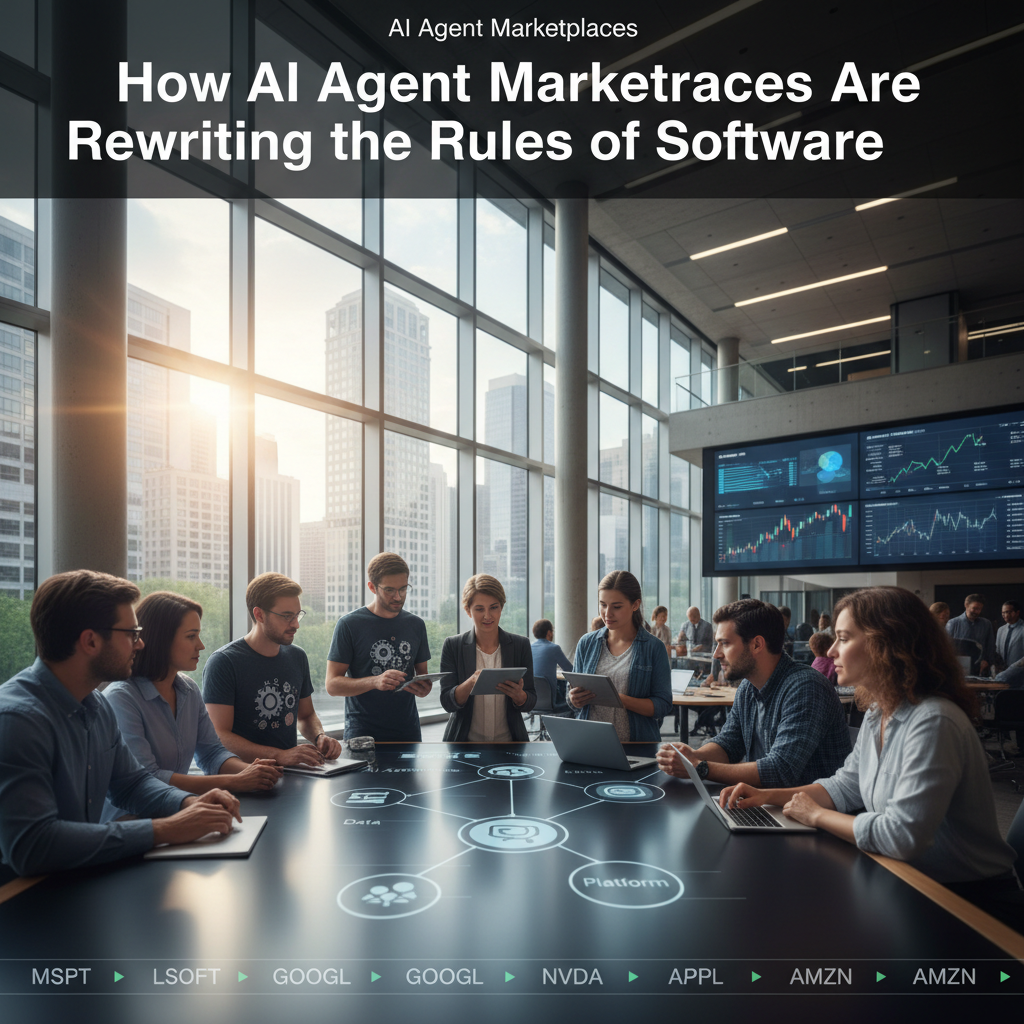
My take — the next big platform fight in software probably won't be about operating systems or clouds. It will be about who controls agent marketplaces.
Autonomous AI agents — apps that act on behalf of users, chaining APIs and driving models without constant human babysitting — aren't just lab toys anymore. They feel like the logical follow-up to APIs and copilots: programmable assistants sold as products. Imagine apps that write other small apps to complete a task and then deliver outcomes, not merely suggestions.
Why this matters now
- Monetization changes. Instead of selling seats or one-off apps, developers can charge per agent, per task, or split revenue with a marketplace. That shifts unit economics and how startups get valued.
- Platform power tilts. Whoever owns the marketplace controls discovery, billing, identity and the trust layer — and those four things together can produce winner-take-most dynamics, reminiscent of the early App Store and AWS marketplace moments.
- New stack layers emerge. Agents glue together models, data connectors, backend automation and on-device logic. That opens space for specialized middleware — think connectors, orchestration, and certification services.
What's interesting is how these pieces combine: distribution plus composability plus autonomy. If the App Store was about buying a tool, agent marketplaces are closer to hiring someone to get a job done — you pay for the result, not the screwdriver.
Concrete examples you will actually see
- A virtual CFO agent that reconciles bank feeds, prepares tax-ready reports and even tries to renegotiate vendor terms.
- A travel agent that scans calendars, rebooks missed connections and presses carriers for refunds.
- A developer agent that triages bugs, writes tests and files pull requests for human review.
Those shift buyer behavior from acquiring tools to procuring outcomes. It sounds small, but that shift matters for procurement, SLAs and pricing.
Risks and frictions
- Quality and hallucinations. Autonomous agents amplify model errors. Bad outputs at scale are not merely annoying — they're reputational and legal hazards for marketplaces.
- Security and data plumbing. Agents require deep access to accounts and documents, which increases attack surface and pushes up the cost of secure design and certification.
- Regulation and liability. Who pays when an agent causes harm — the developer, the marketplace or the model provider? Expect regulators to force clarity here, and fast.
In practice, though, the story will be messier: some agents will work brilliantly in narrow domains and fail spectacularly elsewhere.
Where investors and product leaders should look
- Back platform primitives: billing, identity, connectors and certification. Companies that own those pieces will extract disproportionate value. Big cloud providers already have parts of this advantage.
- Watch inference and hardware. Low-latency, high-throughput inference is still a bottleneck. Chipmakers and inference specialists could be genuine moats for real-time agents.
- Security and audit trails. Middleware that provides verifiable logs, provenance and insurance-friendly certification will be a hot subsector for acquisitions.
Don't ignore smaller plays either: niche agent stores, vertical connectors and tooling for human-in-the-loop governance will matter.
Signals to watch in the next 12 months
- Dedicated agent storefronts and emerging revenue-share terms.
- Certification programs for trusted agents, and insurance products that underwrite agent risk.
- Enterprise pilots where procurement buys outcomes rather than licenses.
This looks like a tectonic shift wearing the clothes of a feature update. For founders, the practical question is how to own a slice of the new stack without being hostage to a single marketplace. For investors, it's about separating infrastructure winners from boutique agent shops. For regulators, expect a scramble to adapt liability rules for software that behaves like a person but legally is not one.