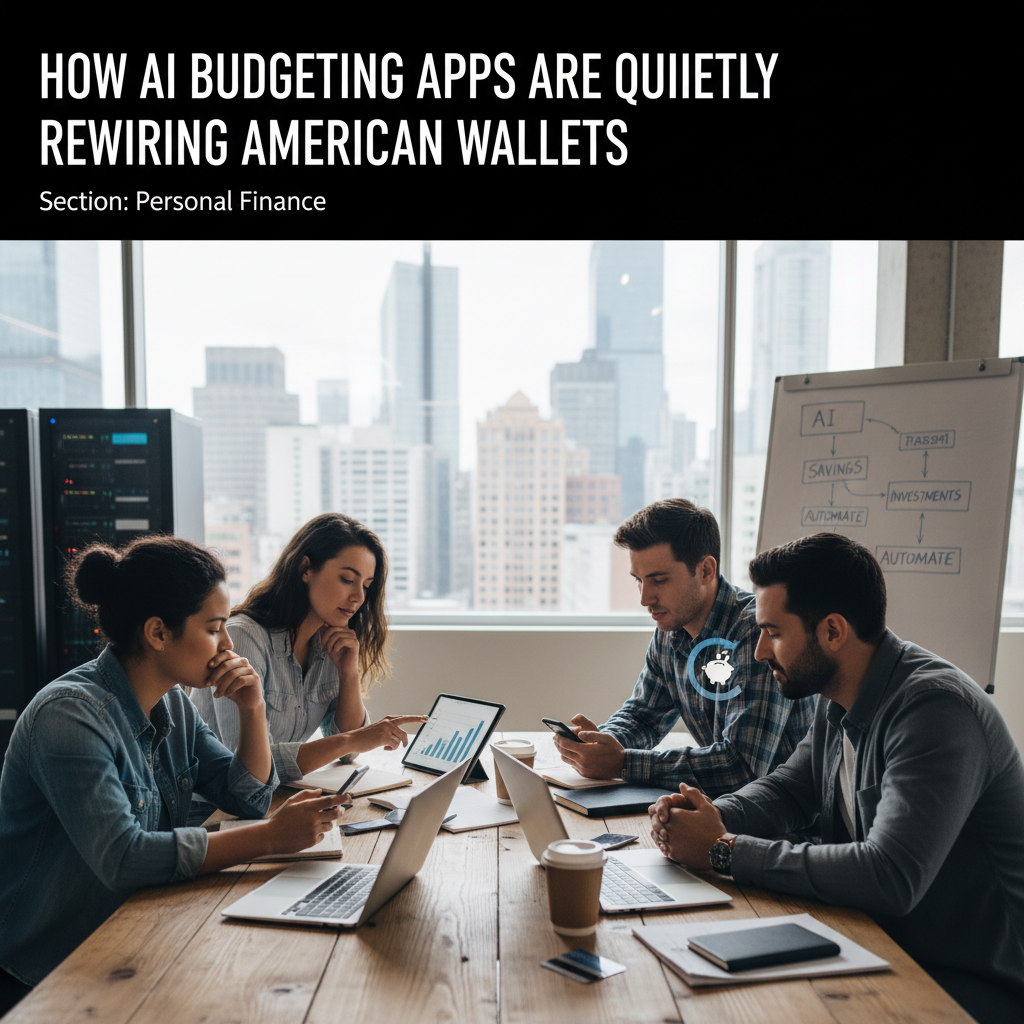
The next wave of personal finance tools is less about neat charts and more about doing money for you.
Budgeting apps promised simplicity for years. The newest ones add two loaded words: autopilot and permission. Hand an app the keys to your accounts and things get efficient fast — and your everyday financial choices quietly move out of your control.
Some context. Personal finance software started as desktop spreadsheets and Quicken-style ledgers, migrated to Mint-style aggregators, then to apps that cancel subscriptions or haggle bills on your behalf. The recent twist is models that not only analyze but also act: they’ll negotiate your cable bill, sweep spare change into savings, or nudge a credit move in real time. What’s interesting is how that shift changes the balance between human judgment and automated convenience.
Why this matters now
- Open-banking APIs (Plaid and friends) plus cheaper AI compute let companies push recommendations and actions in real time.
- Big incumbents and hungry challengers both want in. Intuit sits on decades of consumer signals; startups such as Rocket Money have already scaled aggressive bill negotiation. Banks and fintechs are quietly embedding models to cut churn and lift apparent savings.
What you get — and what you give up
- Automated negotiation and refund tracking can save you hundreds a year, sometimes more if you’re deep in subscription clutter.
- Auto-savings rules and sweep features remove friction — you save without thinking about it.
- Tax and retirement nudges can feel personalized, but they depend on the app’s assumptions and the data it can see. In practice, the advice is only as good as those limits.
Costs and risks to keep in mind
- More account access means more exposure. If the provider is breached or sold, your data footprint grows.
- Autopilot breeds complacency. An app that shuttles cash into a low-interest account could cause you to miss an employer 401(k) match or a higher-yield opportunity you would have chosen intentionally.
- Model mistakes and misaligned incentives matter. A recommendation that boosts short-term deposits might worsen long-term tax outcomes — small gains today, bigger costs later.
How to evaluate these tools, quickly
- Permission hygiene: use read-only access for tracking. Give transfer powers only to features you’ve tested and trust.
- Fee math: negotiation services often take a cut of savings or charge subscriptions. Compare that to a one-time manual renegotiation.
- Data lifecycle: ask whether bank tokens, transaction logs, and identifiers are retained, anonymized, or sold.
- Behavioral audit: does the app favor headline wins or help you reach long-term goals like retirement and debt payoff? Sometimes the incentives don’t align with your priorities.
Real-world patterns worth watching
- Consolidation. Expect bundling — tax prep, credit monitoring, and AI advice under a single roof. It’s convenient, and it can also make exit expensive.
- Advisor reaction. Human advisors are reframing these tools as assistants rather than replacements. For complex trade-offs — estate planning, tax optimization, business decisions — the autopilot version is often too blunt.
- Regulatory attention. As apps move from insight to transaction, regulators will press on disclosure, custody, and fiduciary obligations. That’s coming sooner than many startups assume.
Practical steps if you want to try one
- Start small. Limited permissions and a short trial let you see behavior without handing over control.
- Keep strategic decisions manual. Treat retirement contributions and employer-match choices as a checklist you review, not a fully automated flow.
- Reconcile automatic moves monthly. Tiny errors compound if left unchecked.
- If convenience matters more than marginal risk, these apps can meaningfully smooth cashflow. If you prize control over retirement assets, use a hybrid approach: let AI handle low-stakes chores, but keep the big levers.
This isn’t a prophecy of doom or a cheer for glory. It’s an invitation to be deliberate. The thermostat learned to heat our houses for us — and it also taught us to double-check the schedule now and then. Your wallet deserves the same occasional inspection.