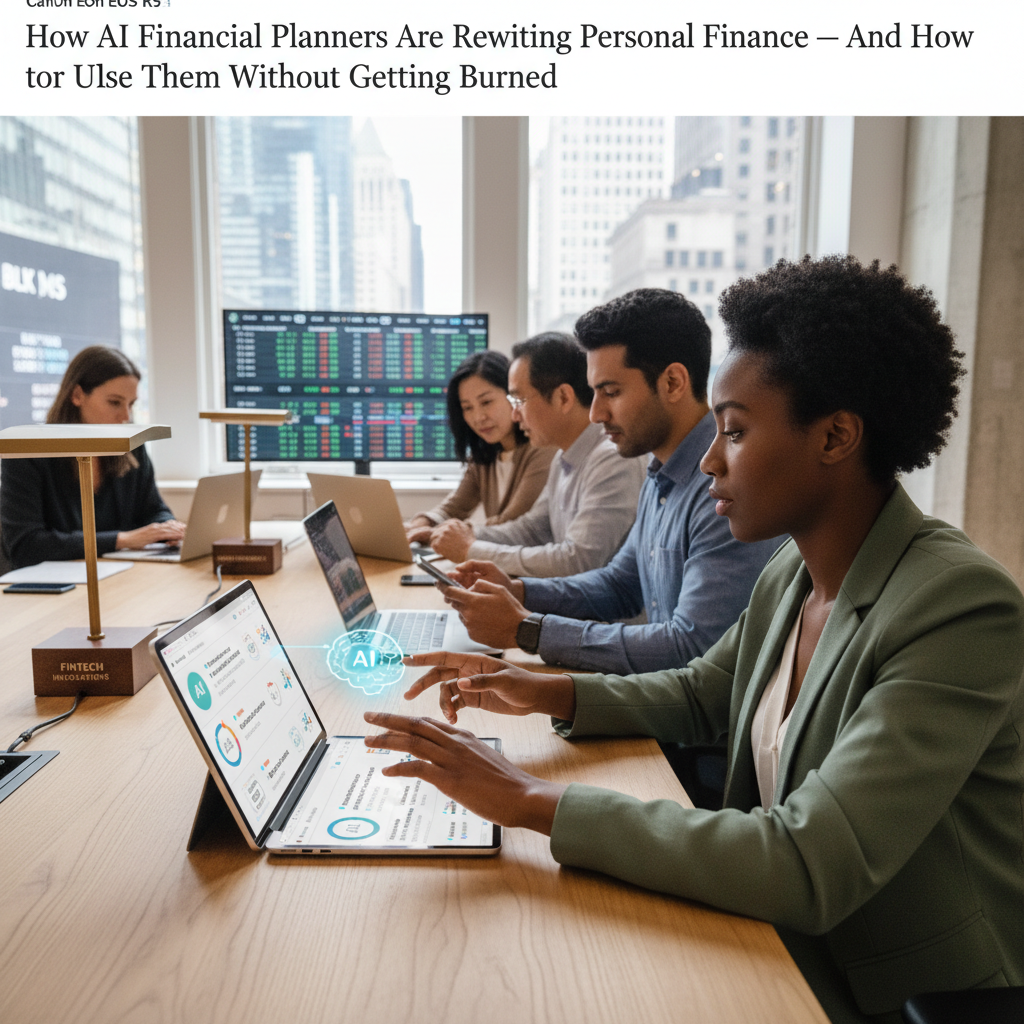
The headline is familiar by now: artificial intelligence is moving into finance
But the story that matters for most people isn’t machines replacing advisors. It’s how these tools are rewiring the plumbing of everyday money management — and how regular savers can capture the upside without handing over judgment.
These planners no longer look like novelty chatbots. They live inside robo-advisors, tax apps and workplace retirement platforms, stitching together account data, running projections and spitting out recommendations in seconds. The practical payoff is real: faster rebalancing, near-real-time tax-loss harvesting and thousands of Monte Carlo runs that once took teams days to produce.
Why this matters now
- Quick setup. Link a bank and payroll account and the system sees cash flow almost immediately — the raw material for tailored saving and debt plans.
- Fee pressure. Low-cost automated services are forcing traditional advisors to compete on price and value.
- Smarter hybrids. We’re seeing models that mix machine automation with human oversight for knotty issues like estate or Medicare planning.
Still, the gains come with trade-offs. Treating these systems as infallible can produce bad outcomes.
What these planners do well — and where they falter
Strengths
- Speed and scale. They run routine tasks across many accounts, catching drift and tax opportunities far faster than a human can.
- Pattern spotting. They notice spending habits and can suggest—or automate—small nudges, like weekly transfers to a high-yield account.
- Scenario breadth. They test many future paths at once, surfacing downside risks you might otherwise miss.
Limits
- Context blind spots. Rare life events, complicated family arrangements or values-driven goals often don’t show up in the data; the machine misses the nuance.
- Explainability. Complex models sometimes recommend moves without a clear, human-readable rationale. That breeds distrust and draws regulatory attention.
- Data risk. More connectivity means more questions about privacy, breaches and how third parties might use your information.
A practical playbook — use AI planners smartly
- Audit first. Before granting deep access, list every account and decide what you will and won’t share. Be choosy.
- Let machines do the chores. Use them for rebalancing, tax-harvesting and fine-tuning contribution rates. Reserve strategic, life-defining choices for you—or a trusted human advisor.
- Demand transparency and guardrails. Prefer services that surface their assumptions and let you tweak risk, return and inflation inputs.
- Cross-check results. Run the same retirement or cash-flow plan on two different platforms. Big divergences are a warning sign.
- Use behavioral nudges but cap them. Automated transfers and round-ups beat willpower. Just don’t set them so high they cause a cash-flow shock.
A couple of concrete examples
- A contractor I know set an AI-enabled app to estimate quarterly taxes and to move a small amount weekly into a tax bucket. No more frantic April scrambling.
- A couple nearing retirement had an AI run hundreds of drawdown scenarios; a fiduciary advisor then interpreted the numbers and helped decide when to claim pensions. The machine supplied breadth; the human supplied judgment.
Regulatory and market context
Big asset managers and brokerages are embedding these tools to stay competitive, and regulators are pushing for more transparency. We learned during the robo-advisor boom of the 2010s that lower costs don’t automatically build trust. This next phase is less about hype and more about closing that trust gap—if firms actually show their work.
My view
These planners are powerful and useful. Use them aggressively for mechanical, repeatable optimizations. But keep human judgment as the safety valve. Think of the system as a sharp, fast analyst that still needs a human editor.
Quick wins you can implement this week
- Connect one non-retirement account to an automated budgeting tool and schedule a modest weekly transfer.
- Run a retirement projection on two different platforms and compare the assumptions.
- Read the privacy and data-sharing policy before connecting payroll or brokerage accounts.
Small steps, disproportionate benefits — provided you don’t abdicate responsibility to code. Technology amplifies decisions. Make sure the choices are still yours.