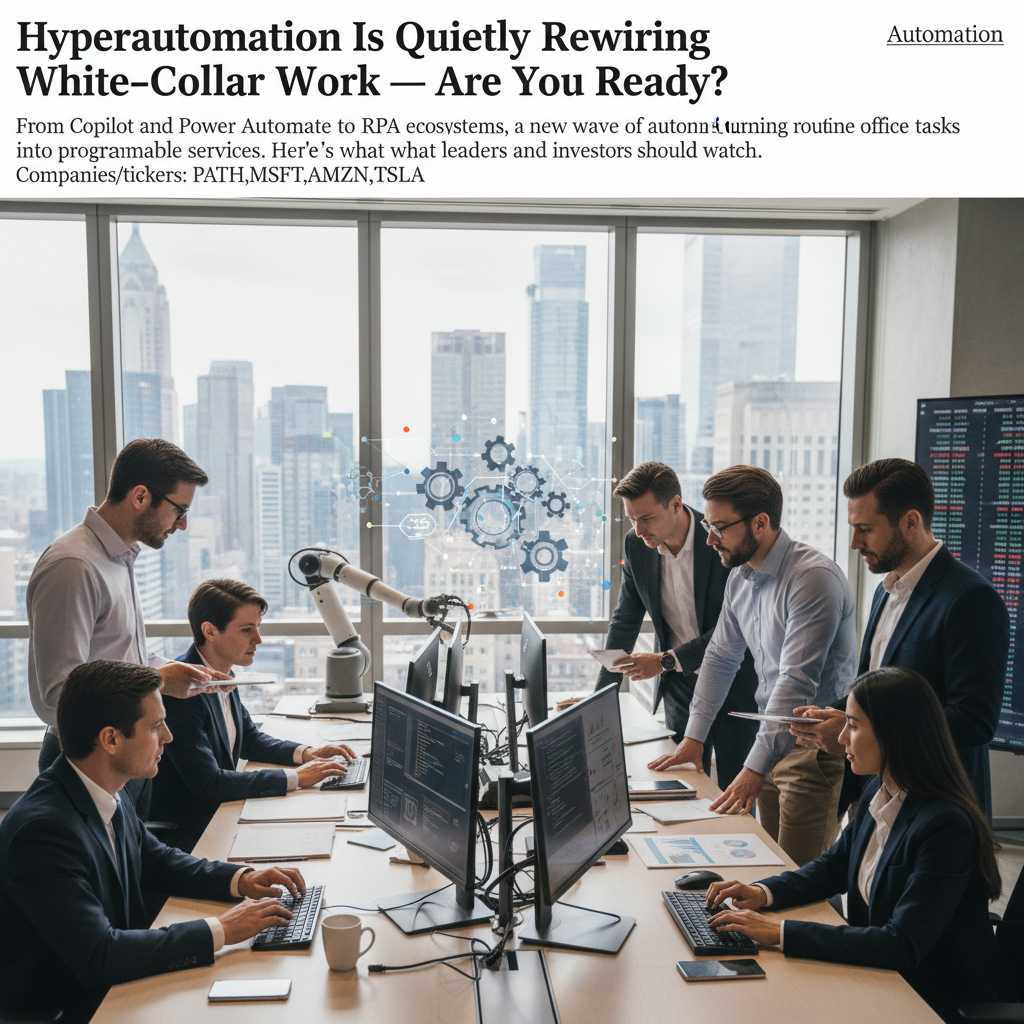
The setup sounds familiar. A finance manager used to spend two long days closing the books. Now a mix of Copilot prompts, Power Automate flows and an RPA bot clears most of the grunt work overnight. Not magic — layered automation: intelligent models for understanding, low‑code tools for orchestration and bots for repetitive execution.
Many people call this hyperautomation — a handy label for stacking RPA, low‑code platforms, workflow engines and smarter models into a single operational fabric. The point is less wholesale replacement and more decomposition: tasks that can be automated get automated, and humans focus on judgment points.
Why this matters now
- Big platforms are bundling automation. Microsoft is folding Copilot into Microsoft 365 and the Power Platform, turning dozens of manual steps into a few reusable flows. Amazon, Salesforce and others are doing the same. The net effect: automation features are moving out of niche RPA suites and into the apps people already use.
- No‑code and low‑code lower the barrier. Teams can prototype automations in days, not months, which encourages experimentation — and faster payback.
- Smarter language and generation models make messy inputs tractable. Emails, contracts, receipts — things that used to demand brittle rule sets can now be handled with more grace.
What executives should watch
- Operational governance. Quick wins multiply shadow automation: undocumented bots, security gaps, overlapping workflows. A center of excellence that sets standards and monitors health may sound dull, but it stops irritation from becoming chaos.
- Task‑level economics. This usually changes where value is created rather than eliminating it. People shift into auditing bots, training models and designing processes. Companies that retrain staff to work with automation keep productivity — and morale — intact.
- Vendor dynamics. Pure‑play RPA vendors have valuable technology, but platform vendors that bundle automation into broader suites can undercut them on price and distribution. That squeeze matters for positioning and M&A risk.
Signals for investors and risks to watch
- Favor revenues tied to recurring cloud services and partner ecosystems over one‑off license sales. Deep integration with productivity suites and partners tends to stick.
- Be wary of top‑line growth without healthy margins. Rapid rollouts can hide maintenance burdens: brittle automations, frequent patches and glue code add real costs.
Examples and caveats from the field
- A mid‑market manufacturer automated purchase‑order approvals and cut processing by weeks. Six months later the workflow started to fray when suppliers changed invoice formats. The cure was not heroic: a small team added resilient parsing rules and monitoring. Lesson — automation is ongoing engineering, not a once‑done project.
- Sales teams that automate outreach sequence more touches and increase activity. But if the messaging or product‑market fit is weak, automating simply scales the problem. More volume is not a substitute for a better story.
A short history to keep in mind
This is another wave in a long story. Mainframe batch jobs. Spreadsheets. Macros. RPA. Each wave industrialized a different layer of work. What’s different now is that models bring semantic understanding and low‑code democratises who can build workflows.
A pragmatic checklist for leaders
- Start with high‑frequency, low‑variance tasks and measure time saved and error reduction.
- Create a governance playbook: ownership, rollback paths and security reviews.
- Invest in a small automation ops team to run and evolve bots.
- Watch vendor roadmaps for native automation baked into productivity suites.
Where this leaves you
Hyperautomation is not a single product you buy and forget. It’s an operating model. Winners will treat automation like product development: iterate fast, instrument results and move people into higher‑value roles. Investors should price in commoditization risk for narrow RPA plays and favor platforms with ecosystem reach and recurring revenues.
If you run processes, you are already in the automation business. The real question is whether you will own the change — or be run by it.