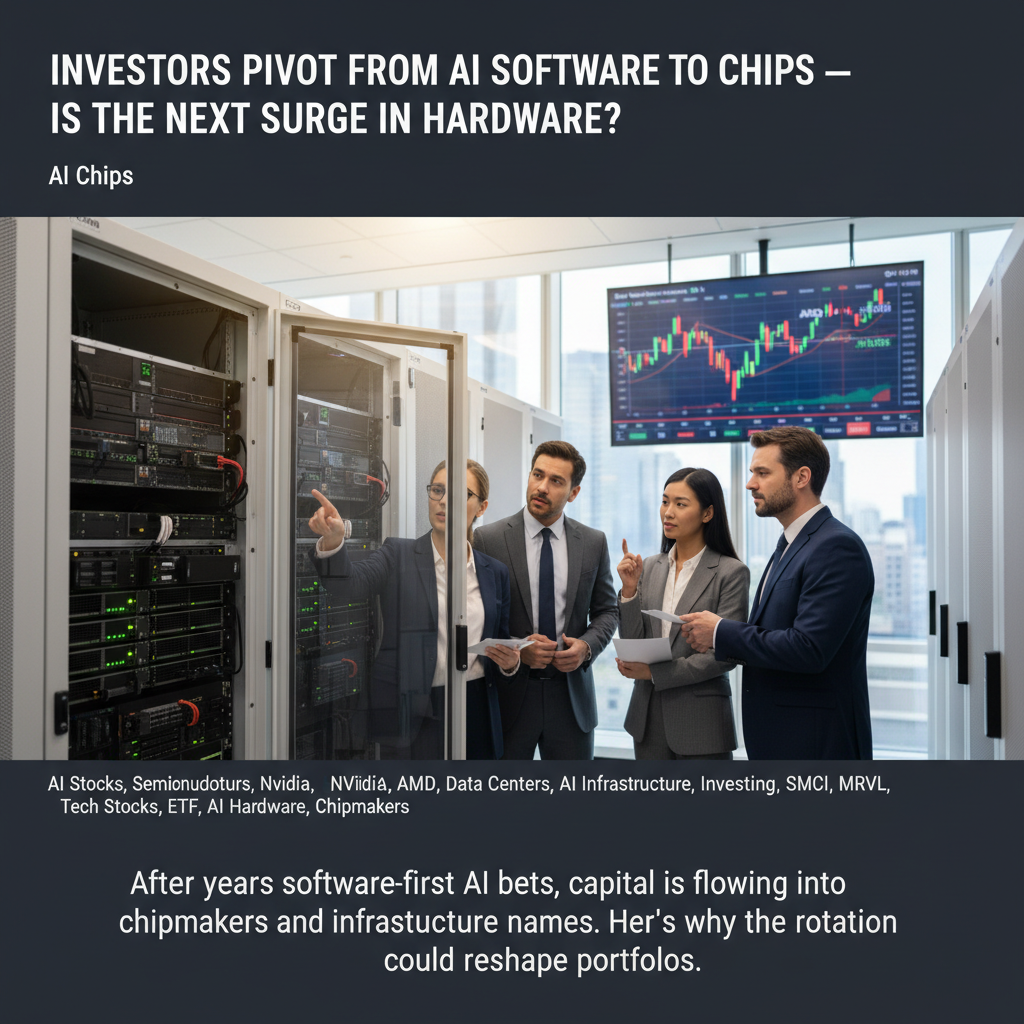
Thesis, briefly: Big AI models eat hardware. Investors are finally pricing GPUs, networking silicon and server OEMs into valuations. That matters because hardware supply and pricing curves largely set the speed at which enterprises can actually roll out generative AI.
The story so far
Nvidia has been the obvious poster child, and understandably so. But the conversation is widening. Hedge funds and retail traders are starting to look past models and cloud contracts to the physical layers under them: GPUs, custom accelerators, interconnects, and the racks that hold everything. This isn’t mere momentum chasing. It reflects a multi-year capital cycle in which compute demand is outpacing how fast fabs and OEMs can add capacity. In other words: the bottleneck is often metal and silicon, not code.
Why this rotation feels different
- Tangible constraints. You can’t conjure more silicon overnight. Foundry capacity, substrate shortages and long lead times create real, measurable chokepoints.
- Broader, stickier economics. Software can be swapped; hardware design wins with hyperscalers tend to lock in revenue for years.
- Stack multipliers. A big GPU order doesn’t stop at the chip. It lifts server makers, networking vendors and cooling and power suppliers — the revenue impact cascades.
A few caveats and risks
- Valuations still matter. Much of the upside is already reflected in prices for the obvious winners. If AI budgets pause, multiples can contract fast.
- Efficiency gains. Smarter models, better compression, or software-level optimizations could temper demand for raw flops. It’s possible the need for more chips will be smaller than some expect.
- Geopolitics. Export controls and trade friction around advanced nodes or GPUs could reroute growth in ways that are hard to forecast.
Companies worth watching
- Nvidia (NVDA): The clear bellwether for GPU-driven AI compute.
- AMD (AMD): A credible challenger with growing server ambitions.
- Super Micro (SMCI): A server OEM that benefits when hyperscalers refresh hardware.
- Marvell (MRVL): Networking silicon that underpins modern data-center fabrics.
Practical portfolio notes (not investment advice)
- Don’t bet on a single name. Spread exposure across the stack rather than pinning everything on one winner.
- Watch order books and backlogs. They’re leading indicators — big order upticks often show up in revenues before you see broader macro signs.
- Size positions to match conviction. Core stakes in leaders, smaller tactical plays for suppliers that win design cycles.
A historical echo, with a twist
This has shades of the late-1990s hardware refresh. The key difference now is that the software itself pushes for more hardware, not less. That makes the demand more durable in some scenarios — though not guaranteed.
Final take
I’m wary of one-name bets. There will be superstar winners, sure, but the safer way to play this theme is to follow where the physical money flows: chips, interconnects and servers. That’s where volume, contracts and long-term revenue streams live.
Pedro Marini