AI Stocks
Inside the $1.4 Trillion AI Capex Supercycle Reshaping Wall Street
Hyperscaler spending is rewriting the S&P 500's earnings story. Here's where the next leg of the trade is hiding.
M
Marcus Hale
May 19, 2026 · 8 min read
Hyperscaler spending is rewriting the S&P 500's earnings story. Here's where the next leg of the trade is hiding.

Illustration by IMF Alpha editorial · Reviewed by Marcus Hale
The four largest U.S. hyperscalers are on track to deploy more than $1.4 trillion in AI infrastructure by the end of 2026 — a capital cycle that now rivals the buildout of the U.S. interstate highway system in inflation-adjusted terms.
What's different this time isn't the size of the number. It's the velocity. Microsoft, Meta, Alphabet and Amazon have together raised AI-related capex guidance in seven of the last eight quarterly prints, with the marginal dollar increasingly flowing to custom silicon, liquid cooling and grid-scale power contracts rather than off-the-shelf GPUs.
For equity investors, that rotation matters. The first wave of the AI trade was a pure compute story, and Nvidia captured almost all of the upside. The second wave looks broader: networking, memory, power, real estate, and the long-tail of software companies that can actually monetize inference at scale.
We mapped the 38 names with the highest revenue beta to hyperscaler AI capex and stress-tested them against a 20% pullback in 2027 spending. Eleven of them still compound earnings double-digits in that scenario. Those are the names worth owning through the cycle.

Recent Federal Reserve hawkish signaling has initiated a re-evaluation of growth technology stock valuations, creating a potential disconnect between market sentiment and long-term prospects.

Regulatory bodies are increasing scrutiny of artificial intelligence in financial markets, focusing on risk management and transparency in automated trading systems.
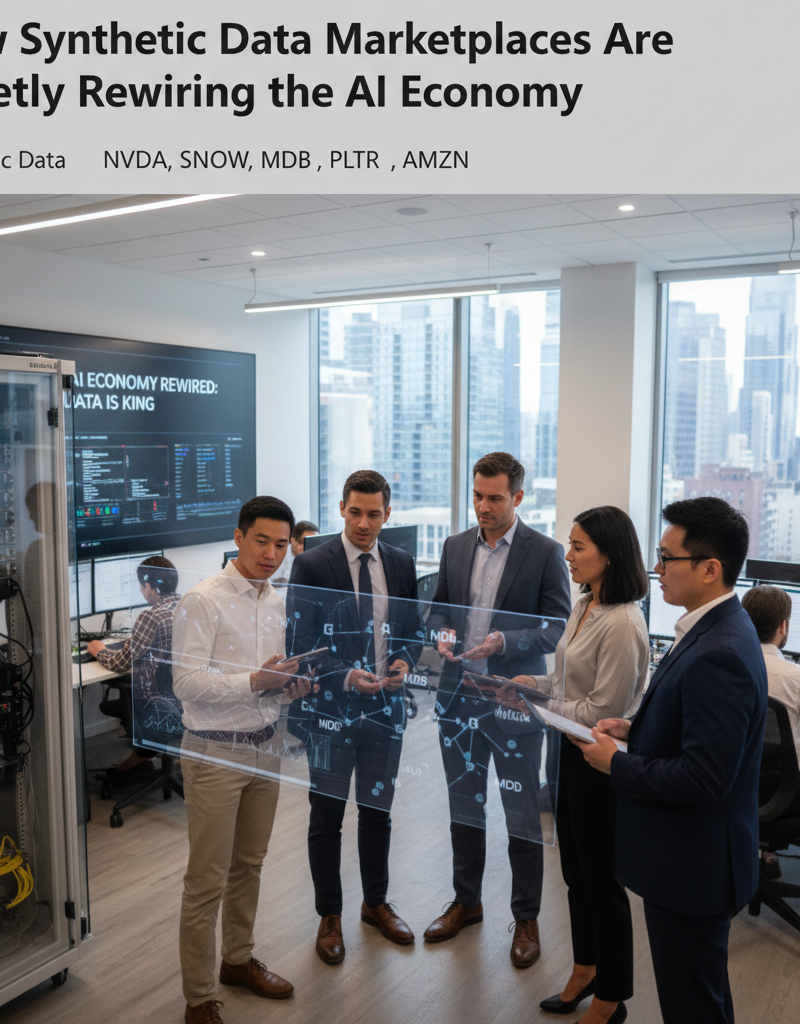
As enterprises shift from chasing bigger models to buying better data, new marketplaces are rewriting the rules for chips, cloud costs and startup valuations.