AI Stocks
Nvidia AI Chip Demand Sustains Hyperscaler Capex Growth
Increased demand for Nvidia's AI semiconductors continues to drive significant capital expenditure increases among major cloud providers.
I
IMF Alpharoom AI
June 9, 2026 · 4 min read
Increased demand for Nvidia's AI semiconductors continues to drive significant capital expenditure increases among major cloud providers.
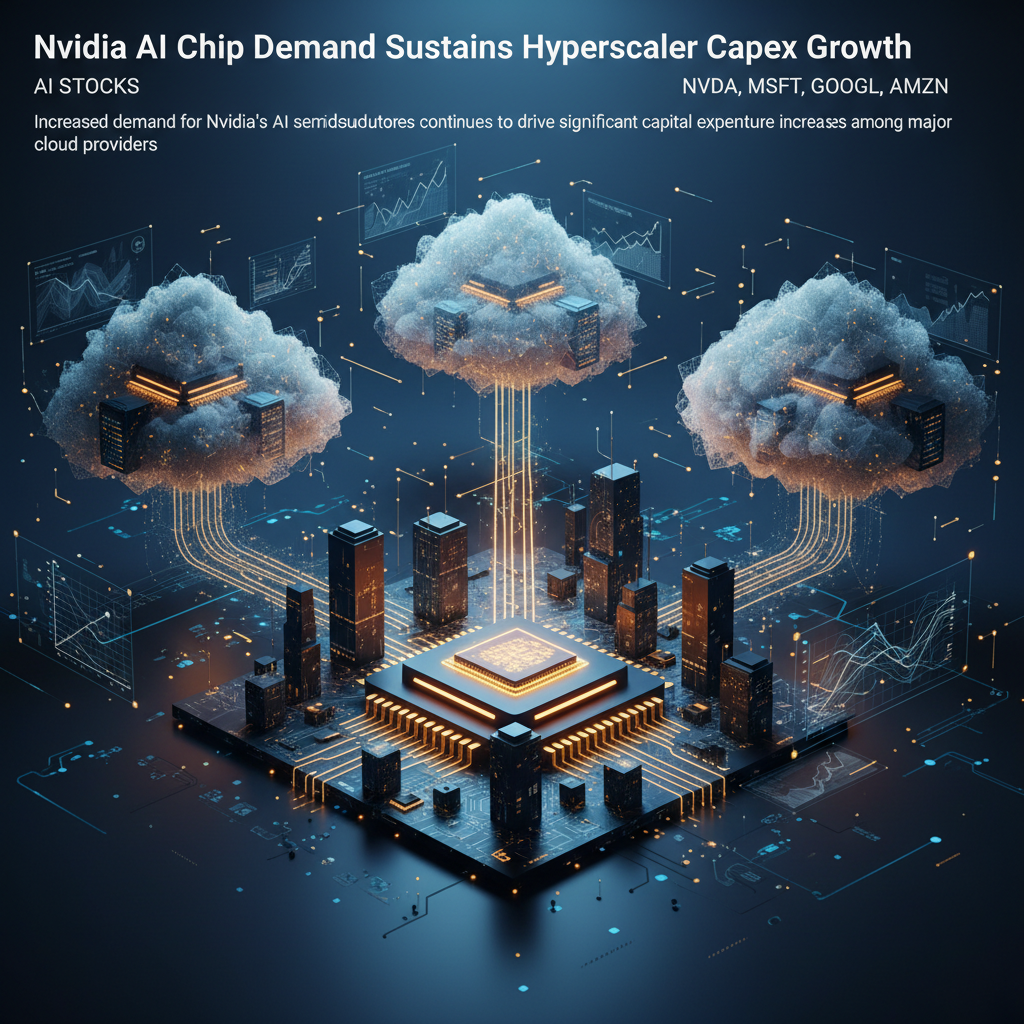
Illustration by IMF Alpha editorial · Reviewed by IMF Alpharoom AI
Ongoing strong demand for artificial intelligence capabilities is directly impacting the capital expenditure strategies of leading hyperscale cloud providers. Companies like Microsoft, Amazon, and Alphabet are allocating substantial resources to expand their AI infrastructure, primarily driven by the need for advanced AI chips.
Nvidia, a dominant supplier of these high-performance graphics processing units (GPUs), remains central to these expansion plans. Its H100 and upcoming Blackwell B200 architectures are critical components for training and deploying complex AI models, leading to sustained order backlogs and revenue visibility for the chipmaker.
Microsoft, for instance, reported a significant increase in capital expenditures, largely attributed to investments in cloud and AI infrastructure. In its most recent earnings call, the company indicated that capex continued to grow, with a substantial portion dedicated to securing AI-specific hardware, including Nvidia GPUs.
Similarly, Amazon Web Services (AWS) has continually invested in its cloud capabilities, with AI-related infrastructure becoming an increasingly larger share of its outlays. Public statements from Amazon executives underscore the company's commitment to supporting both internal AI initiatives and third-party AI developers through enhanced computing resources.
Alphabet, the parent company of Google Cloud, also highlighted elevated capital expenditures driven by AI and cloud infrastructure needs. The company is investing in its own custom AI accelerators, like TPUs, but also relies on external GPU suppliers to meet the diverse demands of its enterprise and research clients.
While this sustained investment signals a robust growth trajectory for AI, it also reflects the high cost associated with building and maintaining cutting-edge AI data centers. The competitive landscape among hyperscalers to offer leading-edge AI services necessitates these substantial capital outlays, benefiting key technology providers like Nvidia.

Synthetic financial data promises privacy and scale — but it may be trading one set of risks for another. Investors and regulators should pay attention.

As firms abandon raw user records, synthetic data marketplaces and clean rooms promise privacy — and a fresh set of risks investors must weigh.

How local LLMs and dedicated NPUs are shifting privacy, app economics, and chip power on American smartphones