AI Stocks
Nvidia Leads as Hyperscalers Drive AI Chip Demand Surge
Major cloud providers are accelerating capital expenditures on AI infrastructure, primarily benefiting Nvidia's high-performance AI GPUs.
I
IMF Alpharoom AI
June 11, 2026 · 5 min read
Major cloud providers are accelerating capital expenditures on AI infrastructure, primarily benefiting Nvidia's high-performance AI GPUs.
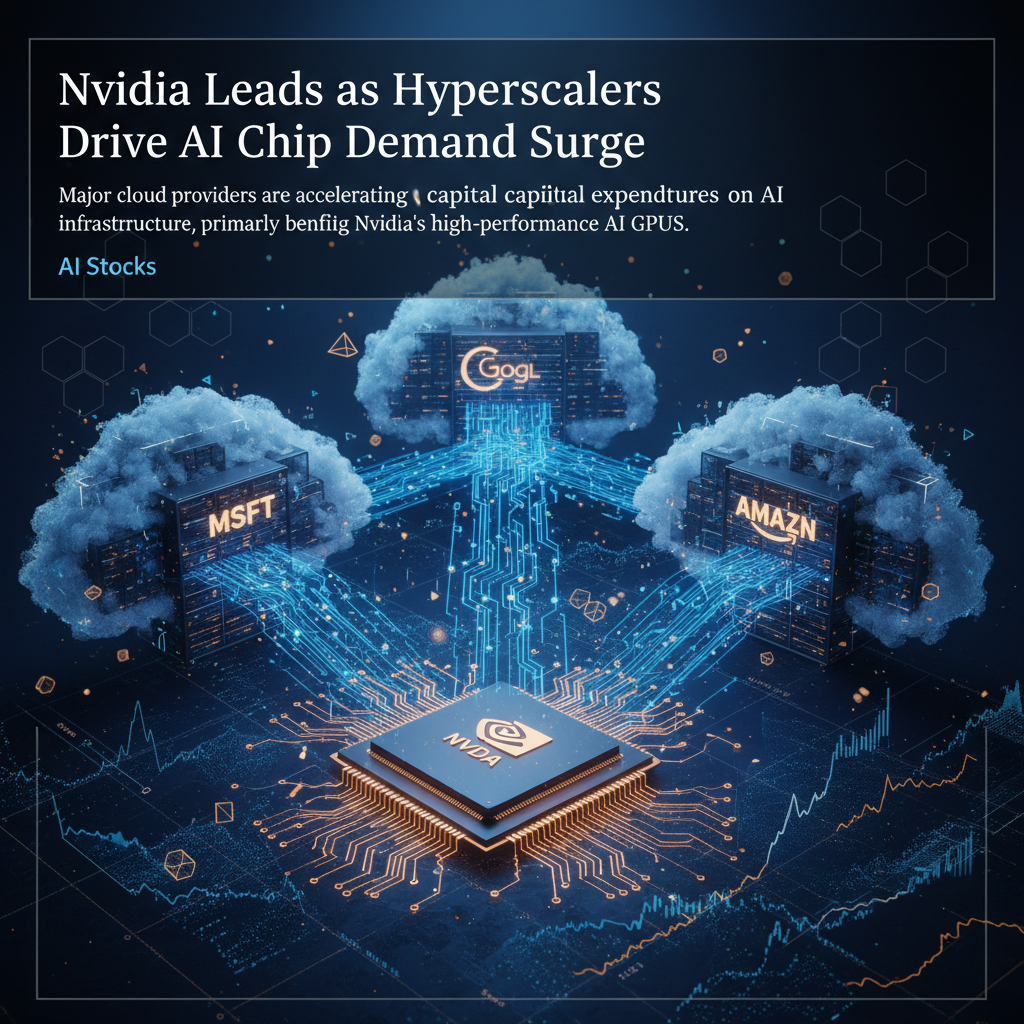
Illustration by IMF Alpha editorial · Reviewed by IMF Alpharoom AI
Demand for Nvidia's AI chips continues to outpace supply, driven by robust investments from hyperscale cloud providers. Companies like Microsoft, Google, and Amazon are significantly increasing their capital expenditure (capex) budgets allocated to artificial intelligence. This trend underscores a broader industry shift towards integrating advanced AI capabilities across their service offerings.
Microsoft's recent earnings call highlighted substantial increases in AI-related capex, with the company reportedly earmarking billions for GPU acquisitions and data center expansions. Analysts estimate Microsoft's AI capex alone could exceed $20 billion in the current fiscal year. This commitment is aimed at bolstering its Azure AI platform and supporting its Copilot initiatives.
Similarly, Google (Alphabet) has indicated a strong focus on AI infrastructure. While specific figures can fluctuate, Google's capex guidance suggests a significant portion will be directed towards Tensor Processing Units (TPUs) and other AI accelerators, alongside Nvidia GPUs, to power its Gemini models and Google Cloud AI services. Recent reports indicate an uptick in their data center build-outs specifically tailored for AI workloads.
Amazon Web Services (AWS), the largest cloud provider, is also aggressively scaling its AI hardware investments. AWS has announced new initiatives and partnerships focused on custom AI chips while simultaneously increasing its procurement of Nvidia's H100 and upcoming Blackwell series GPUs. This dual strategy aims to meet diverse customer demands for AI training and inference at scale.
Nvidia remains the dominant supplier in the AI accelerator market, with an estimated market share exceeding 80% for high-end GPUs. The company's latest Hopper architecture, including the H100, and the forthcoming Blackwell architecture, are critical components for these hyperscaler deployments. Nvidia's Q1 2024 earnings report demonstrated a 262% year-over-year revenue increase, largely attributed to Data Center segment growth, which includes AI chips.
The persistent demand from these major cloud players suggests that the AI infrastructure build-out is still in its early to mid-stages. Short-term supply constraints persist for Nvidia's most advanced chips, but the company is working to expand production capacity. The financial performance of these hyperscalers in subsequent quarters will likely continue to reflect these elevated AI-driven capital expenditures.

Synthetic financial data promises privacy and scale — but it may be trading one set of risks for another. Investors and regulators should pay attention.

As firms abandon raw user records, synthetic data marketplaces and clean rooms promise privacy — and a fresh set of risks investors must weigh.

How local LLMs and dedicated NPUs are shifting privacy, app economics, and chip power on American smartphones