The short take
Nvidia still runs the AI training market for now, but the next 12–24 months will tell whether that control hardens into a true monopoly or flattens into a profitable plateau. New process nodes, rival chips, cloud bundling and shifting regulation are opening openings beyond NVDA — and creating risk for anyone who bought the story without a contingency plan.
Why the narrative is shifting
- Supply is catching up. TSMC’s next nodes and added capacity mean more AI-grade silicon will actually reach customers. That eases the scarcity premium that has propped up GPU prices.
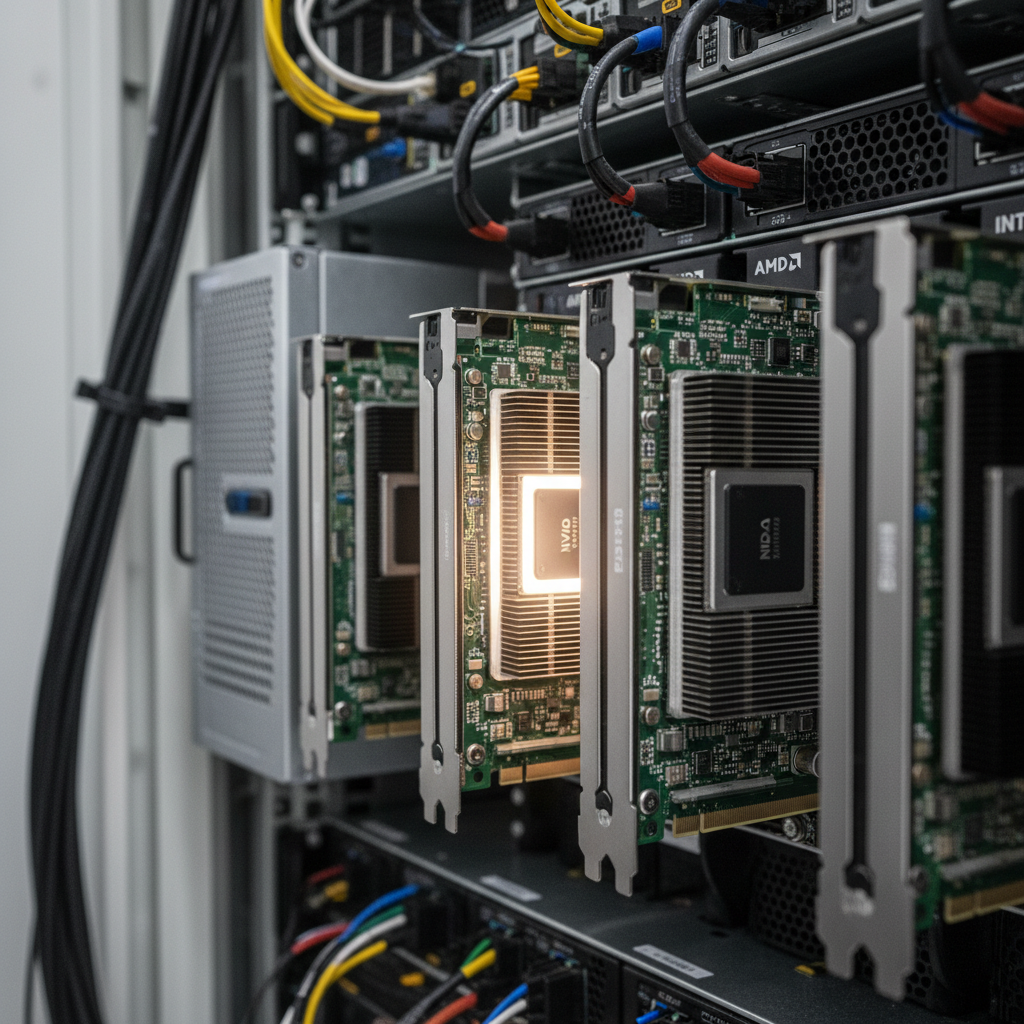
- Real competition is arriving. AMD’s MI300 series, a retooled Intel data-center push, and custom accelerators from hyperscalers are closing the gap in places where software and integration matter most.
- Raw FLOPS aren’t the whole story. Model efficiency, compiler toolchains and runtime stacks increasingly determine real performance. GPUs are being challenged by hardware tuned for particular training or inference workloads — and that changes buying logic.
What investors often miss
Past cycles treated AI chips like a single-product sprint. In practice the market is more complicated.
- It’s bifurcating: training is huge compute with attractive margins; inference is massive scale, lower margins and far more customization.
- Cloud providers are packaging silicon with software and services, creating sticky revenue streams that help Microsoft, Google and AWS as much as the chip vendors.
- Geopolitics and export controls can re-route supply and customers almost overnight. Diversifying across vendors and regions matters more than many realize.
Winners and where value could flow
- Nvidia (NVDA) — Still the go-to for general-purpose training. For the premium multiple to hold, expect sustained data-center revenue growth and margin expansion.
- AMD (AMD) — A practical challenger on price/performance. Watch MI300 adoption in clouds and enterprise proof points.
- Intel (INTC) — If roadmaps turn into competitive silicon and fabs plus packaging execution improves, Intel could regain relevance and see a multiple re-rate.
- Microsoft (MSFT) and Alphabet (GOOGL) — Hyperscalers are packaging AI as a bundled product. Their ability to monetize services and lock customers could pay off over time.
Signals worth tracking
- Quarterly data-center revenue and forward guidance from NVDA and AMD.
- Announcements of cloud vendors adopting non-Nvidia accelerators.
- Cloud GPU instance pricing: sustained declines point to real supply relief.
- Compiler and runtime improvements that shrink the performance gap.
- Regulatory changes and export controls that reshape cross-border sales.
Practical portfolio moves
- For growth exposure: keep NVDA, but size it so a mean reversion in multiples doesn’t cripple your book.
- For tactical rotation: consider AMD if MI300 adoption accelerates; add a cloud provider (MSFT or GOOGL) for more defensive exposure to AI monetization.
- For hedging: small positions in specialized accelerator vendors or ETFs that bundle AI hardware and software can soften single-stock shocks.
Final read
Nvidia’s dominance feels inevitable because momentum breeds confidence. Yet markets reward durable cash flow, not temporary scarcity. The winners won’t just sell chips — they’ll combine hardware, software and distribution into repeatable revenue. Watch the signals, trim for valuation risk, and prefer businesses that can turn compute advantage into sticky customer contracts.
Authorial note: this piece weighs market structure, technology cadence and competitive strategy rather than short-term price moves. Treat it as a map, not a trading mandate.