AI Chips
Nvidia's AI Halo Is Becoming a Market Force — Here’s What Investors Miss
Why the GPU leader is more than a one-stock story and where real opportunities and risks hide in the AI stock boom
P
Pedro Marini
May 30, 2026 · 4 min read
Why the GPU leader is more than a one-stock story and where real opportunities and risks hide in the AI stock boom
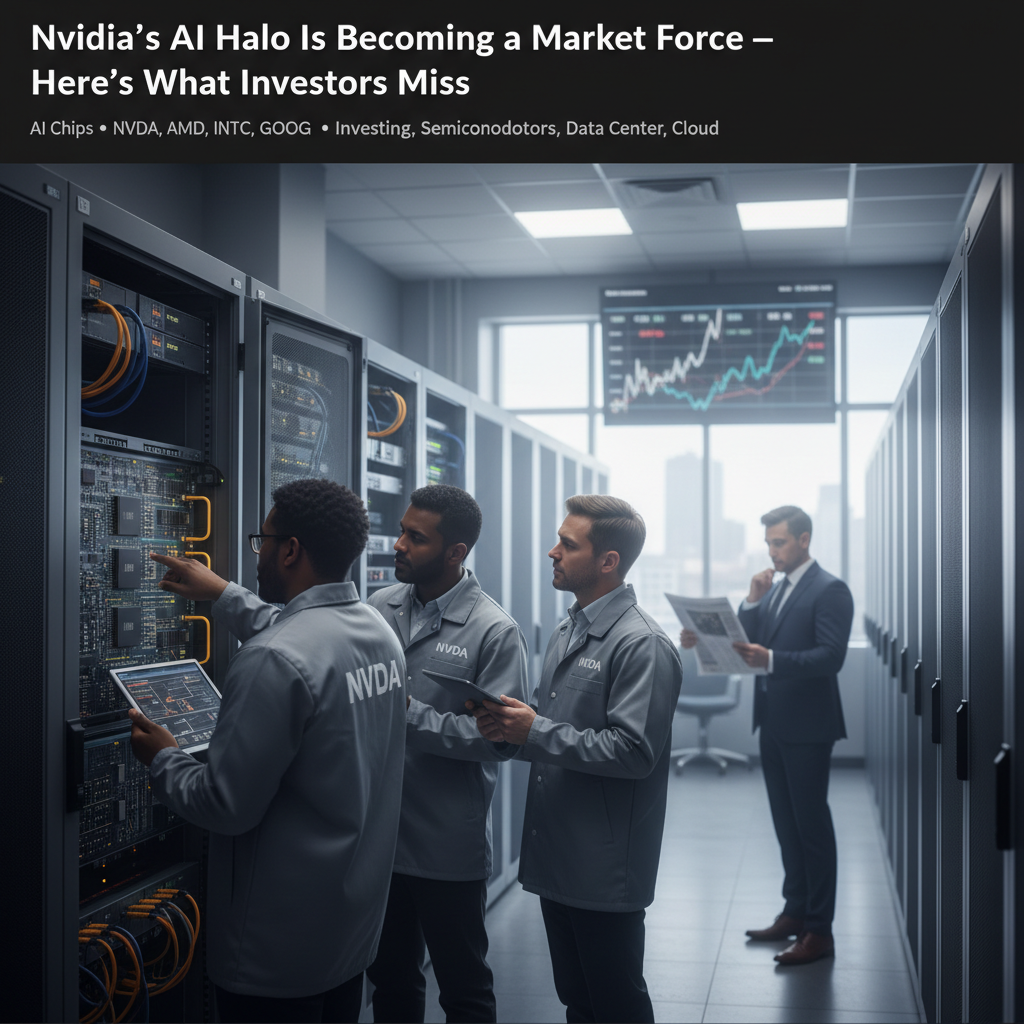
Illustration by IMF Alpha editorial · Reviewed by Pedro Marini
The quick take
Nvidia has become shorthand for AI investing, but the market’s rush to own one ticker obscures broader shifts in compute, supply chains, and software lock-in. I watch markets and chips closely; some of this looks like hype, some of it looks like a durable advantage — and the risks are bigger and messier than the headlines suggest.
What changed — fast
Nvidia went from gamer-GPU darling to essential infrastructure for large language models and generative AI. It wasn’t a single product launch that did it. It was demand piling up from cloud providers, startups chasing scale, and developers building around one mature software stack.
This isn’t another ordinary hardware cycle. Two things matter more than usual:
What’s interesting here is how these two effects reinforce each other; software stickiness lengthens hardware cycles, and concentrated demand makes supply tight.
Why the market crowned Nvidia — and why that crown is fragile
The market is betting on sustained acceleration in data-center accelerator spending. That’s a defensible wager: training cutting‑edge models today still needs dense compute and memory architectures that GPUs provide.
But the position is vulnerable.
Small changes in orders or a technology surprise could have outsized effects. Markets love narratives; they also swing hard when details change.
Where opportunity lives beyond the headline
If Nvidia is the headline, there are bylines across the stack. Three practical ways to get exposure without putting everything on one symbol:
In other words: don’t just own the GPU vendor. Own bits of the ecosystem that survive different scenarios.
A short playbook for the next 12 months
Practical, not prescriptive. Markets will test theses in weird ways.
Counterpoint — the bear case worth taking seriously
Suppose a model-efficiency breakthrough cuts training compute needs by 5x. That single advance would shrink demand for top-tier GPUs and redirect spend toward software engineering and cheaper inference hardware. Markets rarely price big efficiency shifts ahead of time.
It’s not the likeliest scenario, but it’s the one that would change everything fast.
Why this matters beyond portfolio moves
This is a structural shift for computing, reminiscent of the rise of x86 servers in the 2000s. The winners won’t just take revenue — they’ll shape developer tooling, talent flows, and data-center economics for a decade. That means the rewards are real, but patience and selectivity matter more than ever.
The upshot: treat this as an industrial and software transition, not a single-name story.
What I’ll be watching next
If you want a concise watchlist or a comparative checklist for AI-capex earnings, I can send a short template next.

Both the Securities and Exchange Commission and the Commodity Futures Trading Commission are actively scrutinizing the accelerating integration of artificial intelligence into financial markets, focusing on risk management, market integrity, and transparency.

Strong demand for advanced AI accelerators, particularly from major cloud providers, continues to drive Nvidia's revenue growth, despite anticipated moderation in capex.

Banks and fintechs are racing to replace fragile real-world datasets with synthetic alternatives. That promises speed and privacy, but also new biases, regulatory headaches, and systemic risk.