On-Device AI
On-Device AI Is About to Remake Personal Finance
Local LLMs on phones bring faster budgeting, stronger privacy, and lower cloud bills — but also new security and regulatory headaches.
P
Pedro Marini
June 15, 2026 · 3 min read
Local LLMs on phones bring faster budgeting, stronger privacy, and lower cloud bills — but also new security and regulatory headaches.
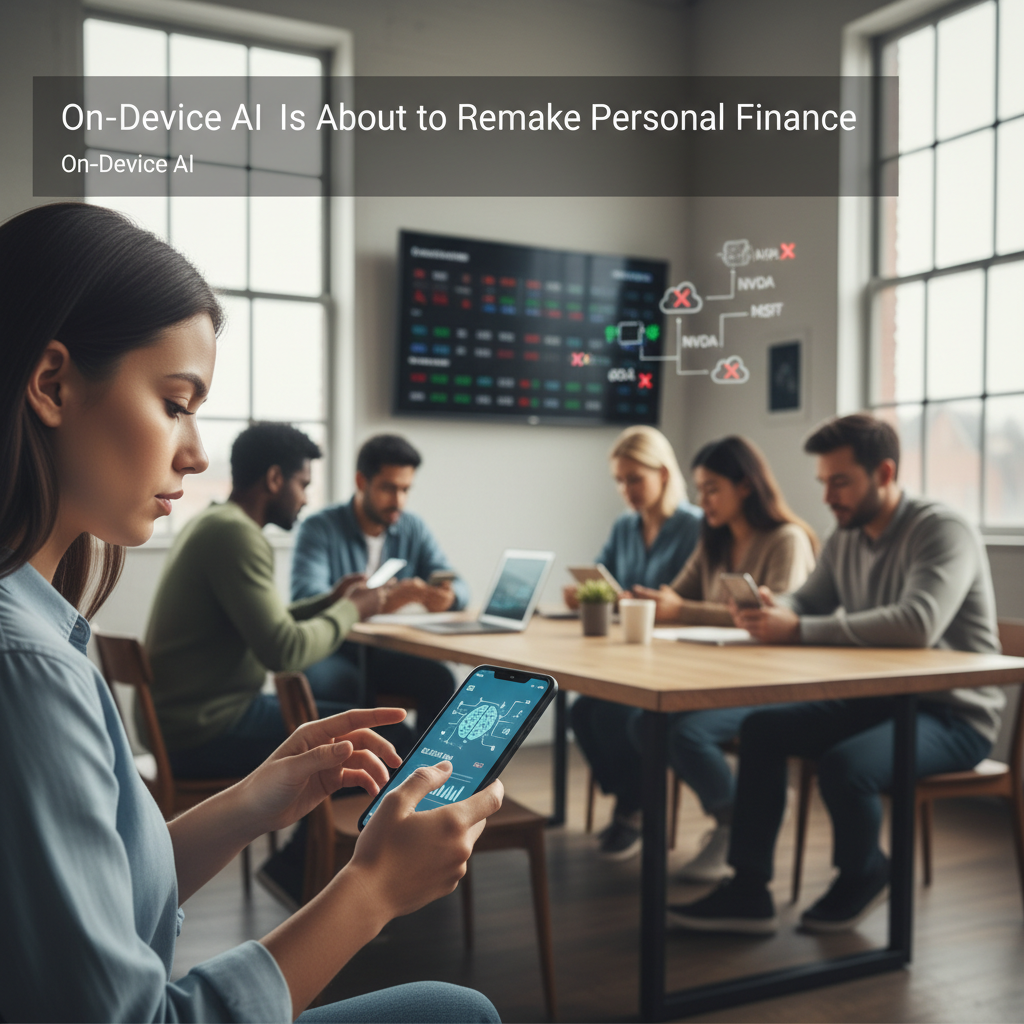
Illustration by IMF Alpha editorial · Reviewed by Pedro Marini
The shift from cloud to silicon is not subtle. For years fintech apps pushed analytics and recommendations out to remote servers. Now, with compact language models, aggressive quantization and much stronger NPUs in phones, a lot of that intelligence can live on users’ devices.
That has practical consequences for Americans. On-device AI can sort transactions instantly without streaming raw data to the cloud, keep a personal finance assistant usable while you’re offline, and make voice-driven bill pay feel snappier. It also hands fintechs a new way to cut cloud bills while selling privacy as a real feature.
How we got here
What actually changes for users
Where banks and fintechs will compete
Competition will tilt toward how models behave and how firms handle data. Companies that document update paths, let users tweak on-device behavior, or offer verifiable privacy guarantees will earn trust. Expect subscription models: a cheap tier that leans on cloud processing and a premium tier where everything stays on the device.
Real tradeoffs and risks
Who benefits and who loses
A short roadmap for product teams
On-device AI is not a cure-all, but it reshapes incentives. For American consumers that means tools that feel more immediate and more private, and fewer vague assurances about secure servers. The next battleground won’t just be accuracy; it will be trust — and the firms that combine lean models, transparent policies, and a smooth user experience will set the tone.

U.S. financial regulators are scrutinizing the increasing use of artificial intelligence in capital markets, focusing on potential systemic risks and the adequacy of current disclosure requirements.

Strong demand for Nvidia's AI accelerators persists, driving significant capital expenditures among major cloud providers, influencing market dynamics and hardware supply chains.

Synthetic financial data promises privacy and scale — but it may be trading one set of risks for another. Investors and regulators should pay attention.