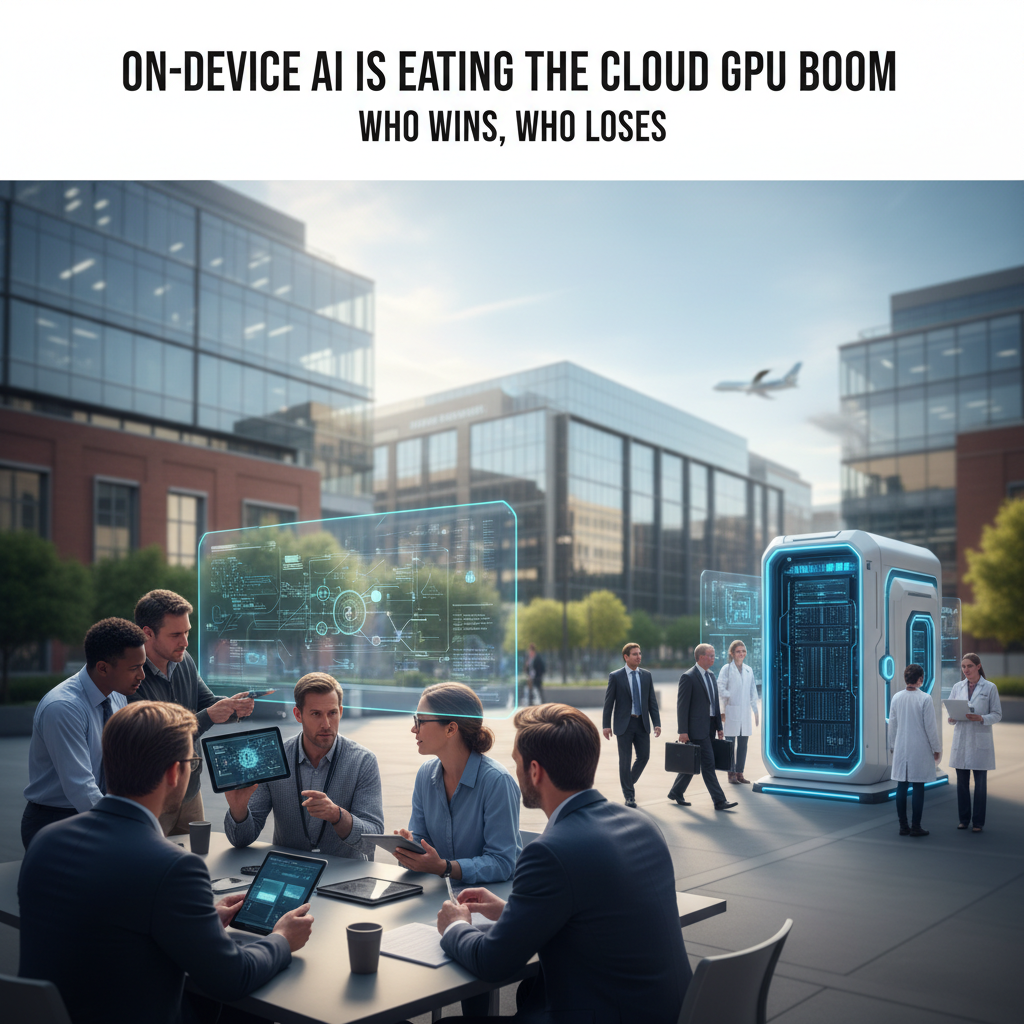
The headline is simple: phones and laptops getting smarter on their own means less trivial inference sent to expensive cloud GPUs. That doesn’t mean the data‑center era ends — it just reshapes around different roles.
A year ago this felt like a niche bet. Now device makers ship NPUs and SDKs that let compact LLMs run locally with latency and privacy advantages enterprises actually care about. Couple that with aggressive quantization, pruning, and smarter caching, and a slice of inference demand that used to live in cloud racks is quietly migrating to the edge.
Why this matters now
- Cost math matters. Running billions of short queries on H100s is not cheap. On‑device inference pulls many micro‑requests off those clusters and that lowers cloud GPU utilization.
- Latency and data residency are real constraints. For finance, healthcare, and real‑time support, local models are often the better tradeoff.
- The plumbing is getting easier. Apple, Google and several chip vendors now provide frameworks that make integration far less painful than it was two years ago.
A few concrete shifts you’ll see
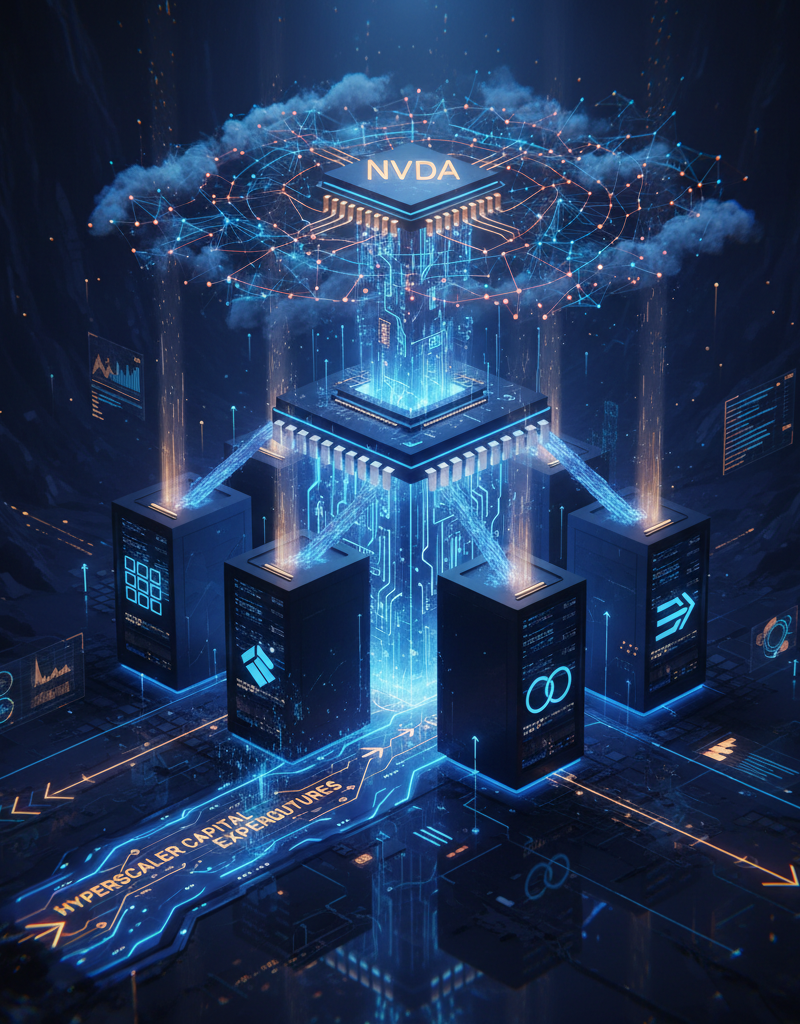
- Nvidia (NVDA) still owns training compute — no one is replacing big datacenter GPUs for model training. But inference demand is fragmenting, which could temper the near‑term growth investors expected.
- Apple (AAPL) and Qualcomm (QCOM) stand to gain as NPUs and software hooks let apps monetize on‑device capabilities.
- Startups focused on quantization, pruning, and orchestration suddenly have meaningful leverage; their tech becomes the connective tissue between tiny models on devices and large models in the cloud.
Think back to when app stores lured ad dollars away from the web. It didn’t happen overnight, it was messy, and it created new vendor classes. We’re seeing something similar here — except the contest is over compute, not distribution.
Implications for major players
- Cloud providers (MSFT, AMZN, GOOG) will pivot toward hybrids: local inference runtimes, burstable GPU credits, and new pricing around orchestration and sync.
- Chipmakers optimizing power‑efficient matrix math — call it NPU work — will find growth outside the datacenter: phones, laptops, cars, IoT sensors. It’s a long tail.
- GPU firms will keep ruling training cycles, but their earnings could decouple from short‑term inference demand. That’s a subtle but important shift.
Where to watch next (for execs and investors)
- Listen for “on‑device” or “NPU” in earnings calls. Companies that push edge SDK adoption are likely to capture new revenue streams.
- Monitor model‑compression startups and licensing deals; these firms may be takeover targets for both chip vendors and cloud giants.
- Follow enterprise pilots in regulated industries. Successful pilots in finance or healthcare often scale into long contracts.
A few caveats
- Not every model compresses well. Large foundation models and training workflows will still anchor datacenter purchases.
- On‑device doesn’t erase cloud spend — it reshapes it toward training, sync, backup, and hybrid orchestration. Expect different buckets of spend, not zero spend.
Net effect: AI compute is maturing. Blanket cloud inference is fading, but a more nuanced, hybrid economic model is taking shape. That’s good for specialization — nimble chipmakers, focused tooling startups, and cloud providers that adapt will find opportunities. Those that assume the old full‑stack cloud model persists risk getting surprised.
— Pedro Marini