S&P 5005,842.10 0.42%
NASDAQ19,210.55 0.88%
NVDA1,184.22 2.41%
MSFT478.90 0.88%
GOOGL210.11 1.12%
META612.50 0.34%
AAPL239.80 0.21%
AMZN248.66 1.40%
AVGO1,902.40 3.12%
TSLA298.10 1.05%
BTC98,420 1.88%
ETH4,210 2.24%
10Y4.18% 0.02%
DXY104.12 0.18%
S&P 5005,842.10 0.42%
NASDAQ19,210.55 0.88%
NVDA1,184.22 2.41%
MSFT478.90 0.88%
GOOGL210.11 1.12%
META612.50 0.34%
AAPL239.80 0.21%
AMZN248.66 1.40%
AVGO1,902.40 3.12%
TSLA298.10 1.05%
BTC98,420 1.88%
ETH4,210 2.24%
10Y4.18% 0.02%
DXY104.12 0.18%
Back to homepage
Automation

RPA 2.0: How Generative AI Is Rewriting Automation Playbooks

From screen-scraping bots to decision assistants — why finance and operations leaders must rethink ROI, governance, and talent now.

P
Pedro Marini
July 14, 2026 · 4 min read
RPA 2.0: How Generative AI Is Rewriting Automation Playbooks

Illustration by IMF Alpha editorial · Reviewed by Pedro Marini

Listen to this article
AI narration · ~4 min
Tickers mentioned
PATH+2.30%MSFT+1.10%IBM-0.60%APPN+0.70%

Lead: a familiar tool gets a new brain

Robotic process automation started life as a glorified macro: repetitive, rule-bound clicks done faster than any human could. That simple model saved millions of hours across accounting, HR, and customer service. Now generative language models are being grafted onto those bots, giving them judgement and conversational fluency. Deterministic scripts are becoming assistants that can explain themselves and cope with exceptions.

Why this matters today

  • Major automation vendors — UiPath (PATH), Microsoft (MSFT), IBM (IBM) — are building generative models into their stacks. Not only for chat: they’re parsing contracts, summarizing invoices, and drafting finance narratives.
  • The value is shifting. It’s less about shaving headcount and more about recovering time for higher-value, knowledge work. That change is subtle but consequential.

A quick historical pulse

RPA grew out of screen scraping and workflow orchestration. Over the last five years it gained AI for extracting unstructured data. The new wave swaps brittle rules for probabilistic reasoning. Instead of breaking when a vendor changes an invoice layout, the system will suggest actions and attach confidence estimates. It’s not perfect, but it’s a different class of behavior.

Real implications for finance and ops

  • Faster exception handling. Tasks that used to sit in triage queues can be pre-sorted and explained by models, leaving humans to resolve the genuinely weird cases.
  • Smarter alerts for treasury and compliance, but also noisier signals. Expect more false positives unless teams tighten thresholds and monitoring.
  • Procurement and legal can auto-draft and summarize contracts, cutting cycle time. That speed raises governance questions that organizations often underestimate.

Counterpoints and risks

  • Hallucination risk — models can invent plausible but incorrect justifications. That will wreck audit trails unless humans gate critical outputs.
  • Hidden cost — fine-tuning models, building observability, and running retraining pipelines can eat into the upfront efficiency gains if integration effort is underestimated.
  • Labor impact — roles will shift more than simply disappear. Accountants who reconcile ledgers today are likely to become exception managers and model auditors tomorrow.

Two brief examples to ground the change

  • Accounts payable: manual three-way matching gets replaced by a pipeline where a transformer reads freeform memos, assigns categories, and flags low-confidence matches for review. Throughput rises, but review work becomes more concentrated and cognitively demanding.
  • Treasury: a conversational assistant drafts transaction investigations for AML analysts, who then validate and submit. Throughput increases, but the team becomes dependent on model explainability and clear audit artifacts.

What automation leaders should do

  • Start with exceptions. Automate the 20 percent of work that generates 80 percent of manual reviews, and keep humans in the loop for low-confidence outputs.
  • Instrument everything. Treat confidence scores, error rates, and decision logs as routine KPIs.
  • Set up model governance: lineage, training-data provenance, periodic validation, and a rollback plan.
  • Reskill with intent. Prioritize judgement, audit rigour, and model supervision skills over simply more scripting.

A final stance

This isn’t just automation 1.0 on steroids. It’s a change in operating model: systems that used to obey now have to explain. The upside is real — faster cycles, richer analytics, new customer experiences — but only if organizations pair the tech with tighter governance and deliberate people investments. Think of generative RPA not as a tool swap but as a different way of running work.
Advertisement
Continue reading

Related coverage

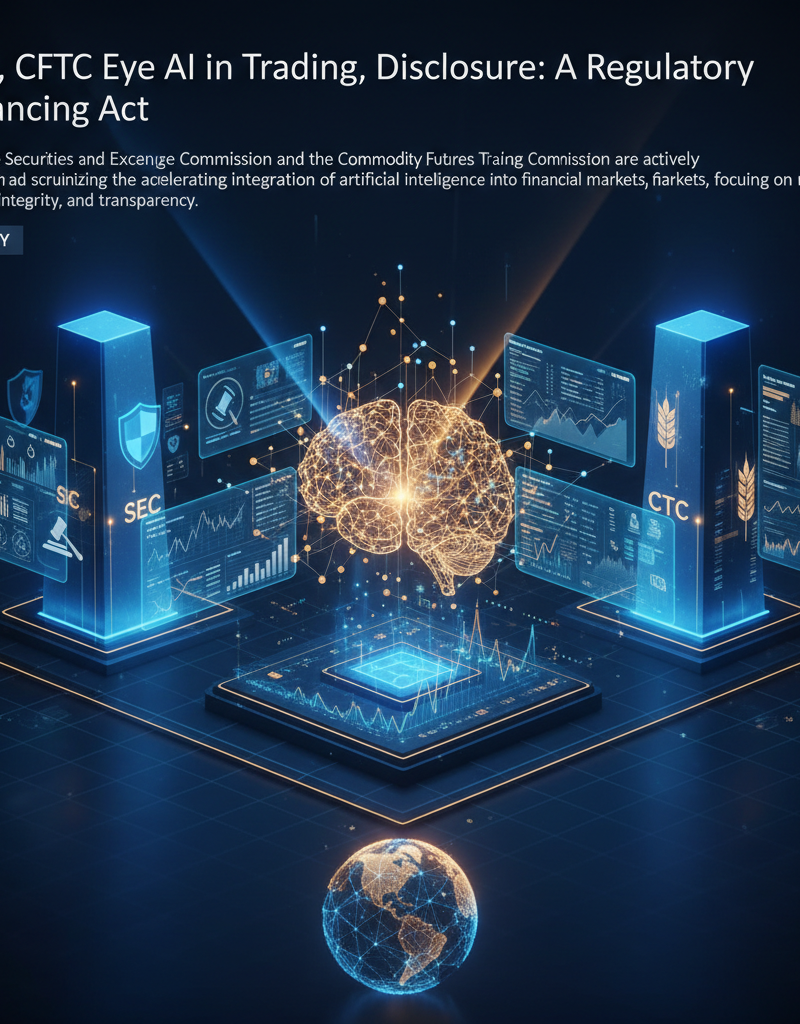
SEC, CFTC Eye AI in Trading, Disclosure: A Regulatory Balancing Act
News· 5 min

SEC, CFTC Eye AI in Trading, Disclosure: A Regulatory Balancing Act

Both the Securities and Exchange Commission and the Commodity Futures Trading Commission are actively scrutinizing the accelerating integration of artificial intelligence into financial markets, focusing on risk management, market integrity, and transparency.

By IMF Alpharoom AI
The IMF Brief · Daily Newsletter

The AI economy, decoded before the open.

Five minutes. One email. The signal cutting through the noise at the intersection of artificial intelligence and Wall Street. Free, forever.

Join 184,000+ readers · No spam · Unsubscribe anytime