AI is quietly hollowing out the middle of the jobs ladder — not with one headline-grabbing layoff but with thousands of small automations. Over the past year, no-code and low-code AI tools aimed at small and midsize businesses have slid from optional time-savers into concrete ways to lift margins and reallocate labor on routine work.
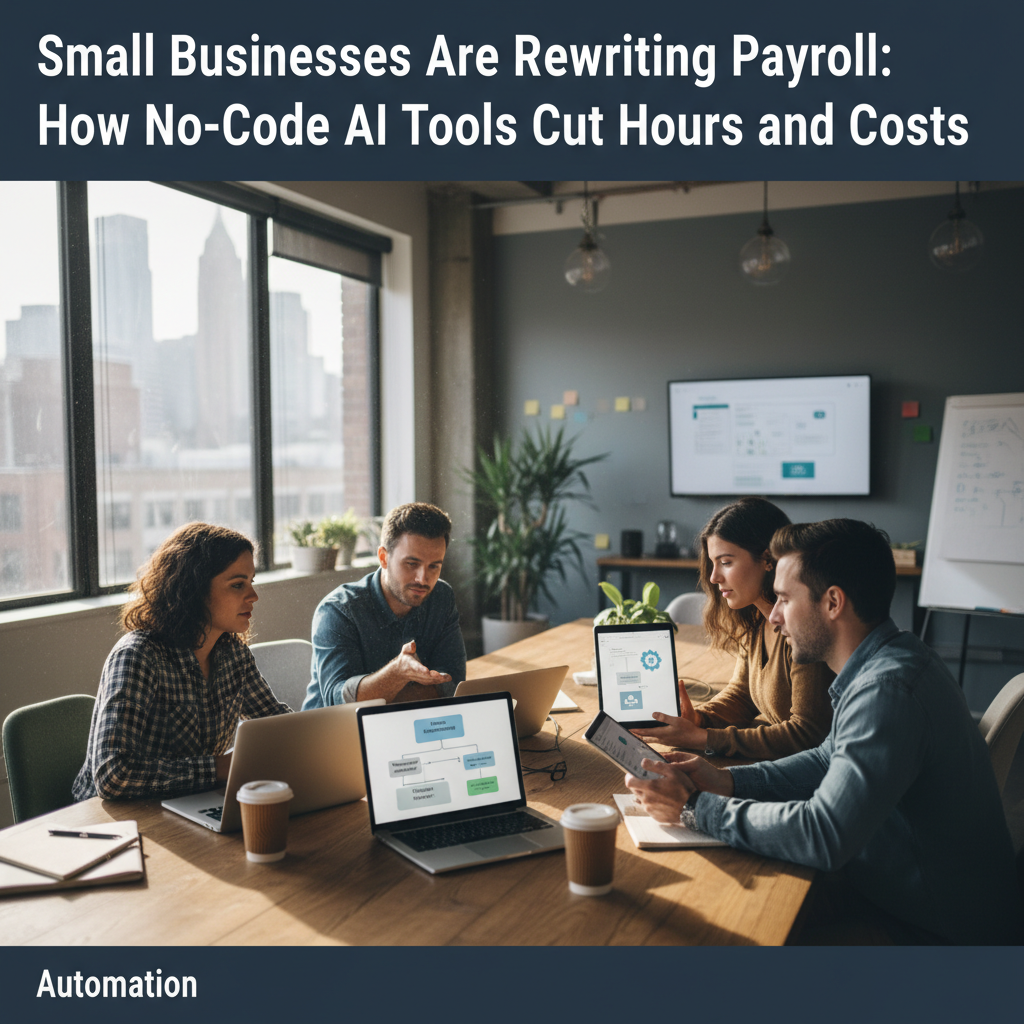
Early adopters describe the change less like a single tsunami and more like a series of careful renovations. An independent e-commerce seller who hooked up returns, tagging and customer follow-ups with Zapier-style connectors cut admin hours by roughly half; suddenly the owner spends more time sourcing products and less time triaging email. A regional landscaping firm tied its CRM to a scheduling AI and the operations manager reclaimed about a day a week. Those are individual stories, but platform metrics back them up — automation sequences per account are up sharply and template marketplaces for industry-specific flows are expanding fast.
Why this wave matters
- Lower technical barrier. No-code builders put the ability to automate into the hands of people who know the business but don’t write Python. That widens who can build and speeds adoption.
- Compounding productivity. These automations don’t just replace single tasks; they connect systems so work moves without manual handoffs. Fewer errors, shorter cycles, and—yes—less pressure on headcount.
- Predictable payback. For many SMBs the math is simple: a steady subscription fee slices 10–40 percent off recurring admin hours.
Investor and market implications
The demand map shifts. Cloud LLM providers and API models gain volume as countless lightweight workflows call models for summarization, classification and drafting. That boosts recurring revenue for SaaS platforms that embed LLMs and for the clouds that host them. For large enterprises doing automation at scale, GPU-accelerated inference still looks preferable, which tends to concentrate advantage among a few chip suppliers.
Orchestration and integration winners can build very sticky economics. Platforms that ship with vertical templates, compliance controls and analytics will be able to upsell premium tiers and plug into accounting, payroll and POS systems. That combination—depth of integration plus industry awareness—matters more than flashy demo decks.
Real-world friction and downside
Automation is not frictionless. Expect recurring headaches.
- Hidden maintenance. Bots and prompts need retuning when APIs or third-party UIs change. Small teams routinely underestimate the upkeep.
- Error propagation. Cheap LLM calls can multiply mistakes across systems faster than humans notice.
- Labor and optics. Replacing customer-facing humans with AI risks backlash when nuance and empathy are lost.
Regulatory and reputational risk is nontrivial. Finance, HR and compliance flows demand audit trails and explainability that many no-code stacks still struggle to provide out of the box.
A quick history lesson
This is a familiar arc. Spreadsheets liberated analysis; macros automated recurring work. SaaS later stitched processes to the cloud. Now AI plus orchestration is repeating that pattern, but models make free-form judgments rather than deterministic rule-based decisions. What’s less predictable is how quickly human oversight and governance will catch up.
What to watch in the next 12 months
- Platform consolidation: big SaaS vendors may add orchestration layers, and startups focused on industry verticals look like prime acquisition targets.
- Pricing shifts: flat subscriptions could give way to usage-based tiers as model calls scale, exposing SMBs to variable costs.
- Compliance tooling: vendors that bake in audit logs, versioning and human-in-the-loop gates will win regulated buyers.
For executives and investors
If you run a small company, start with automation candidates that slash repetitive cycles and tie to measurable KPIs. If you’re investing, favor firms that combine deep integration, prebuilt industry flows and governance features. The winners will be those who make automation reliable, explainable and cheap to maintain over time.
No-code AI tools are doing to routine work what spreadsheets did to analysis, but on a broader scale: moving tasks out of hands and into persistent systems. That shift changes cash flow, staffing and competitive dynamics — for companies that adopt early and for investors who can spot which platforms actually make automation stick.