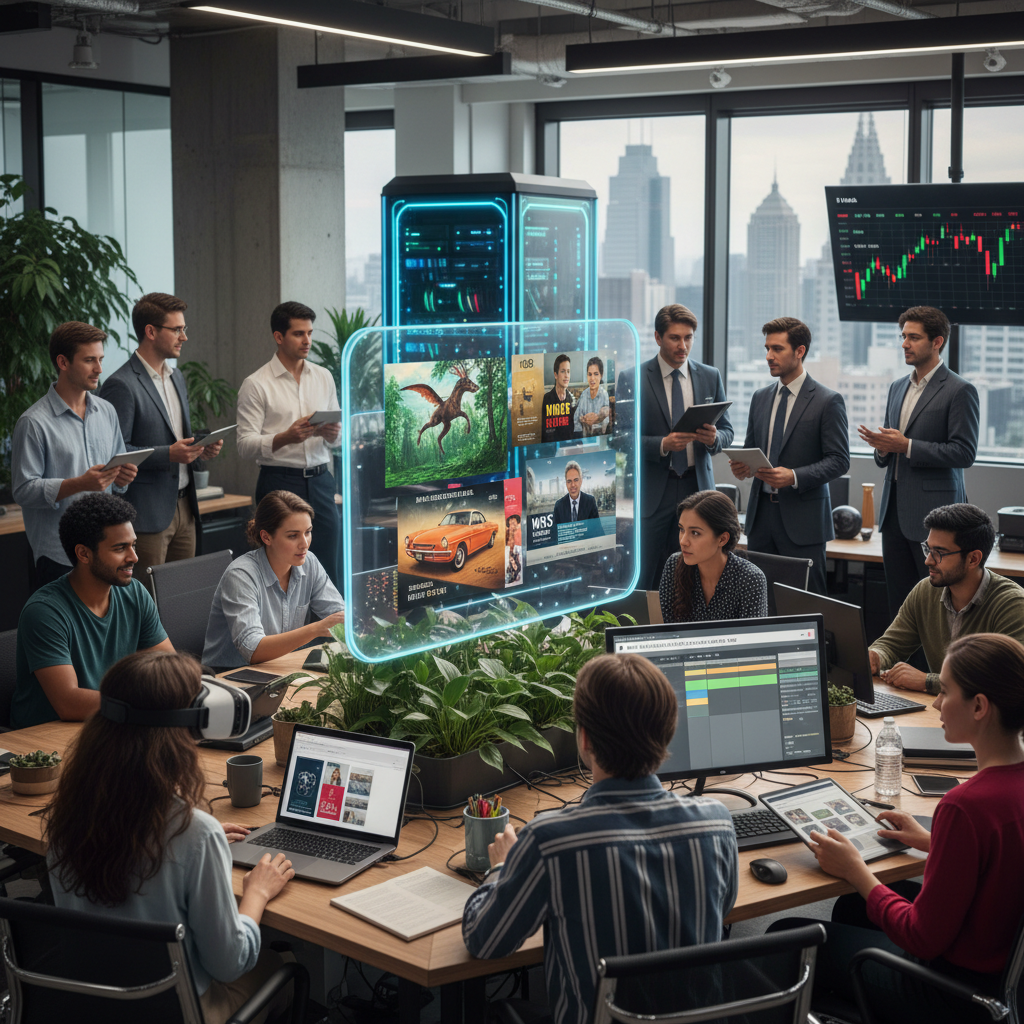
The jump from text prompts to moving images felt inevitable; now it’s here. What began as shaky, short loops has grown into tools that can plausibly produce marketing spots, social shorts, and useful first drafts for indie films. They’re not perfect. Still, they are useful—quickly.
Why this matters now
-
Two lessons from the image boom are already repeating: output quality can improve very fast, and distribution turns that output into value. Text-to-video inherits both. Stronger models, cheaper GPUs, and smoother product integrations mean these tools are no longer just curiosities.
-
Big tech and focused startups are both pushing forward. That pushes improvement, but it also creates a mess of competing priorities — platform safety, payment models, creator economics — and those tensions will shape which products survive.
Infrastructure: who’s ahead
-
GPUs are still the bottleneck. Demand for cloud inference and training capacity is a clear tailwind for chip makers and cloud providers. If you follow signals that matter to investors, watch GPU utilization, cloud bookings, and margins.
-
Expect ecosystems to form around editing layers, style presets, and plugins. The real winners will be the tools that let creators refine AI drafts without forcing them to become machine-learning experts.
The real-world friction: cost, copyright, trust
-
Quality comes with compute. A polished 30-second clip can still cost nontrivial GPU time or require heavy optimization. That doesn’t replace big production budgets this minute, but it makes ideation and iteration dramatically cheaper.
-
Copyright and likeness issues are already appearing. Platforms will need watermarking, provenance metadata, or certification programs so advertisers and publishers feel safe using the output.
-
Trust is social. One widely shared misuse or a convincing deepfake could trigger fast policy and regulatory pushback. In practice it’s messier than theory suggests — public perception moves the fastest.
Concrete implications for three groups
-
Creators: Treat text-to-video as a drafting layer. It speeds up storyboarding and social-first cuts, but most commercial work will still need a human finishing pass.
-
Advertisers: A/B testing and localized cuts become much faster. Brands will pay extra for compliance guarantees — verified source assets, strong filters, contractual safeguards.
-
Investors: Look past raw model vendors and toward infrastructure and SaaS that add workflow value. Compute demand, recurring revenue from creator tools, and enterprise safety features are stronger signals than model accuracy alone.
A quick case sketch
An indie agency ran a text-to-video tool overnight and produced three versions of a 15-second social spot. The creative director pulled the best bits, re-shot a single actor to anchor authenticity, and skipped a full-location shoot. That hybrid — AI plus selective live capture — is likely to be the dominant playbook over the next 12–24 months.
What to watch next quarter
- Standards around watermarking and provenance beginning to stick.
- Pricing nudging away from per-generation fees toward subscriptions or credit bundles for enterprises.
- More partnerships between model providers and established editing suites.
Text-to-video will not make skilled cinematographers obsolete. But it does multiply what teams can test and iterate. Near-term winners will be the groups that combine human judgment with AI speed: studios that iterate faster, platforms that lower advertiser risk, and tools that make high-end finishing more accessible. If you produce video, buy GPUs, or write checks, start planning for hybrid workflows now.