The narrative that AI simply equals hyperscale clouds and one GPU champion is starting to fray. NVIDIA did build a massive moat with datacenter GPUs, no question. But the next chapter looks messier — more distributed, and for investors that means more competition and more nuance.
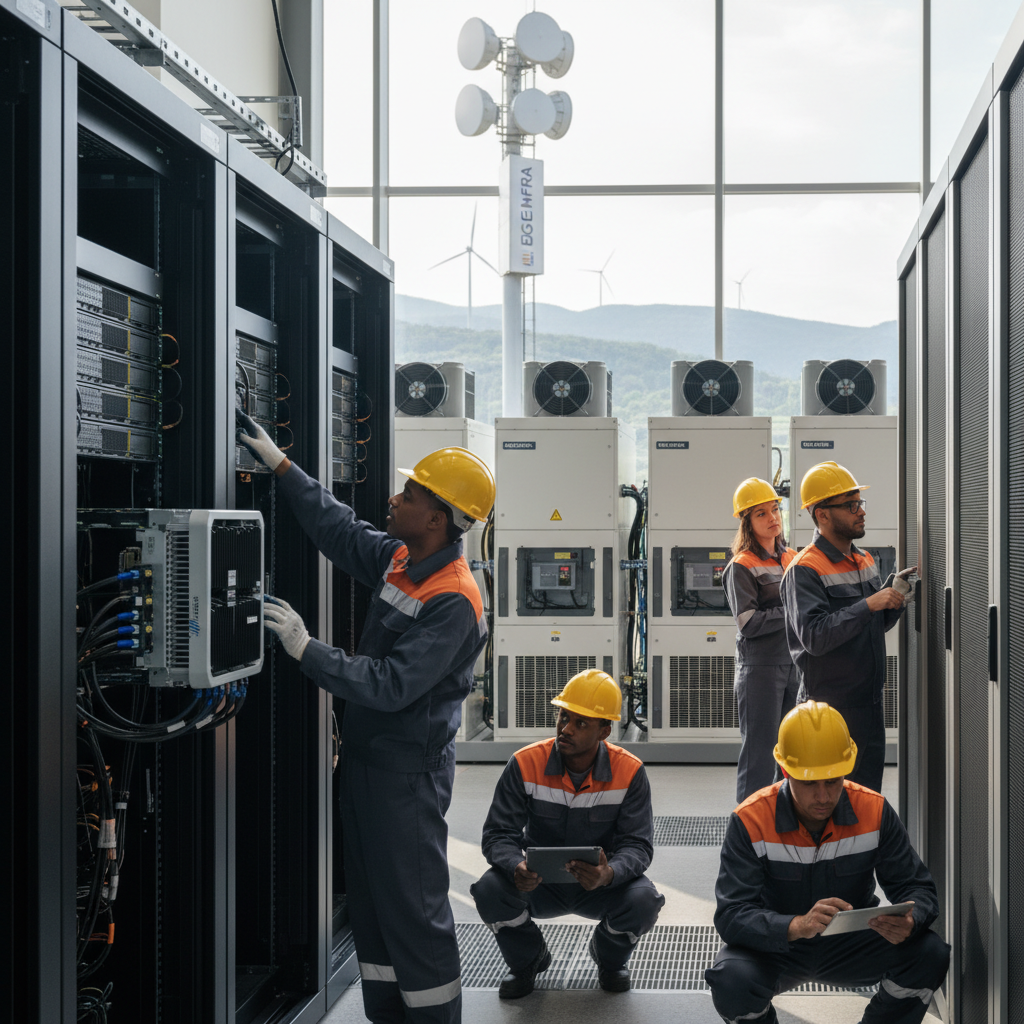
This is a familiar tech cycle: as inference demand and latency-sensitive apps explode, economics and regulation push work away from distant cloud farms toward regional hubs, telco edge sites, and private on-prem clusters. Think content-delivery networks all over again, but for models instead of video.
Why this shift matters
-
Cost-per-inference is changing the math. Training will likely remain a cloud-centric activity, but running billions of daily inferences is a different beast — scale-sensitive and commoditizable. Purpose-built accelerators and inference-optimized chips can match real-world performance while using far less power.
-
Latency and data locality are not abstract problems. Financial trading, medical imaging, autonomous logistics — these applications often need millisecond responses and tight data residency controls. Sending everything to a distant region adds time, cost and regulatory exposure.
-
Energy and infrastructure tilt toward smaller deployments. Electricity costs, cooling overhead and supply-chain bottlenecks make massive GPU farms politically and economically awkward in some markets. Denser, lower-power accelerators cut both capex and ongoing operating bills.
Players to watch
NVIDIA stays central because of its software stack and installed base, but the field is widening. Cloud providers are optimizing for their customers’ needs, chip designers are building domain-specific silicon, and startups are experimenting with interposers and inference stacks that squeeze out extra efficiency.
Also keep an eye on telcos and regional data-center operators. They’re quietly building AI hubs next to fiber and power. That adjacency matters for low-latency 5G use cases and for customers who demand local control.
Concrete examples (not thought experiments)
A retail broker deploying an LLM assistant for trader terminals will favor latency and security over peak training throughput. A mid-sized hospital network is likelier to buy a validated inference appliance for imaging so protected health information stays within state lines. These aren’t fringe cases; they nudge demand away from the largest clouds toward on-prem or regional solutions.
Investor implications
-
Growth stories fragment. NVIDIA still rides training demand, but growing competition on inference could compress long-term margins. Secondary winners include cloud operators with edge footprints, data-center REITs that host regional sites, and specialty chipmakers.
-
Valuation needs to reflect modularity. Firms that bundle hardware, firmware and orchestration can capture more value than pure-play silicon vendors. That matters when modeling take rates and customer stickiness.
-
Policy and procurement cycles matter more than many admit. Governments and large enterprises increasingly require traceability and localization, which favors regional providers and vendors who can ship validated appliances quickly.
Counterpoints and risks
-
Hyperscalers are not idle. Deep pockets for capex, aggressive hiring and proprietary silicon programs let the big clouds drive costs down and try to reassert dominance.
-
General-purpose GPUs are versatile. If model architectures swing back to workloads dominated by broad matrix operations — more transformer-style work — GPUs regain a clear advantage.
A slightly different framing
Expect a federated market: central training, distributed inference, and more players taking pieces of the value chain. Investors and operators should stop thinking of AI hardware as a two-player game and instead build scenarios that account for specialization, regionalization and steady pressure on operating costs.
If you want a historical parallel, look at the server era of the early 2000s. Scale mattered, yes — but so did proximity, compliance and appliances tuned to specific needs. Those same dynamics are quietly reshaping who wins in the AI era.