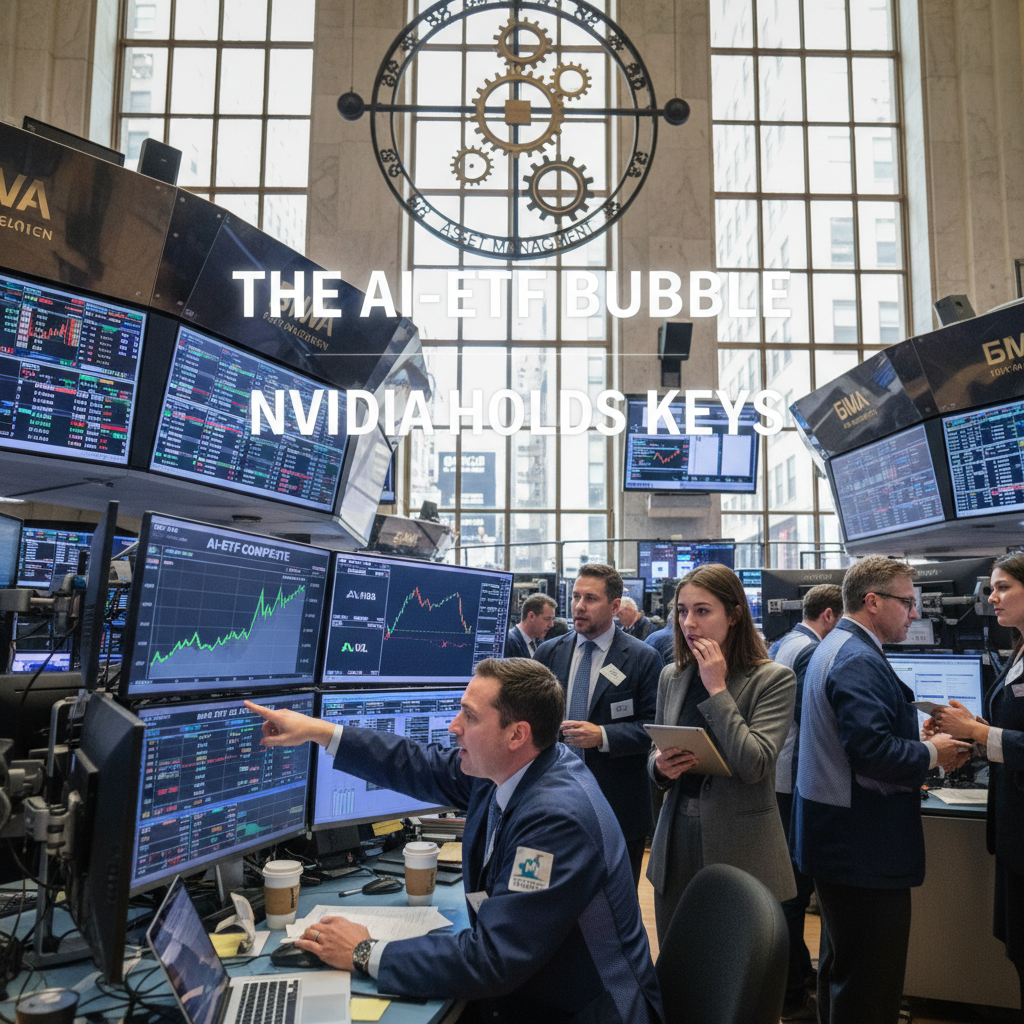
Nvidia isn’t just a stock — it’s become the fuel tank for a lot of AI ETFs. Retail flows and headline-grabbing returns have concentrated huge allocations into a handful of chipmakers and cloud platforms, turning what were meant to be thematic baskets into concentrated bets.
Anyone who lived through the late 1990s will recognize the pattern: a story arrives, inflows chase winners, and indexes end up rewarding the biggest names. What’s different today is speed. Modern ETFs, options markets and algorithmic trading can convert a sector wobble into a liquidity sprint within a single trading day.
Why concentration matters now
- Many AI ETFs behave more like single-stock plays than diversified themes. When one company dominates index weights, the fund’s risk profile follows that company.
- Options and other derivatives around the largest holdings can amplify moves. Heavy positioning in options on a few names makes ETF ownership more volatile than it looks on paper.
- Liquidity mismatch is real. Smaller funds with big positions in thinly traded AI names can suffer wider spreads and painful price slippage on redemptions.
Patterns worth watching
- Megacap dominance. Nvidia, Microsoft, Alphabet and Amazon often sit in the top slots of AI-themed funds. That commonality drives correlated returns across products.
- Active vs passive friction. Many active AI funds promise stock-picking advantage, but they frequently end up shadowing the same mega winners because those companies dominate the AI revenue story.
- Retail mechanics. Commission-free trading plus social-media driven flows push money in and out of ETFs faster than in previous cycles — and that momentum can feed itself.
Why this isn’t just alarmism
The bull case has teeth. GPUs and cloud services are real inputs to enterprise AI adoption, and some concentration reflects actual economic leadership. ETFs also democratize access: for many investors, a basket is a safer, simpler route than picking a single name. Meanwhile, certain active strategies — revenue-based exposure, equal-weighting, rules that cap single-stock weights — can materially reduce concentration without losing AI exposure.
Still, don’t kid yourself: profits for AI leaders are clearer than the late 90s, yes, but the transition from hype to durable margins is uneven. Think of it as FAANG-level attention with semiconductor-style cyclicality. It’s promising, and messy in equal measure.
Practical steps for investors
- Look at holdings, not marketing. Check top-10 weights and calculate effective exposure.
- Prefer funds with explicit concentration limits or consider equal-weighted versions if you want broader exposure.
- If you’ve got a large allocation, think about partial hedges or options strategies to protect after steep rallies.
- Advisors: scenario-test portfolios specifically for a shock to the largest AI names, not just a generic tech drawdown.
A final thought: AI ETFs are a powerful on-ramp to a big secular trend, but many are less diversified than they appear. Treat them like precise tools — very useful in skilled hands, risky if swung wildly. Size positions deliberately, read the prospectus, and don’t let thematic excitement masquerade as automatic diversification.