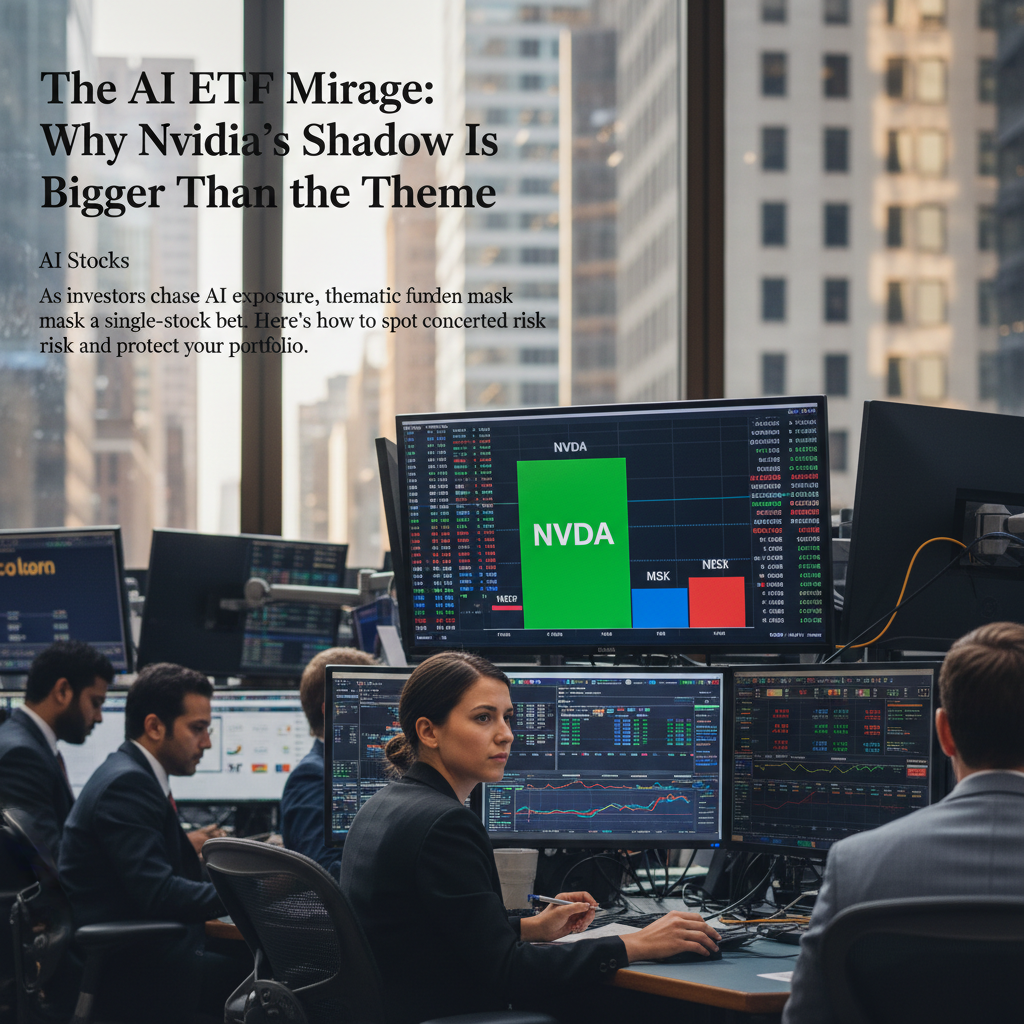
The headline is familiar by now: AI ETFs are piling up assets.
But beneath the neat tickers and slick ads there’s a recurring, underreported problem — many of these funds behave less like broad bets on an emerging industry and more like concentrated wagers on a handful of megacaps, with Nvidia often dominating the roster.
This matters. If you buy a single ETF thinking you own the AI story, you might actually be buying heavy exposure to one company. Imagine buying a ticket to a museum that promises a survey of modern art, and discovering the gallery dominated by a single enormous painting. The theme is present, sure. Your portfolio’s risk, though, ends up looking a lot like a single-name bet.
Why concentration matters
- Single-stock risk hiding behind thematic branding. Funds promise exposure to chips, cloud AI, software and infrastructure. But the indexes that define many AI ETFs tend to lean on the largest, most liquid contributors. When those names wobble, the whole fund follows.
- Valuation and volatility. A handful of winners often trade at premium multiples. If sentiment shifts, a re-rating can turn a long-term theme into a short-term roller coaster.
- Overlap with what you already own. Many investors hold megacaps through broad index funds or retirement plans. Buying an AI ETF with the same names can unintentionally double down on the same exposure.
- Illusion of diversification. Owning 30 to 100 stocks sounds diversified until the top five weights account for 40–60 percent of the fund.
A fair counterpoint
There is a defensible case for concentration. AI infrastructure exhibits winner-take-most dynamics; a small set of firms can capture outsized profits from networks, platforms and proprietary chips. Overweighting those winners can be a rational choice. Still — and this is important — that economic argument does not excuse surprising investors with what is effectively single-stock exposure.
A short checklist before you buy
- Check the top 10 holdings and their combined weight. If one name dominates, treat the ETF like a concentrated stock play.
- Read the index methodology. Is it market-cap weighted, factor-weighted, or curated by the issuer? Rebalancing cadence matters.
- Compare overlap with your core holdings. Add up your exposure to the same megacaps across all accounts.
- Watch expense ratio and turnover. High turnover can create taxable events; thematic or active strategies often cost more than broad index funds.
- Seek true AI revenue exposure. Companies earning revenue from AI-specific products, recurring cloud contracts, or proprietary chips show stronger thematic fidelity than generic tech names.
Tactical alternatives
- Buy individual companies you understand and size the positions deliberately.
- Build a capped basket to limit single-name risk, or combine ETFs that follow different indexing rules.
- Consider active managers who expressly manage concentration — but only if fees and track record justify the trade.
A bit of historical context
Concentration isn’t new. The late-1990s tech frenzy and the later waves of mega-cap leadership in the 2010s both show markets funneling gains into narrow leaders until sentiment shifts. Themes can persist, but leadership within them changes. Treating a theme as a one-way bet on a single pillar invites haircut risk.
One practical takeaway
AI is going to reshape industries, but thematic ETFs are tools, not guarantees. If you want exposure, build it intentionally. If you bought an AI ETF expecting broad diversification, take a few minutes to check the holdings. The difference between owning the narrative and owning the risk is worth that small effort — and a bit of humility.