The story the market wants — and the one the Fed may not deliver
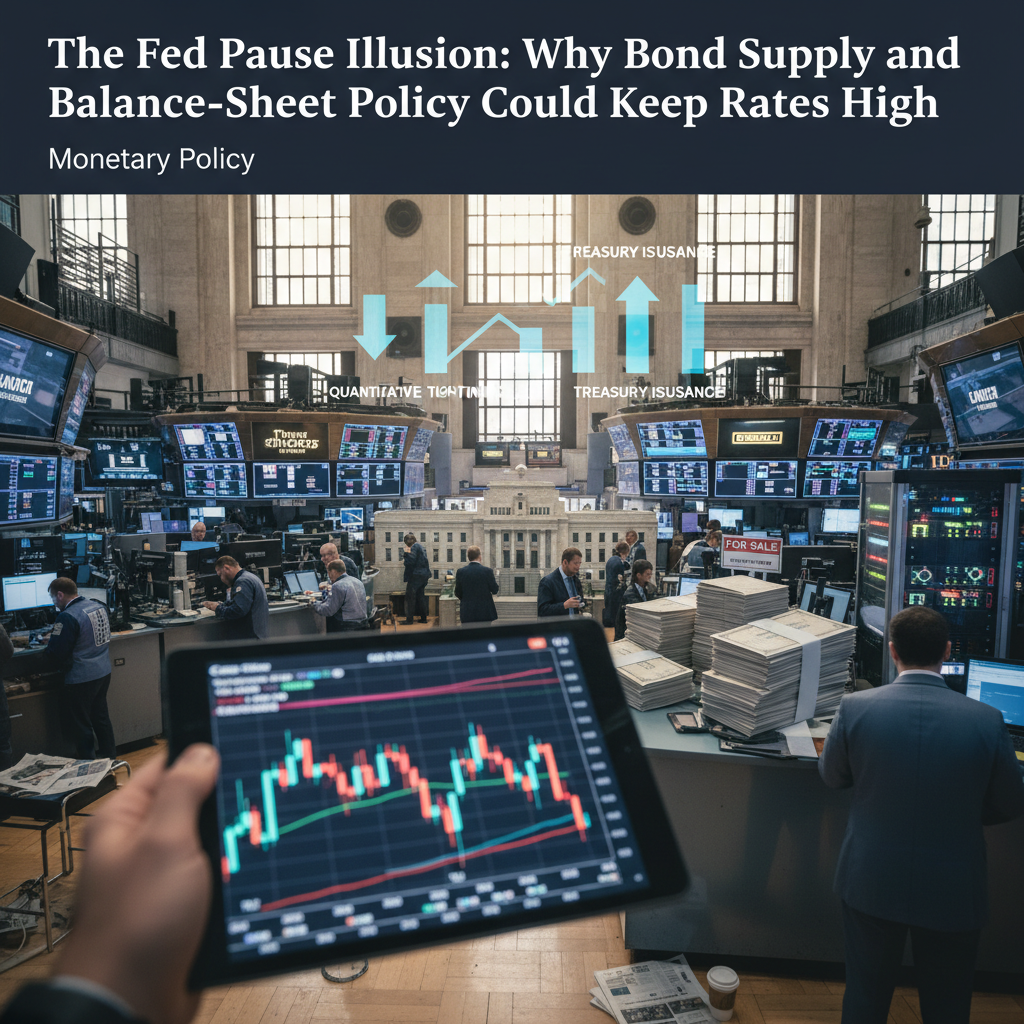
Investors are penciling in rate cuts. At the same time, years of quantitative tightening and a big jump in Treasury issuance are quietly pulling yields the other way. There’s a mismatch here: the Fed can talk about easing, but bond-market mechanics don’t care for neat narratives.
Why the Fed’s balance sheet still matters
Shrinking the central bank’s holdings removes a steady buyer of long-dated Treasuries and mortgage-backed securities. Someone else has to take that paper — pension funds, overseas investors, private pools — and when demand doesn’t keep up, yields climb. It doesn’t happen like flicking a switch, but the effect lingers along the curve even if the policy rate is unchanged.
Practical knock-on effects
- Mortgage rates follow long-term yields, so affordability takes a hit and housing turnover slows.
- Valuations for long-duration growth stocks look less forgiving as discount rates rise.
- Corporates face higher borrowing costs, which can damp investment and hiring plans.
Why Treasury issuance matters more than the headlines imply
Large fiscal deficits mean the Treasury is putting many more notes and bonds into the market. More supply tends to push term premia up unless there’s matching demand. Imagine adding seats to a stadium while fewer fans show up: prices fall and yields rise. It’s simple supply-and-demand, but the scale right now makes a real difference.
Historical echoes, and a caveat
This isn’t a replay of any single past episode, though 2013’s taper shock and the 1994 repricing are useful reference points. Those moments showed how quickly risk appetites can shift when liquidity and supply dynamics change. What’s different now is both the sheer volume of issuance and a global reshuffling of demand for dollar paper — which can amplify moves.
Where the debate fractures
Some economists point to cooling headline inflation and expect cuts as soon as next year. Others focus on sticky services inflation and technical stresses in the Treasury market, arguing long rates could stay elevated. Both views can be right at once: short-term policy could be looser while the long end refuses to cooperate. That’s awkward for many portfolios.
What this means for people and portfolios
- Homebuyers: plan for mortgage payments that may be higher than the Fed funds path suggests. A 0.75 percentage-point move in the 10-year yield can add hundreds to monthly payments.
- Equity investors: expect rotation. Short-duration value names and banks may hold up better than long-duration growth if term premia rise.
- Portfolio managers: duration risk matters. Cash, floating-rate paper, and shorter-duration bonds become more than just placeholders — they’re active hedges.
An imperfect pause
The Fed controls the policy rate, but it cannot instantly unwind decades of balance-sheet expansion or cancel the impact of big fiscal deficits. Plenty of market participants are betting on an orderly glide path to easier policy. That bet could be tested when bond-market mechanics push yields higher even as the Fed signals restraint on short-term rates. Expect a messier interplay between rhetoric and reality — and a next Fed move that may look like a cut on paper but not necessarily in prices or pocketbooks.