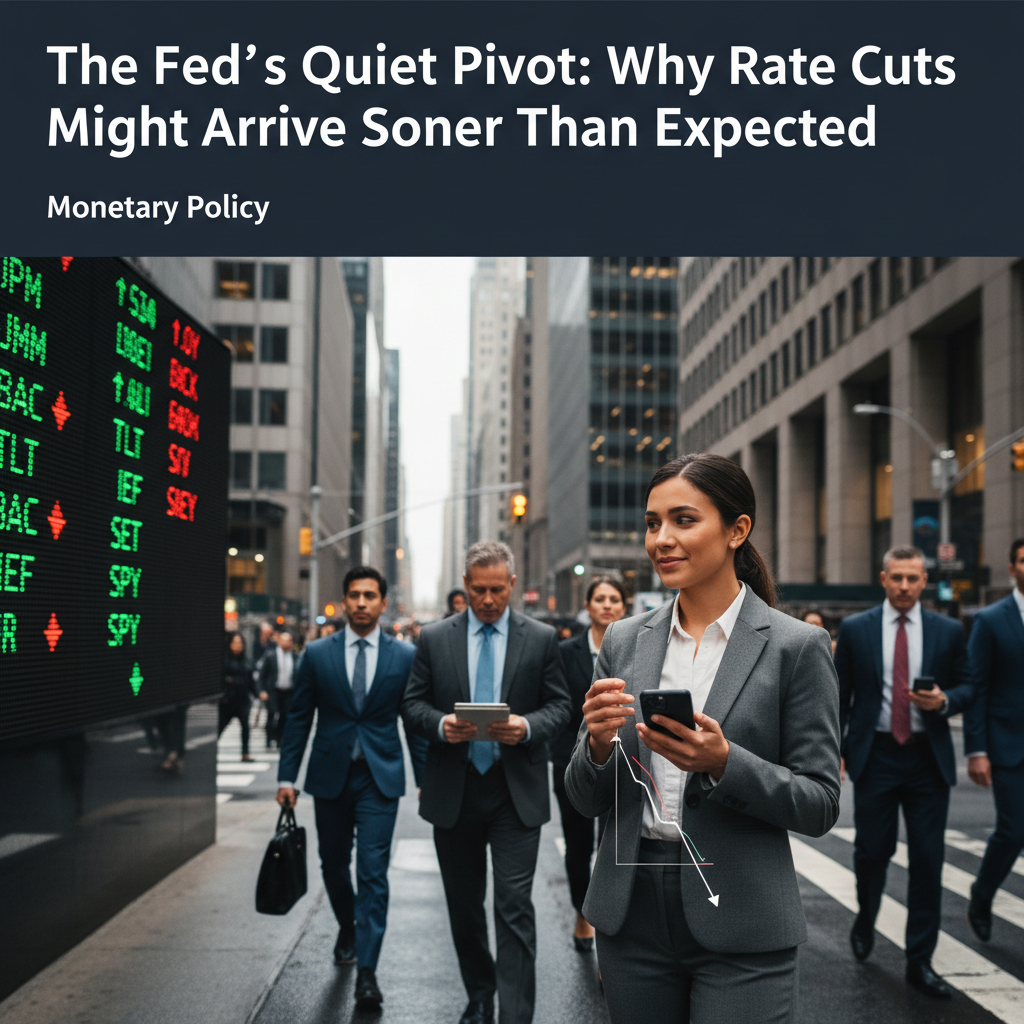
The headline: the Fed is talking softer, inflation is nudging lower, and markets are pricing cuts earlier. Put together, that constellation is starting to feel less like wishful thinking and more like a plausible tilt toward easier policy.
It is not a dramatic break. Think of it as small pushes adding up. Core inflation measures have drifted down, wage growth has cooled in some sectors, and Fed officials are stressing optionality instead of a fixed path. Those moves raise the chance that rate cuts could come sooner than many expected at the start of the year.
Why this matters now
- Futures are pricing policy, so earlier cuts compress long-dated yields and tighten the spreads banks rely on for borrowing profits.
- Mortgage rates are stubborn, but a clearer expectation of Fed easing tends to pull longer-term fixed-income yields lower over time, which helps buyers and refinancers.
- Even modest easing changes affordability and credit access. That matters because households are still stretched by rents and student loans — small shifts can have outsized effects.
Quick data highlights
- Core inflation measures have edged toward the Fed’s tolerance band, though services inflation — especially housing- and rent-related components — remains the sticky part.
- Wage growth is moderating in important industries, which weakens the feedback loop that could reignite price pressures.
- The Fed’s balance-sheet runoff has slowed. It’s a quieter form of accommodation, and historically such technical easing often comes before cuts in rates.
Mechanics, then politics
There are two competing takes worth keeping in mind.
First, the cautious-pivot view: the Fed is buying time. If labor markets stay tight or fiscal impulse returns, inflation could reaccelerate. Cutting too early risks repeating painful stop-start cycles from past decades.
Second, the pragmatic-pivot view: policy is probabilistic. With inflation trending down and growth softening, the Fed has room to trim rates to support activity without necessarily unmooring expectations.
Both arguments hold water. Threading that needle is the Fed’s daily task — easier to describe than to execute.
Winners and losers (rough sketch)
- Banks: Narrower curves squeeze net-interest margins. But if defaults fall because credit conditions ease, that offsets some pain. Regional banks are more exposed than the big diversified ones.
- Homebuyers: Lower long-term yields eventually ease mortgage costs, though the pass-through is uneven and depends on bond-market confidence.
- Bond investors: Short-duration paper becomes less appealing if cuts arrive; long-duration Treasuries would likely rally in a genuine pivot.
- Equities: Rate-sensitive sectors — real estate and growth tech — would benefit; value and financials face mixed signals.
A short historical frame
Monetary pivots are usually gradual. The 1990s and the 2019 easing episode show the Fed can loosen mid-cycle when growth risks outweigh inflation worries. The practical lesson: watch the trajectory, not the headlines.
What to watch next
- Fed minutes and comments from regional presidents for shifts in timing and language.
- Labor-market datapoints for wage trends and participation changes, not just the headline unemployment rate.
- Treasury issuance and Fed balance-sheet moves for technical pressure in bond markets.
Takeaway
This is not a come-from-behind pivot. It looks incremental and conditional — born of easing inflation and a central bank that prefers optionality. For markets and households the implications are tangible: lower borrowing costs are possible and perhaps sooner than many expect, but the path is narrow. Practical positioning: hedge duration exposure, rethink bank and mortgage bets, and pay closer attention to wage dynamics and rents rather than relying on a single unemployment print.
Pedro Marini