Headline: AI doesn't come free
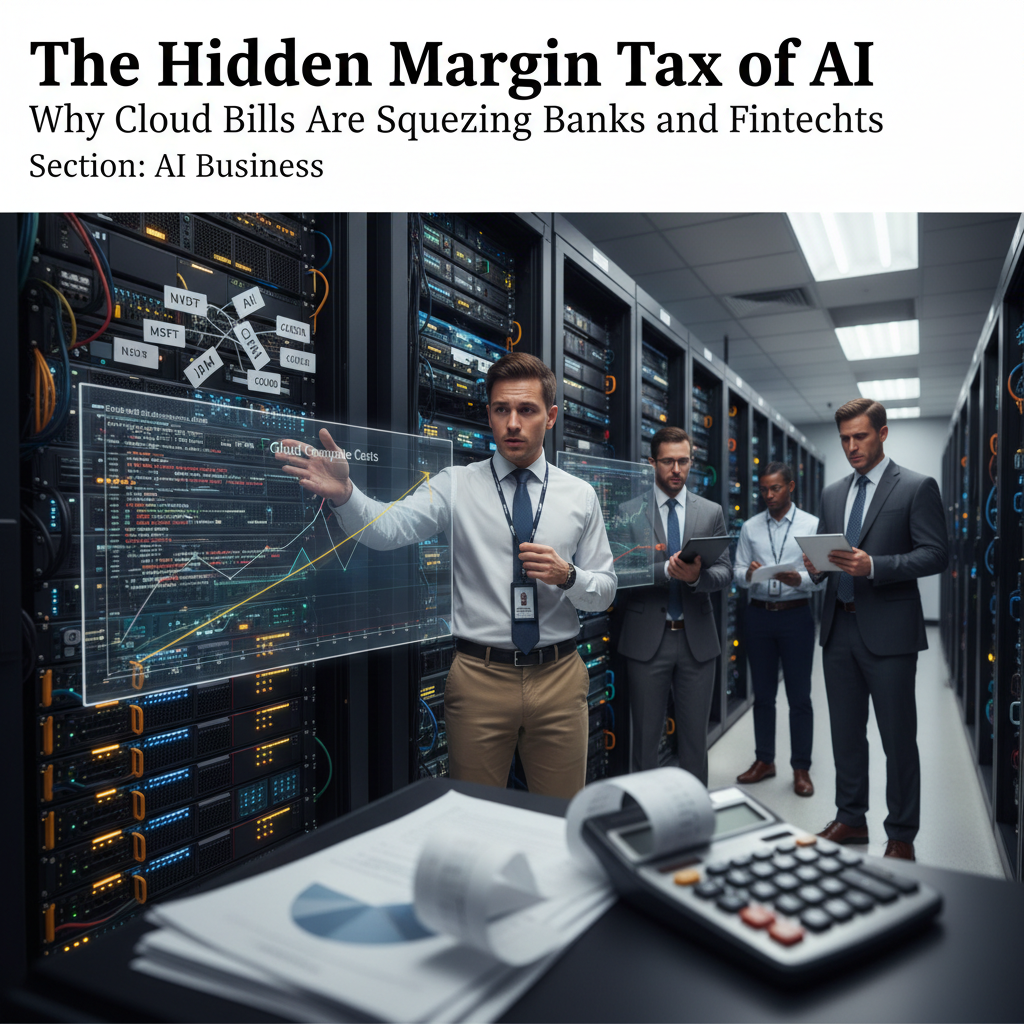
Companies that rushed to bolt large-language features into apps and underwriting are now facing a blunt reality — models can drive revenue, yes, but they also create a recurring cost that behaves more like rent than one-off capital expense. That matters for valuation, and it should change strategy.
Why this matters now
- Cloud compute for large models doesn't scale linearly. A modest uptick in usage can easily double your bill.
- Financial firms run on thinner margins than pure software shops. So the same cost curve hurts more.
- Investors cheer AI adoption, often without fully pricing the ongoing cost that follows.
Not everyone feels the squeeze the same way
- Big banks with scale and captive data centers can move parts on-prem or to hybrid setups and blunt price shocks.
- Challenger fintechs and regional banks typically rely on public clouds and face higher variable costs per transaction.
- Some wealth managers and trading desks use highly optimized inference or bespoke chips to cut marginal cost — a luxury most smaller firms can't afford.
A few recent patterns are worth noting. Some fintechs are shifting from always-on personalization toward client-triggered features that keep the UX but cut continuous compute. Others are renegotiating cloud contracts or buying reserved capacity — think fuel hedges for compute. A small number are talking to chip designers to run trimmed models on-prem, sacrificing some flexibility for lower unit costs over time.
For investors: what to look for
- Watch cloud spend as a percentage of revenue in filings. The trend matters more than the absolute number; rising share signals margin pressure.
- Read guidance about AI rollouts closely. Promises of rapid feature acceleration without cost offsets are a red flag for future margin surprises.
- Pay attention to partnerships and M&A. Deals with cloud providers or chip firms are often defensive moves to blunt the new cost tax.
Where AI helps — and where it can fail
AI can improve margins. Smarter automation cuts fraud, speeds underwriting, and creates upsell opportunities. If a firm actually converts compute into meaningful revenue per request, the math swings positive quickly. The catch is conversion rate: many pilots never scale, leaving a recurring expense with little upside.
A quick historical echo
We saw something similar in the early cloud era. Startups loved low capex, then found elastic bills as usage grew. Banks learned the same with compliance and storage — regulatory needs became persistent costs. AI is another layer on top: a powerful capability that also establishes a new, ongoing line item.
Practical next steps for executives
- Measure AI cost per customer or per loan decision as a core KPI.
- Pilot smaller, distilled models in production to lower inference cost.
- Negotiate blended cloud + on-prem contracts and secure reserved capacity where it makes sense.
- Be explicit with investors about the path from pilot to profitable scale.
One reality to keep in mind
AI can be a durable competitive advantage, but it's not free. Track adoption and, more importantly, the margins that follow. Firms that treat compute as a strategic asset — tuning models, picking infrastructure deliberately, aligning incentives — will turn AI from an expensive novelty into sustainable advantage. The rest risk seeing AI become a tax on growth.
Pedro Marini