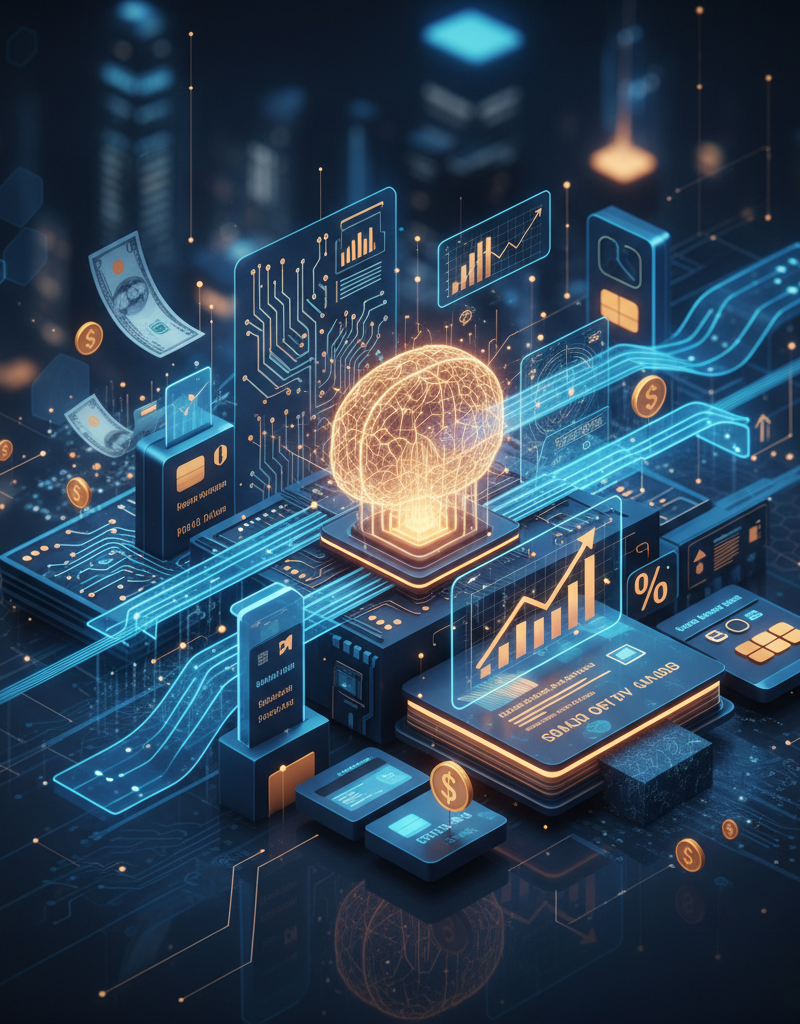
A subtle seismic shift is under way. For years the AI conversation lived in the cloud: big GPUs, bigger models. Now compute is drifting back toward devices, and the story gets messier — and, frankly, more interesting.
Why on‑device AI matters right now
- Chips are finally closing the gap. Mobile neural engines and purpose-built accelerators let trimmed language and vision models run quickly without a roundtrip to a server.
- Privacy and latency have grown up. Offline transcription, local photo edits, and real‑time camera tricks not only feel faster; they also keep far less user data exposed to third parties.
- The math changes. Shifting inference to devices moves costs from recurring cloud bills to up‑front silicon and app engineering.
What's interesting is how these three forces reinforce each other. Faster chips make local features feasible; privacy concerns make them desirable; economics make them sensible.
Concrete examples you either already use or will soon
- Voice assistants that transcribe and act locally, without sending raw audio to the cloud — showing up now in higher‑end phones and tablets.
- On‑device search and summarization across your own documents and messages, keeping sensitive info on the device by default.
- Camera features that run complex edits and scene understanding instantly, improving UX and battery life versus constant cloud calls.
These aren’t pie‑in‑the‑sky ideas. They’re incremental, practical shifts in user experience.
Winners and the worried
- Winners: chipmakers who stuff capable NPUs into phones and PCs, OS vendors who expose local models through APIs, and developers who can ship value without cloud lock‑in.
- Worried parties: parts of the cloud stack that handled routine inference. This isn’t an extinction event for data centers — training and large-scale models stay there — but demand for some inference workloads will narrow.
Call it a rebalancing more than a replacement.
A few cautionary notes
- Local models are smaller and less capable than massive cloud models. Expect tradeoffs: most common tasks will be handled locally, but edge cases will still bounce to the cloud.
- Fragmentation risk is real. Varying phones, NPUs, and toolchains will introduce the kind of complexity developers remember from early Android hardware acceleration days.
In practice, the story will be messier than the headlines suggest.
Implications for developers and businesses
- Hybrid architectures become the norm: local models for latency and privacy, cloud for heavy lifting and aggregation. Teams will need flexible pipelines and smarter strategies to update models running on billions of devices.
- New monetization paths appear: one‑time purchases, edge‑inference subscriptions, premium on‑device features sold as distinct value. Expect experimentation; some will stick, some won’t.
Why this feels different than past cycles
This is the next chapter of decentralization. The 2010s moved computation to centralized clouds; now it’s dispersing again, but with much better software, larger open model ecosystems, and quantization techniques that simply weren’t practical a few years ago.
Signals to watch
- OS toolkits and NPU standards. If Apple, Google, and Qualcomm make model distribution easier, adoption will speed up.
- Developer tooling that automates quantization, pruning, and differential updates — keeping local models current without annoying users.
- Business models: which apps push premium on‑device features, and which keep users tethered to cloud services.
The winners will be those who combine device speed and privacy with the occasional cloud fallback.
The upshot
On‑device AI won’t replace cloud AI. It complements it and shifts where value accrues. For users: faster, safer features. For builders and investors: new battlegrounds around chips, platforms, and the economics of inference. Expect the next major app categories to be defined by how deftly they mix local and cloud intelligence.
Pedro Marini