Quick takeaway
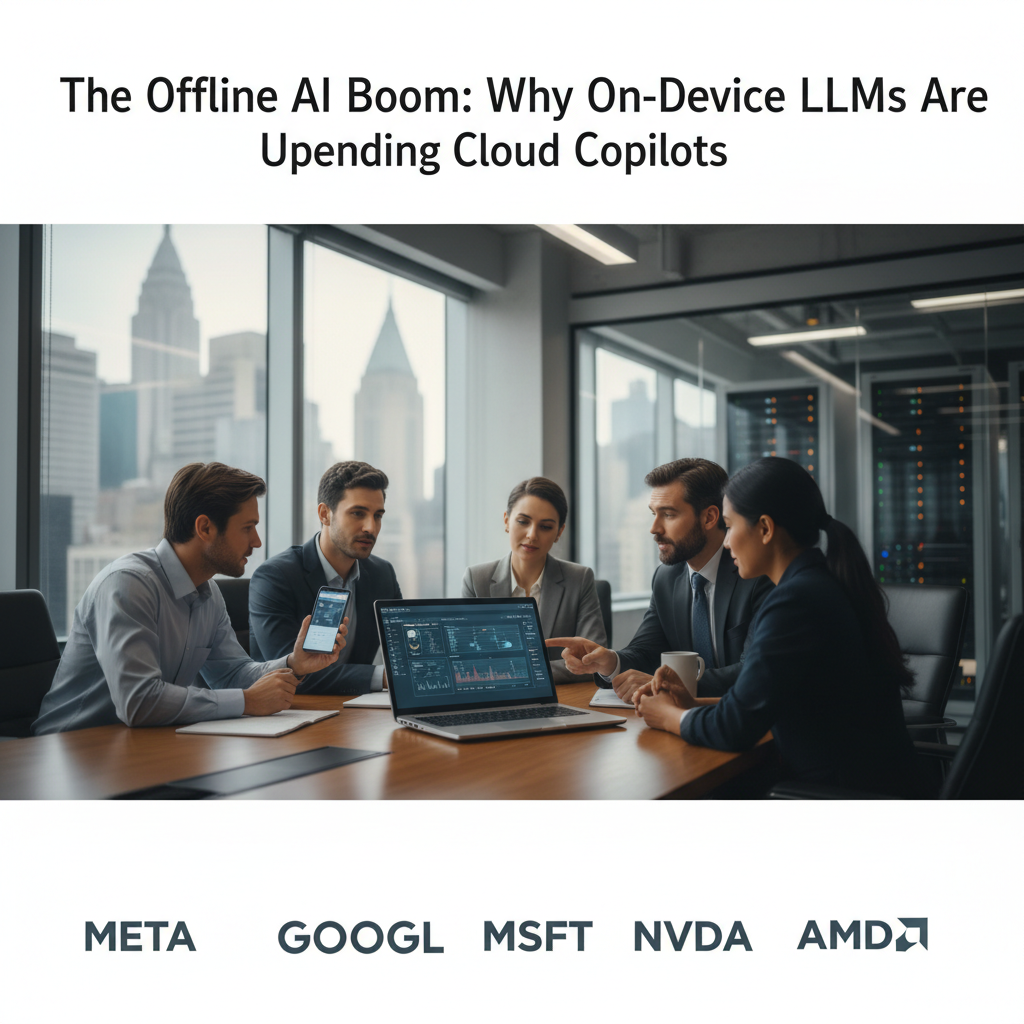
On-device large language models, once mostly a lab curiosity, are finally useful for real businesses. Better model efficiency, dedicated neural hardware in phones and laptops, and permissive open models make it practical to run capable assistants locally — keeping sensitive data on-premises and trimming recurring cloud bills.
A short history, with a twist
The last five years were dominated by cloud-first AI: massive models hosted by hyperscalers delivered the big jump in capability. That came with obvious costs — latency, bandwidth and, for regulated sectors, awkward legal questions whenever client data crossed a third party (and yes, lawyers noticed).
Now a different engineering stack is winning attention: smaller, tighter models; aggressive 8-bit and 4-bit quantization; compiler and runtime optimizations; and stronger edge NPUs. These moves don’t make flashy headlines, but they change day-to-day workflows — and they catch the eye of finance teams tired of ever-growing API bills.
Three drivers behind the shift
- Hardware finally matters. Apple’s M-series, Qualcomm and MediaTek NPUs, and cheaper discrete accelerators put usable local inference on laptops and phones.
- Open, efficient models. More permissive licenses and compact architectures from several labs let developers ship privacy-first assistants without the constant hit of API costs.
- Better tooling. Optimized runtimes, quantization toolchains and local retrieval-augmented frameworks make integration far less painful than it used to be.
Real implications for businesses
- Privacy-first workflows stop being a luxury. A small legal or healthcare shop can summarize documents locally instead of routing them to a cloud API, which reduces compliance risk.
- Cost math changes. For steady workloads, a one-time hardware investment plus engineering often beats perpetual cloud inference fees.
- Product design shifts. Users care more about immediate, snappy suggestions than tiny accuracy gains from a larger remote model. Perceived responsiveness drives adoption more than model size in many cases.
Why cloud still matters
- Capability ceiling. The largest, most capable multi-trillion-parameter models still need data-center scale. For cutting-edge research or heavy multimodal tasks, cloud remains essential.
- Fragmentation and testing. Supporting many hardware targets and model variants raises the testing burden and can introduce security gaps.
- Updates at scale. Pushing model improvements globally is simpler in a centralized cloud; on-device deployments require more elaborate rollout and rollback strategies.
Implications for investors and product leaders
- Pay attention to hardware and tool vendors. Companies that sell accelerators, quantization software or edge deployment platforms could capture outsized demand.
- Expect hybrid architectures. Use local models for latency-sensitive or private tasks and fall back to cloud for heavy lifting.
- Avoid vendor lock-in. Products that bind you to a single NPU or proprietary format create real risk; prioritize interoperability.
A short checklist for CTOs
- Map workflows that are latency-sensitive, highly sensitive from a privacy standpoint, or have steady throughput.
- Benchmark local inference on representative hardware — not just synthetic tests.
- Stage the rollout: pilot on-device summarization or classification before trusting the model with mission-critical decisions.
- Build an update mechanism that balances security, auditability and operational agility.
Where this leaves us
This is not an apocalypse for cloud AI so much as a correction. Intelligence is becoming distributed: the winners will be the products that put the right model in the right place. For users that usually means faster, more private and often cheaper AI. For incumbents it means rethinking pricing, partnerships and where core value is created. What’s interesting is how quickly the economics can flip once the engineering pieces fall into place.