The math is simple, the work is hard.
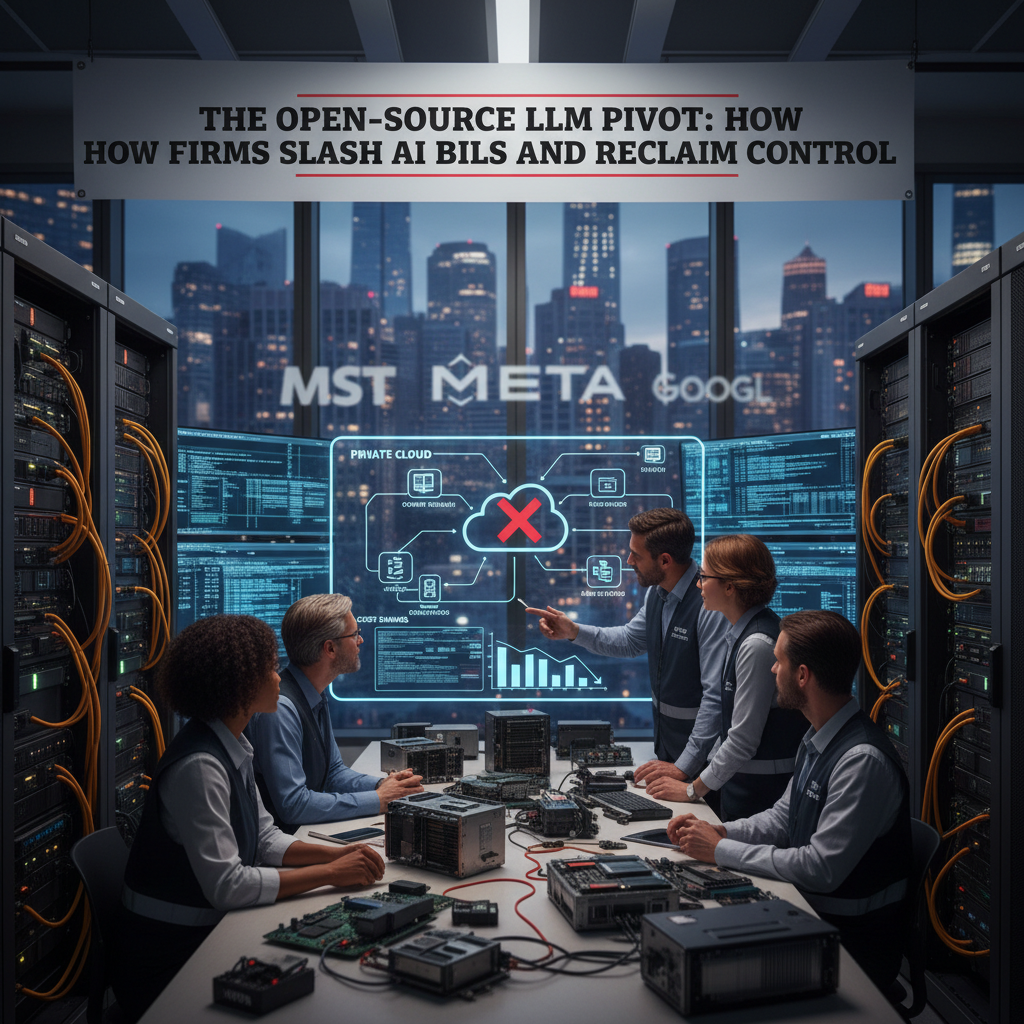
Many companies that once grew by paying per-call to cloud AI APIs are now compiling models, compressing weights and running inference on their own gear. The payoff can be huge in cost savings. The side effects are messy: ops burden, security headaches, ongoing model upkeep.
Why now
- Public API bills ballooned as usage scaled. At millions of queries, per-call pricing starts to feel like renting an expensive car just to do the commute.
- Open models have matured. Better tools for quantization, pruning and distillation make local or hybrid deployment realistic rather than experimental.
- Concerns about vendor lock-in and sensitive data movement push regulated customers toward private instances or dedicated enclaves.
What firms actually get
- Lower variable costs. After you buy hardware and staff the ops work, inference per token can fall by an order of magnitude versus public APIs.
- Tighter control and compliance. Running models on-prem or in isolated cloud pockets reduces third-party exposure, which matters for finance, healthcare and similar sectors.
- More freedom to customize. Fine-tuning, new prompts, or experimental architectures are easier when you own the stack and aren’t waiting on rate limits.
Not everything is free, though. There are tradeoffs.
The tradeoffs
- Running a production LLM stack is non-trivial. You need SRE expertise, constant evaluation for drift, and plans for cold starts and traffic spikes.
- Private deployments can give a false sense of safety. Misconfigured clusters and weak governance undo many security gains.
- If you misjudge the scope of tooling and talent required, operational costs will eat into the hardware savings.
Market ripple effects
- Cloud vendors will feel pressure on high-volume inference work. Expect more hybrid offerings and rent-a-GPU models.
- Chipmakers win as demand for on-prem accelerators rises, though price and efficiency competition will tighten.
- Tooling startups—monitoring, quantization, model-ops—become attractive acquisition targets for larger players wanting to stitch together end-to-end solutions.
A historical perspective
Think of this as the Linux moment for AI. Two decades ago, enterprises moved off proprietary stacks as open tooling and talent matured. The pattern looks familiar: convenience first, then cost discipline and a push for control.
For investors and strategists
- Near term: cloud incumbents still capture a lot of revenue and trust. Hybrid offerings will be where battles are fought.
- Mid term: companies that supply inference hardware and model toolchains stand to benefit as firms bring compute in-house.
- Builders: calculate total cost of ownership, not just per-token price. Factor in ops, dataset work, compliance and refresh cycles.
Net result
This shift is driven less by ideology and more by unit economics. Firms are choosing engineering complexity over paying a premium on compute. It won’t topple the cloud giants overnight, but it will reshape partnerships, M&A activity and where R&D dollars flow.
Quick checklist for execs
- Pilot a quantized model on representative traffic; measure cost per 1M queries and latency under load.
- Map and audit data flows and compliance gates before any on-prem rollout.
- Create a cadence for model updates and evaluation metrics so performance doesn’t erode silently.
This is an inflection, not a quick hack. Teams that treat it as a deliberate migration strategy rather than a short-term cost trick will be the ones who win over time.