The headline you didn't hear loud enough: AI is quietly moving out of the cloud and into our pockets, cars, and factory floors. This isn't an overnight revolt — it's a pragmatic migration, driven by cost, latency, and privacy. For businesses that priced everything on cloud compute, this shift looks structural, not cyclical.
Why it matters now
- Cost pressure is real. Running inference on large models in the cloud — billed as GPU hours — is expensive. For predictable, repetitive workloads, smaller specialized models running locally can shave significant op-ex and reduce latency.
- Latency and reliability. Customer-facing services — voice assistants, AR overlays, fraud checks at the register — often need responses well under 100 ms. Edge inference sidesteps network jitter and congested backhauls.
- Privacy and regulation. New data-protection rules and rising customer expectations make on-device processing an obvious choice when personal data is involved.
The cloud isn’t out of the picture
Cloud providers still own training, model orchestration, versioning and many batch tasks. Think of it as a division of labor: heavy lifting in the data center, quick, skinny intelligence at the edge. The companies that can stitch those two together without friction will have the edge.
Who looks well positioned
- Apple has been explicit about moving capabilities on-device. That creates offline features, cleaner privacy messaging, and less dependence on recurring cloud calls.
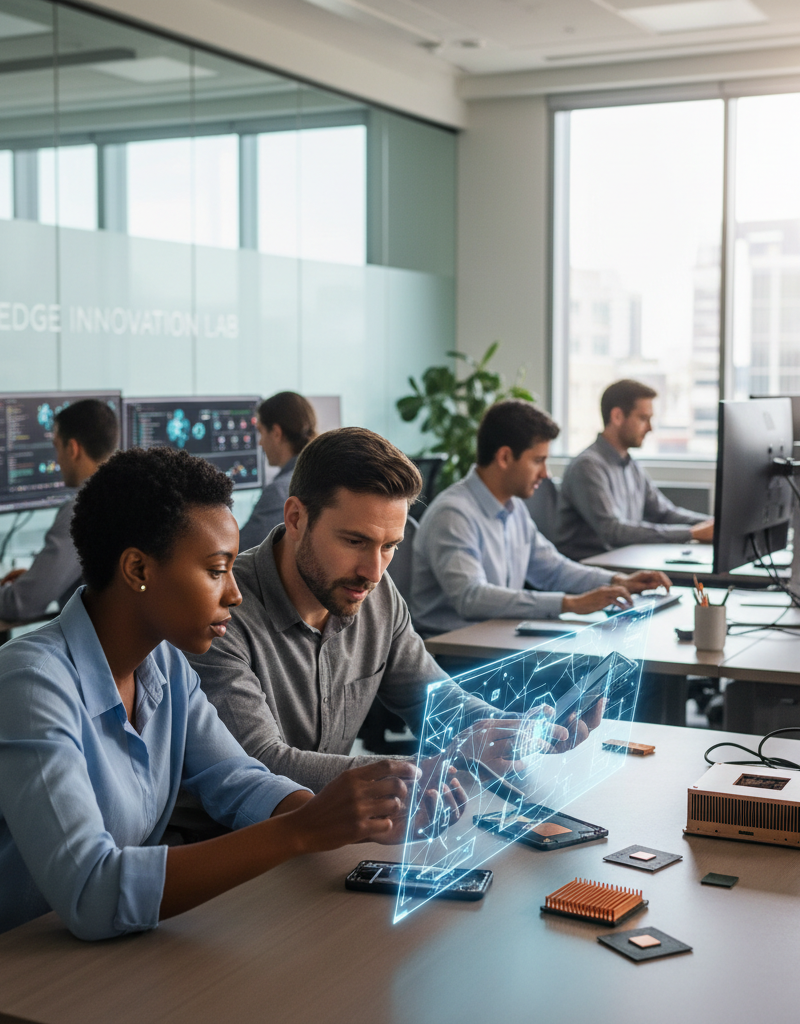
- Qualcomm and other silicon vendors are racing to squeeze more matrix-multiply capability into mobile SoCs. The goal is not just raw FLOPS but efficient, everyday inference across text, vision and audio.
- Nvidia and big cloud providers still dominate large-scale training and high-end inference. But if routine inference keeps migrating off racks, their high-margin businesses will face pressure.
A practical example
Take a multinational retailer doing personalized recommendations. Old pipeline: collect clicks, upload to cloud, run inference, return recommendations. New approach: a compact personalization model runs in-store or on the device, gets periodic updates from anonymized, aggregated summaries, and serves recommendations locally. Faster at the checkout, cheaper overall, and less exposed to privacy scrutiny.
Market implications
- Venture funding will flow toward optimized model compilers, quantization, and edge deployment tooling, not just ever-larger models.
- Enterprise spend will shift from pure cloud compute line items to hybrid contracts that include device provisioning and lifecycle management.
- Chipmakers that prioritize inference-per-watt and integrated AI stacks — not only peak throughput — will likely win long-term design commitments.
Risks and trade-offs
- Some workloads simply can't be compressed. Training, long-context reasoning, and large multi-tenant generative tasks will remain cloud-first.
- Fragmentation is a headache. Supporting thousands of hardware variants raises engineering costs and can slow feature rollout.
- Security changes meaningfully when code runs on devices; patching, supply-chain integrity and tamper resistance become top concerns.
Why investors should pay attention
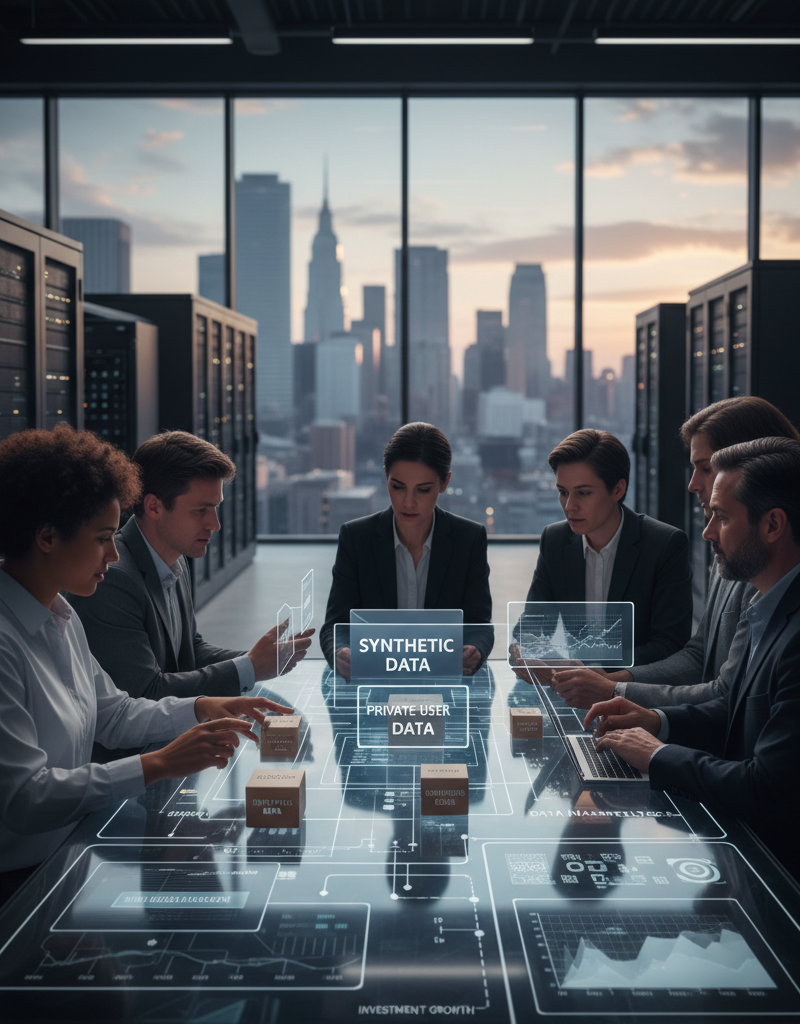
This migration reshuffles the AI supply chain. Firms whose revenue depends on cloud GPU hours may see growth slow as inference decentralizes. Conversely, companies offering tooling, chips, and management layers for edge AI could build sticky, recurring revenue as enterprises re-architect.
A more honest framing
Don't think of this as a duel between cloud and device. Think of a choreography that keeps changing. The cloud will train and version models. Devices will make them useful where time, cost or privacy matter. The winners will be those who orchestrate both — from silicon through deployment pipelines. For US companies, the practical advice: start small, measure cost per inference, and design for hybrid operations before competitors do.
Quick takeaways
- On-device AI cuts latency, cost and privacy exposure for many real-time apps.
- The cloud remains essential for training and heavy reasoning; the practical future is hybrid.
- Watch chipmakers and software vendors focused on inference-per-watt and deployment tooling.
Pedro Marini