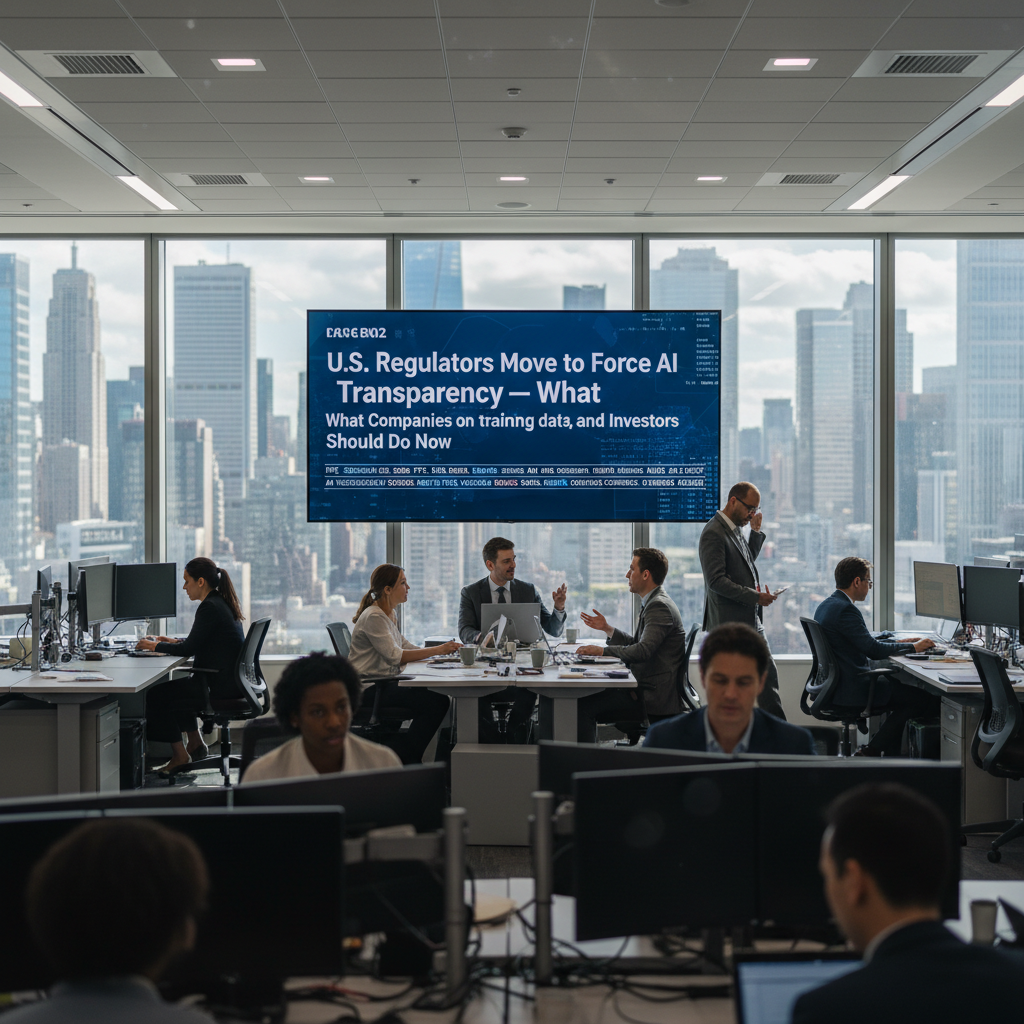
The headline is blunt: Washington no longer thinks of AI as just a technical problem.
Over the past few months federal agencies have signaled a coordinated appetite to press for clearer disclosures from companies building and deploying generative models. For the U.S. market that looks like tougher questions about where training data came from, prominent consumer notices when a bot is speaking, and stricter rules for AI used in hiring, lending and advertising.
Why this matters now
- Regulators are moving past voluntary standards. The old case — let innovation breathe — is being pushed back by a newer one: unregulated models are producing tangible consumer and market harms.
- Investors see policy risk. Even if rules are messy at first, compliance costs and slower product launches will pressure near-term margins.
A bit of history helps. Europe’s AI Act set a template with risk tiers; it shifted expectations more than it settled U.S. policy. In America, enforcement so far has been piecemeal — FTC warnings, state deepfake laws, agency guidance on algorithmic bias. What’s different now is coordination and a real appetite to turn guidance into enforceable requirements. That shift matters more than it initially seems.
Concrete moves regulators are reportedly weighing
- Mandatory disclosure when an AI system materially influences consumer-facing decisions, plus specifics about the classes of data used for training.
- Requirements to document safety testing — an audit trail for model behavior on fairness and robustness.
- Clear consumer notices for AI-generated material in advertising, political messaging and interpersonal apps.
These are aimed at obvious harms like scams and deepfakes. But they bleed into gray areas. For example, forcing firms to reveal training sources touches IP and security: companies warn that detailed dataset disclosure could leak trade secrets or let adversaries game models. Reasonable tension there.
What this means for companies
- Short term: expect higher compliance budgets. Legal, data-engineering and red-team resources get pushed to the front of the queue. Startups without compliance rails may see fundraising get tougher.
- Medium term: product roadmaps may tilt toward explainability rather than raw capability. Firms that can show safety checks and provenance will win trust — and deals where counterparties demand it.
- Strategic choice: treat transparency as a competitive advantage (show your math) or hide behind opacity. The second option is a short runway.
Market implications — who’s most exposed
- Big Tech faces reputational and enforcement risk, but it also has the resources to adapt. Smaller, distributed startups might feel the pinch earlier.
- Investors should watch for companies with opaque training pipelines and heavy reliance on user data; those are more vulnerable. Businesses with diversified revenue and a strong compliance culture are safer, comparatively.
Counterpoints and limits
Disclosure is not a cure-all. Bad actors will still hide, and too much disclosure can create security risks. Also, overly prescriptive rules could chill safety research — some labs have already quietly pulled back from publishing details to avoid misuse. In practice, the story is messier than regulators’ headlines suggest.
Practical steps for investors and executives
- Run a rapid portfolio audit: flag firms that use third-party models without contractual guarantees on data provenance.
- Ask management for an AI bill of materials: model sources, training-data categories (not raw data dumps) and red-team results. That’s actionable and reasonable.
- Push for phased compliance: prioritize disclosures where harms are highest, like hiring, credit scoring and political ads.
A human wrinkle
Regulation is not only about code or checklists; it’s about public trust. If regulators can force clear, intelligible disclosures that ordinary people actually understand, AI could win legitimacy. If all we get is a paper trail designed for lawyers, then we’ll end up with tick-box compliance and continued mistrust. That difference matters.
Where this leaves us
U.S. regulators are closing in on mandatory transparency for AI. Expect higher costs and some short-term disruption, but also an opportunity: sloppy players get pushed out and firms that treat explainability and safety as product features can extract a premium. Investors should price in a near-term compliance hit while hunting for companies that can turn regulation into a differentiator.