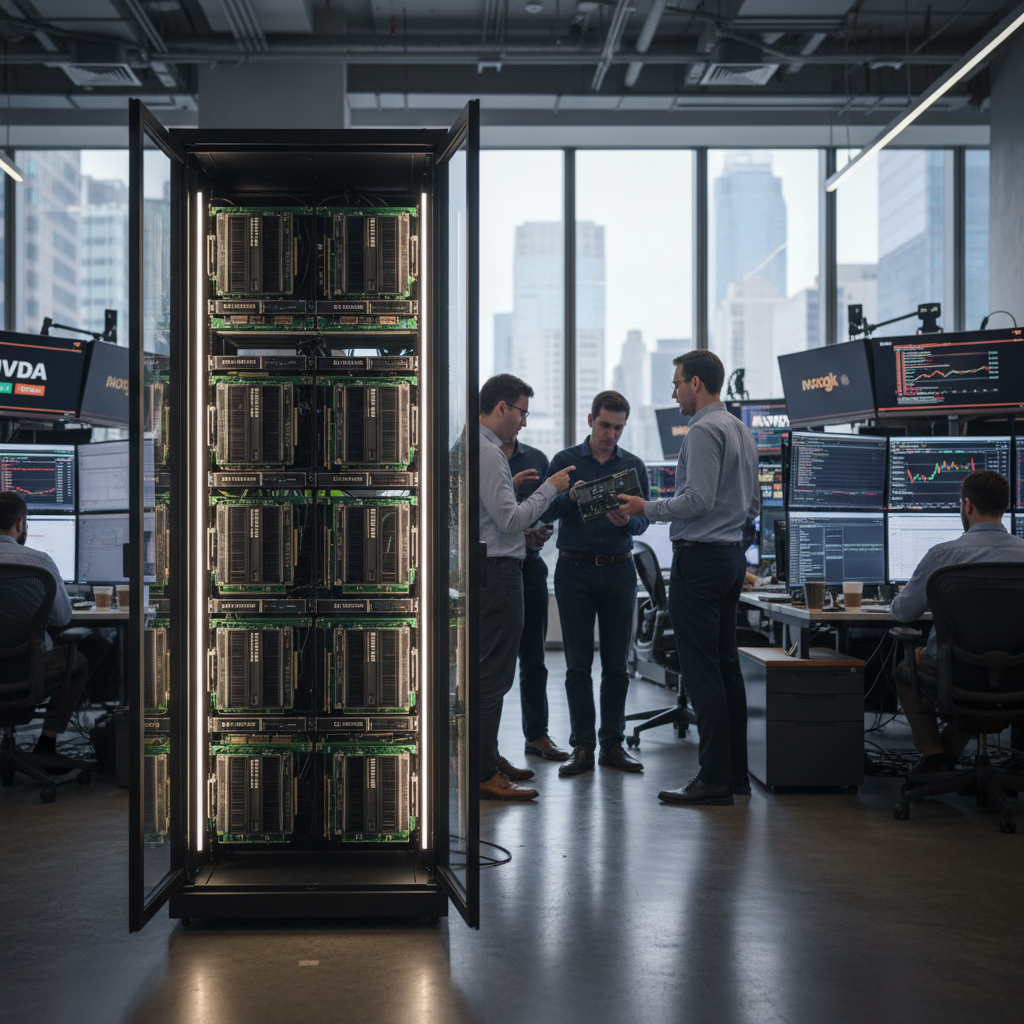
Nvidia H100s aren’t just another data-center gadget — they’re changing how capital gets allocated.
A year ago, large quant shops treated GPUs mostly as an efficiency play. Now they are strategic infrastructure. The H100 family, tuned for large language models and generative AI, has become the engine driving model-based trade ideas, portfolio stress tests and microsecond shaving in execution pipelines.
This feels familiar: cheap compute has democratized complex strategies before, from stat arb in the 1990s to HFT in the 2000s. But there are three important differences this time.
- Concentrated supply: A handful of chip makers and cloud providers control most availability. That means shortages or supplier pricing power can propagate through markets faster than they used to.
- Model overlap and correlation risk: Many groups are fine-tuning the same open models and datasets. Independent alpha is harder to find, and crowding around similar heuristics can magnify drawdowns.
- Operational scale and cost: Running H100-caliber models eats capex and electricity. For big shops, that cost is a moat; for smaller funds, cloud credits and managed services are the only practical options.
You can see the effects already. Backtests that once took days now finish in hours. Generative models are running millions of macro scenarios for stress testing. Execution desks are experimenting with AI-driven micro-adjustments that look like a faster, more opaque version of the dynamic routing experiments from the 2010s.
That said, a faster GPU only accelerates whatever you already have. A flawed model runs faster, not better. What matters is software, data quality and incentives. Firms pairing proprietary data pipelines and strict governance with compute advantages will outperform those who depend on raw horsepower alone. Some teams are clearly underestimating that.
Keep an eye on three signals
- Nvidia and major cloud providers: sustained H100 demand props up chipmakers and clouds, but rising supply or alternative architectures could flip the story.
- ETF flows into AI and chip stocks: hardware narratives pull retail money; volatility follows when expectations outrun supply realities.
- Scrutiny from regulators and counterparties: correlated, AI-driven strategies raise questions about concentration and market impact — and those questions are starting to land.
A quick caveat: compute amplifies possibilities, but it is not an investment thesis by itself. Think back to the dot-com era — raw capacity opens doors, but lasting returns come from differentiated data, tighter processes and sound human judgment.
All told, H100s and their successors are rewriting the plumbing of finance. Expect a few winners with integrated stacks — and a new set of fragilities risk managers will have to wrestle with.