The new quietly disruptive trend
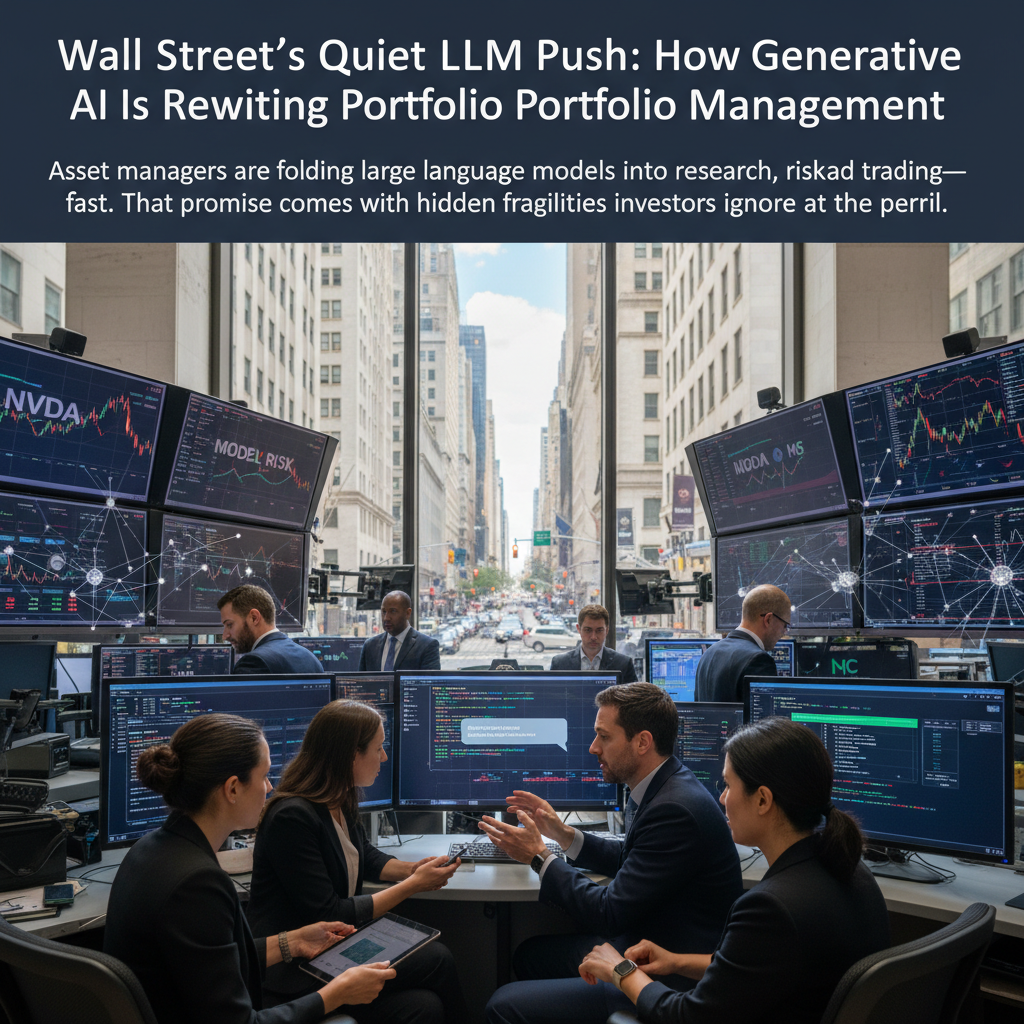
Wall Street isn’t putting up billboards for generative AI. The shift is quieter: teams are slipping large language models into screens that scan earnings sentiment, into trade rehearsals, into compliance checks. On the surface it looks like faster research cycles. Underneath, it can create shared blind spots across portfolios — everyone suddenly telling very similar stories.
Why now?
- Falling inference costs and well-tuned pre-trained models mean custom financial assistants are within reach for mid-sized asset managers, not just big quants.
- Cloud and hardware improvements let shops prototype risk models and idea-generation tools without needing multi-year budgets or monster compute bills.
This isn’t the first AI moment in finance — quant strategies and machine learning have been mainstream for years. What’s different now is the narrative layer: these models synthesize stories, draft memos, even translate regulatory prose into trading signals. That changes how decisions are framed, sometimes in subtle ways that matter.
Real-world uses — practical, not sci-fi
- Automated idea generation. Analysts feed quarterly transcripts to models and surface thematic plays in minutes instead of days. It often highlights things humans miss, but it also amplifies whatever bias is in the inputs.
- Risk narrative checks. Beyond numeric stress tests, managers are writing scenario narratives to probe portfolio reasoning. That helps surface logical gaps, though it’s not a substitute for cold math.
- Compliance and audit trails. Models can standardize reporting and speed reviews. At the same time they raise gnarly questions about provenance and hallucinated citations.
Where the promise meets peril
- Model drift and stale data. Market language evolves. A model trained on last year’s transcripts might not see new stress signals.
- Herding risk. If many firms use the same models and feeds, positions can converge. In a stress event that can magnify moves.
- Hallucinations and misplaced confidence. These systems produce polished explanations that can be wrong — and traders, being human, can over-trust a plausible story.
Think of it like the spread of low-cost index funds two decades ago: broadly beneficial, but it also concentrated exposures. LLMs can democratize idea generation while concentrating narrative risk.
Regulatory and operational blind spots
Regulators are catching up. The debate has shifted from whether AI will be used to how it should be validated, documented and overseen. Expect attention on:
- Explainability and auditability for model-driven advice.
- Data governance to stop proprietary trade secrets leaking during training or inference.
- Stress scenarios that include model-behavior failures, not just market shocks.
What this means for investors
- Institutional investors should press managers on model governance: how are LLM outputs checked against numeric backtests and independent review?
- Retail investors should be cautious with robo-advisors or ETFs that tout AI strategies; ask about inputs, backtests and risk controls.
Counterpoints and signs of restraint
Not everyone is all in. Some large managers treat LLMs as helpers — fast research assistants, not final decision-makers. That’s important: when balance sheets are on the line, human judgment still overrides a persuasive narrative.
The upshot
Generative AI is changing how investment stories are told and built. The upside is speed and richer signal synthesis. The downside is correlated narrative risk, governance gaps and overconfidence. Investors who demand answers about validation, provenance and stress testing will be in a stronger position when the next market shock arrives.
Quick watchlist
- Favor firms with explicit model-governance playbooks and independent audits.
- Pay attention to news of AI-related outages or model-driven trade losses; those incidents reveal hidden failure modes faster than any white paper.