Why this matters now
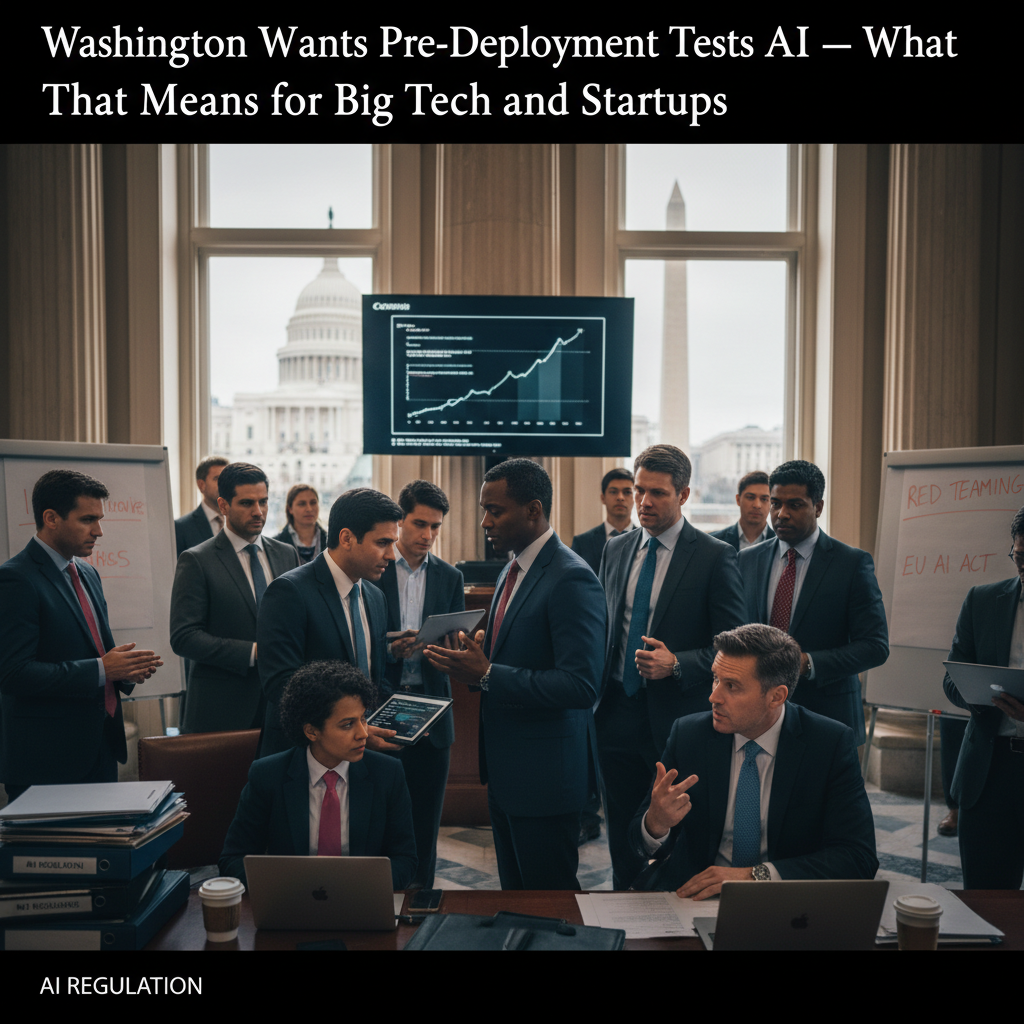
Washington has quietly shifted from advisory nudges to something firmer. After a run of high-profile hallucinations, deepfake scams, and content-moderation fiascos, federal officials are leaning toward requiring pre-deployment safety checks for powerful models — think vaccine-style trials or aircraft certification, not just voluntary checklists. Yes, it sounds dramatic. It is. The trade-off is obvious: slower rollouts in exchange for systems that are less likely to blow up in public.
What lawmakers and agencies are proposing
- Pre-deployment risk assessments that spell out likely misuse scenarios and the mitigations the developer will deploy
- Independent red-team audits to probe vulnerabilities before a model sees the public
- Model registration and transparency filings with a federal entity — more NIST-style guidance than an FDA-style approval process
- Liability and mandatory incident reporting tied to deployed systems
None of this is carved in stone yet. These are modular ideas, not statutes. Still, they mirror how regulators handle other high-stakes tech and reflect bipartisan worry about systemic risk from foundation models.
How this compares to the EU and past regulatory moves
The EU AI Act took a top-down route: tiers of risk with prescriptive controls. The US response is more decentralized — agencies enforcing rules, sector-specific requirements, and standards emerging from NIST plus industry groups. The EU offers a blueprint; Washington looks like a patchwork of specialists trying to avoid strangling innovation.
History matters here. Regulators moved fastest where consumer harm was visible and immediate — aviation after crashes, food and drugs after poisonings. AI is different: the harm is diffuse, often indirect, and the tech moves fast. That makes the usual playbook harder to apply in full.
Who wins and who pays
- Large incumbents with compliance budgets and internal safety teams are best positioned to shoulder testing and registration costs. Expect Microsoft (MSFT), Alphabet (GOOGL), Meta Platforms (META), and Amazon (AMZN) to fare better than most.
- Vendors of hardware and testing tooling — firms tied to secure compute and AI infrastructure, including Nvidia (NVDA) — stand to benefit from increased demand.
- Startups will feel the pinch. Mandatory audits are a capital and time tax that favors well-funded players or those building narrowly auditable products.
This isn’t just a transfer of costs. It changes business models and which ventures are viable.
Real-world examples that crystallize the risk
- Deepfake audio scams that siphoned money from local businesses, illustrating how rapidly harms can scale when provenance is unclear.
- Automated credit or hiring tools that reproduce historical bias, showing why audits must include sociotechnical review — not just checking code.
What’s interesting is how these examples mix technical failure with social context. Fixing one without the other is unlikely to work.
Counterpoints and trade-offs
- Too-prescriptive rules could freeze innovation or push startups offshore to friendlier jurisdictions.
- Voluntary standards risk being ignored by bad actors and slow movers.
- Audits and red teams reduce risk but do not eradicate emergent, unpredictable behaviors in large models.
There’s no perfect solution. Any regime will have blind spots.
Practical next steps for stakeholders
- Companies: map your AI supply chains, institute basic pre-launch tests, and budget now for third-party audits.
- Investors: bake regulatory compliance into valuations and prefer firms with documented safety processes.
- Policymakers: aim for tiered requirements, create public-private testing labs, and design liability rules that encourage disclosure without weaponizing litigation.
Small, pragmatic steps now will smooth the harder trade-offs later.
Wrapping up: this is no longer a theoretical debate. Mandatory pre-deployment testing is moving from idea to expectation for serious AI products. Expect messy short-term effects — delayed launches, acquisitions, a boom in compliance services — but also the possibility of a credible testing ecosystem that makes AI safer and more investable, if regulators avoid one-size-fits-all rules.
Keep an eye on agency rulemaking and the next round of hearings. The decisions made over the next 12–18 months will help determine whether safety becomes a competitive moat or an extra burden.