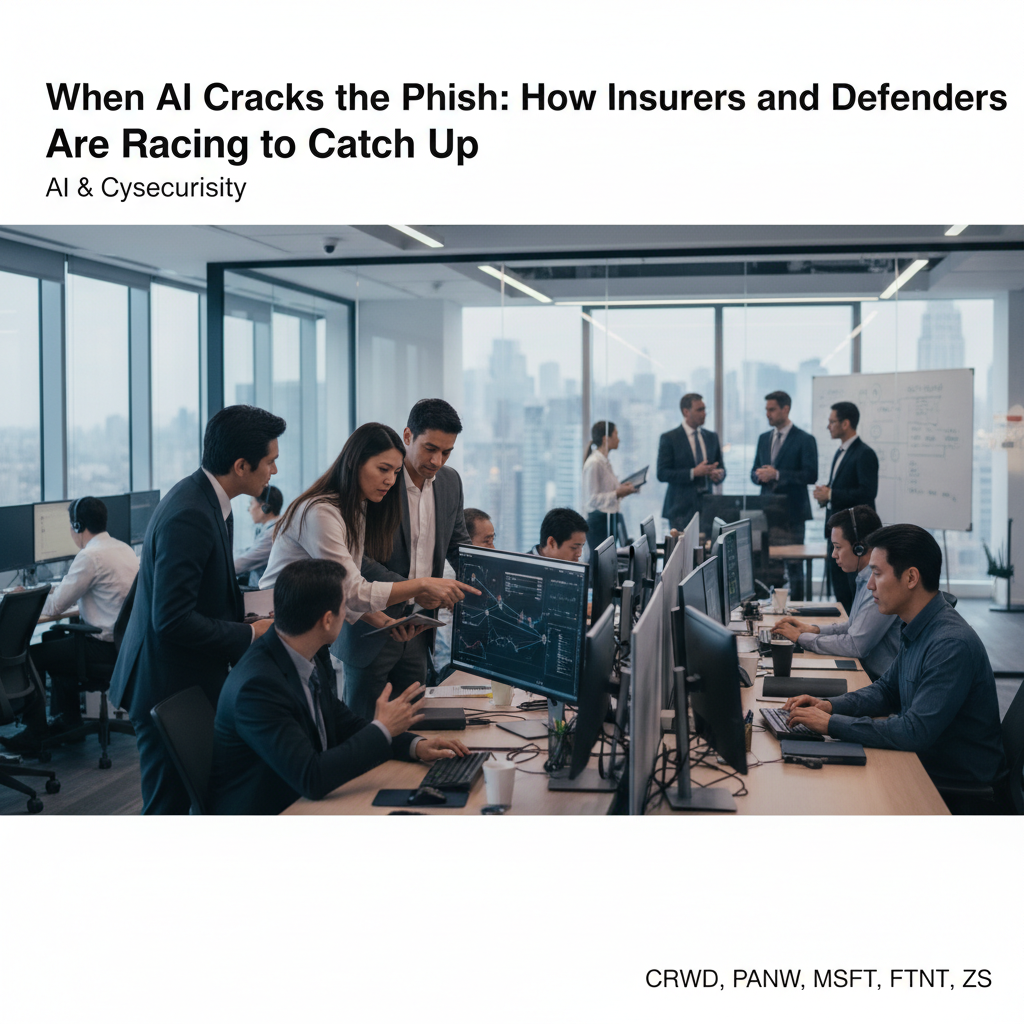
A new kind of phishing has arrived — precise, persuasive, cheap to produce
Briefly: phishing stopped being a slog. What used to be hand-crafted spear-phishing is now a pipeline — models draft tailored messages, voice cloning supplies convincing audio, and follow-ups are automated. The pieces are cheap and scaleable.
This is not hypothetical. Over the past year, incident responders have documented campaigns that stitch together large language models, cloned voices, and data scraped from public sources into multi-step fraud that imitates real workflows. The effect is straightforward: higher hit rates for attackers, social engineering that’s harder to spot, and mounting headaches for cyber insurers trying to price risk.
Why insurers are suddenly in the headlines
- Insurers are tightening coverage and lifting premiums because business email compromise and ransomware losses remain volatile, and now look easier to automate.
- Underwriters are trying two things at once: using models to score applicant security at scale, and making defensive tech a condition of coverage.
- That creates a loop — better vendor controls can lower rates, but only if they actually shrink the attack surface in practice.
What defenders are doing — and where they still fall short
- Endpoint and extended detection vendors are adding features to spot model-driven attacks. Good in theory; noisy in practice. Those alerts spit out more false positives, so people still have to sort the signal from the noise.
- Identity controls, phishing-resistant MFA, and anomaly detection are rising up the priority list. Yet many small and mid-size organizations still fail basic hygiene, which AI makes easier to exploit.
- Voice biometrics and behavioral analytics show promise against cloned-voice fraud, but adoption is patchy and integration costs are real.
In practice, though, the scene is messier than the product sheets suggest. Tooling helps, but it doesn’t replace human judgment or operational discipline.
Investor and market implications
- Security vendors that can prove AI-native detection and tight identity integrations should outpace peers. Expect consolidation as incumbents buy capabilities instead of building them from scratch.
- Cyber insurers that automate underwriting with reliable signal pipelines could recover margin — but mispricing risk is a live danger. Get the data wrong and the losses follow.
Actionable signals for executives and investors
- Boards should require incident response drills that include AI-driven phishing scenarios. Yes, it’s awkward — but necessary.
- CISOs: focus on identity hardening, phishing-resistant MFA, and run simulated attacks that use real AI-crafted lures.
- Investors: favor vendors with demonstrable deployments in enterprise identity and detection ecosystems, not glossy roadmaps.
A human paradox
What’s interesting is that this tech arms race pushes organizations back toward what machines are worst at: relationships, verification rituals, and contextual skepticism. That may sound ironic, but expecting clearer human signals — predictable checks, known workflows, trusted contacts — could become one of the most effective defenses.
This contest will shape premiums, vendor valuations, and board agendas over the next 24 months. For now, expect litigation, stricter policies, and brisk demand for tools that can actually prove they reduce real-world compromise.