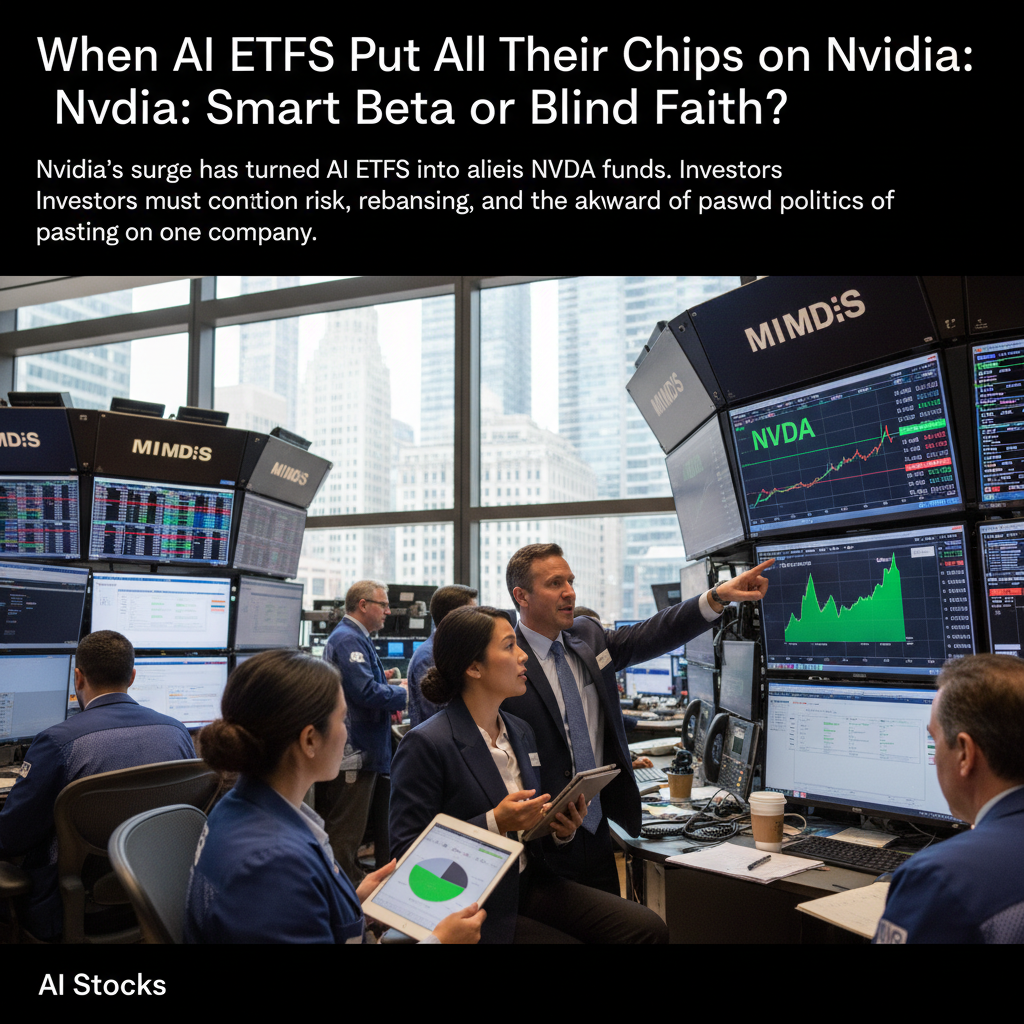
Nvidia isn’t just a line item; it’s the story. In a lot of AI-focused ETFs one chipmaker now dominates to the point that owning the fund can feel more like a single-stock bet wearing passive clothing.
A quick bit of context: concentration inside thematic funds isn’t new. In the late 1990s a handful of internet names skewed tech funds, and in commodity cycles a single producer has often carried whole indices. What’s changed is the pace — and how hungry the market is for narrow AI exposure.
Why this matters
- Many AI and robotics ETFs list Nvidia among their largest holdings, sometimes taking up a double-digit share of assets. That creates two immediate problems: passive investors pick up unintended single-stock risk, and the fund’s tracking error jumps if the leader stumbles.
- ETFs sell diversification. It looks different when one company explains a big slice of benchmark performance; diversification becomes, in practice, mostly cosmetic.
Three practical implications for investors
- Concentration amplifies drawdowns. If Nvidia falls 30%, heavily weighted funds could suffer much larger declines than broader tech indices.
- Rebalancing and fresh inflows often force ETFs to buy more of what’s already expensive. It can become a self-reinforcing loop — higher price begets more flows, which begets higher weight.
- Tax and liquidity mechanics matter. Heavy exposure to a single name raises real questions about how an ETF will handle redemptions in stress without forcing taxable events for long-term holders.
Some alternatives worth considering
- Active AI funds: managers can dial down Nvidia exposure or favor smaller, overlooked AI enablers — you pay for that discretion, though.
- Build your own basket: mix chipmakers, software enablers, cloud providers and pure-play AI services. More work, but you avoid a single ETF’s concentration.
- Hedged exposure: options or collars can blunt downside on concentrated positions, at the cost of returns over time.
Counterpoints — because there are decent ones
- Supporters say this isn’t blind concentration but recognition of a real economic moat. Nvidia’s GPUs and data-center ties are central to current generative AI deployments.
- And market-cap-weighted ETFs are simply reflecting where profits and valuations sit. Penalizing funds for following market signals risks missing the very alpha investors seek.
What to check before buying any AI ETF
- Look at the top 10 holdings and their combined weight.
- Check rebalancing cadence and methodology.
- Compare expense ratio and turnover — high churn can mean incidental tax costs.
- Understand the sponsor’s share-lending and authorized participant practices; they determine liquidity in stress scenarios.
The upshot
AI is a structural shift, but buying a theme fund without peeking at the top holdings is like buying a symphony ticket and finding a soloist on stage. For long-term portfolios, treat AI exposure as an intentional allocation: decide how much conviction you have in the leader, set position limits, and demand transparency rather than marketing gloss.
If you own an AI ETF, do the arithmetic: how much Nvidia risk are you actually comfortable carrying, and does that fit with the rest of your balance sheet?
Decisions made now will influence returns for years. Think of this as a valuation test, not another hype cycle.